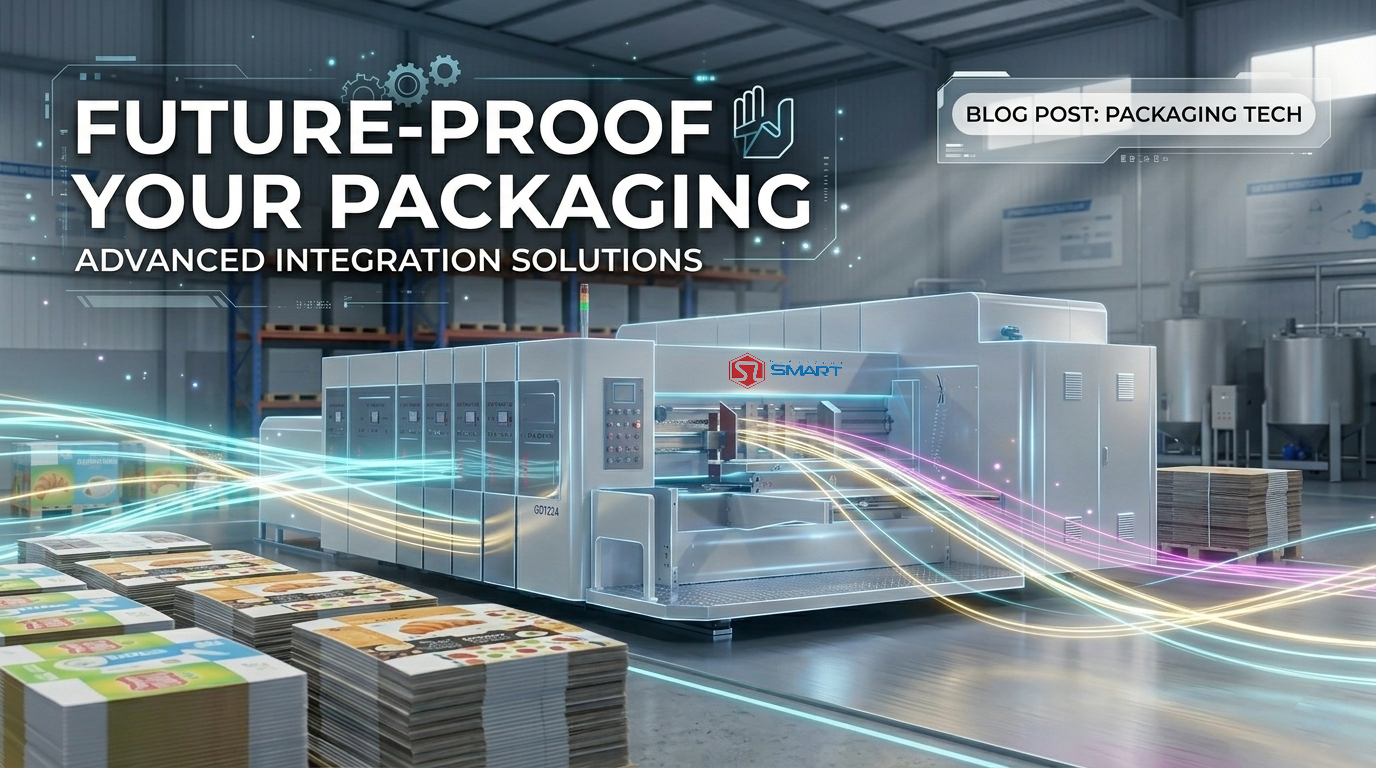
As a Senior Packaging Engineering Consultant and Global Supply Chain Strategic Expert at Guangzhou Smart Machinery, with over two decades of dedicated experience in the research, development, and international delivery of corrugated finishing equipment, I understand the gravity of your procurement decisions. When a Chief Technology Officer or a Multinational Procurement Director initiates the search for a carton box printing machine, they are not merely looking for a piece of industrial hardware. They are seeking a formidable strategic asset designed to anchor their entire production floor. In the modern packaging landscape, acquiring a high-tier carton box printing machine is about securing a high-speed, precision-engineered converting ecosystem that balances initial capital expenditure with relentless, long-term operational resilience.
This comprehensive, encyclopedia-style technical guide is designed specifically for decision-makers at global Tier-Two and Tier-Three Box Plants. Within these extensive sections, we will dissect the mechanical architecture, analyze the strict localized configurations required for diverse global climates, and examine the profound economic impact of advanced corrugated finishing equipment.
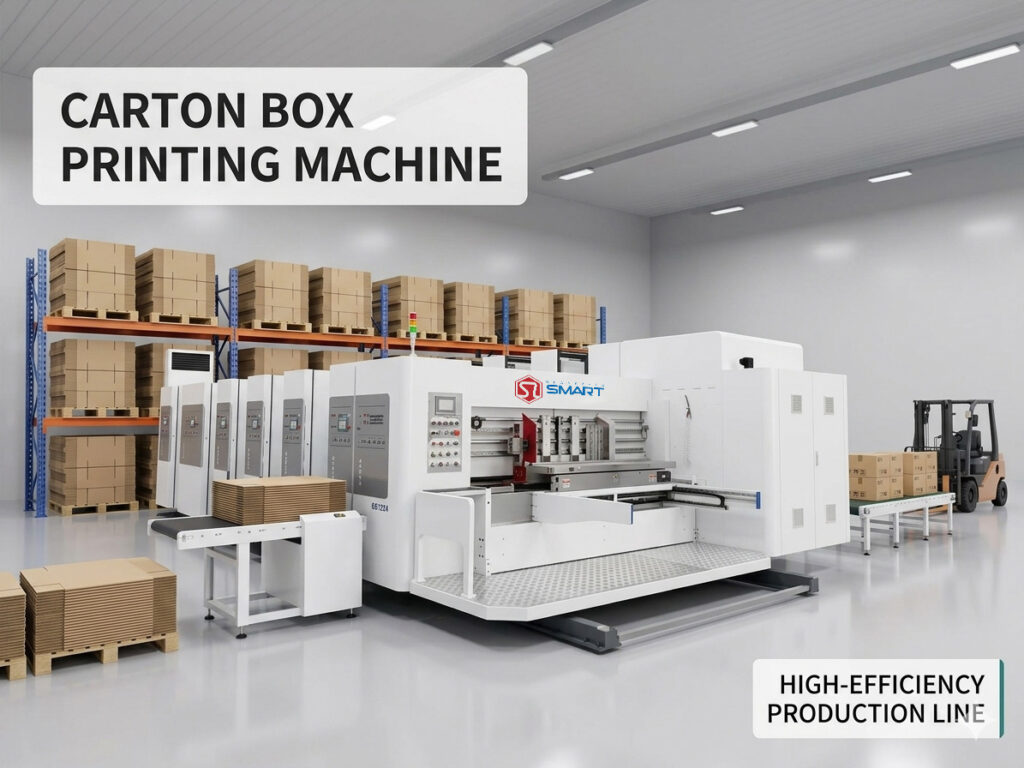
Deep Definition: Technical Architecture and Engineering Principles of a Carton Box Printing Machine
To genuinely comprehend the formidable capabilities and the intrinsic value of a premium carton box printing machine, one must look far beneath the heavy steel frames and analyze the microscopic orchestration of its mechatronics. The ultimate objective of this machinery is to execute flawless inline converting—the complex methodology of transforming a blank sheet of raw corrugated board into a fully printed, meticulously slotted, folded, and glued carton in a single, uninterrupted pass, all while operating at blistering industrial speeds.
The Infeed Dynamics: Absolute Preservation of Structural Integrity
The journey of a high-fidelity retail carton begins precisely at the feeding section of the line. Inferior machines frequently utilize outdated mechanical kick-feeders that violently strike the trailing edge of the board. This aggressive impact instantly crushes the internal flutes and permanently destroys the corrugated board structural integrity, leading to compromised compression strength in the final product.
A world-class carton box printing machine completely eliminates this risk by employing a highly sophisticated lead edge feeder. This advanced system utilizes an extended mechanical stroke combined with synchronized, multi-zoned suction channels to gently, yet firmly, grip the bottom sheet of the paper stack. This precise, friction-based feeding ensures that even severely warped boards are introduced into the machine architecture perfectly parallel to the running axis, preserving the crucial Edge Crush Test rating of the raw material.
Once safely inside the machine, the board is propelled forward via an advanced vacuum transfer system. Instead of relying on heavy mechanical pull rollers that compress the delicate paper fibers, a vacuum transfer utilizes continuous suction belts or strategically placed ceramic-coated wheels to hold the board firmly against the transport guides. This frictionless transport mechanism is absolutely vital for maintaining exact registration between the various printing units, ensuring that multi-color graphics align with zero overlapping errors.
Precision Flexography: The Role of the Anilox Roller
As the board smoothly enters the flexographic printing units of the carton box printing machine, the distribution of liquid ink is meticulously governed by the anilox roller. This vital component serves as the beating heart of the flexographic printing process. Engineered with millions of microscopic cells laser-engraved into a hardened ceramic surface, the anilox roller dictates the exact volume of ink transferred to the photopolymer printing plate.
Whether your manufacturing plant is executing simple industrial barcodes for logistics or high-definition, multi-color retail graphics for premium consumer goods, the microscopic precision of the anilox roller guarantees absolute color consistency. This ensures that the first box off the line looks exactly identical to the millionth box, completely eliminating color variation across massive production runs.
Complex Conversion: The Slotting Unit and High-Speed Bundling
Following the pristine application of graphics, the corrugated board advances aggressively into the slotting unit. This is the mechanical zone where the physical, three-dimensional geometry of the box is permanently defined. The most advanced iterations of a carton box printing machine feature complex dual-shaft configurations within this unit, allowing for the independent, micro-millimeter adjustment of the pre-creasing and final creasing profiles. This carefully staged creasing process prevents the inner liner paper from cracking—a catastrophic defect that routinely plagues inferior machinery during the subsequent folding phase.
As the perfectly scored and slotted board transitions through the folding and gluing sections, the finished carton enters the counter ejector. Operating at extreme velocities, the counter ejector meticulously receives, squares, and accurately counts the folded cartons into precise bundles before ejecting them down the line for immediate strapping and palletization. When evaluating a carton box printing machine, the seamless, jam-free transition from the lead edge feeder all the way through to the counter ejector, maintaining speeds up to 350 m/min (1148 FPM), is the ultimate testament to the machine’s elite engineering pedigree.
Navigating Global Climate and Labor Challenges: Why Regional Differences Dictate Your Carton Box Printing Machine Selection
A massive industrial asset weighing tens of thousands of kilograms cannot be treated as a universal, one-size-fits-all commodity. As a global supply chain strategic expert, I continuously advise factory managers that atmospheric realities, geographical climates, and regional labor economics must absolutely dictate the specific engineering configurations of their equipment. When you assess a carton box printing machine, its localized adaptations are just as critical to your success as its baseline production speed.
North America: The Relentless Pursuit of Zero Downtime and Supreme Safety Compliance
In the highly competitive North American manufacturing landscape, exceptionally high labor costs and uncompromising regulatory environments drive all capital procurement strategies. Box plants operating in this demanding region cannot afford to have operators manually clearing jams, physically washing printing plates, or performing lengthy, manual order changeovers. The absolute demand is for full automation aimed at achieving continuous “Zero Downtime.”
Furthermore, compliance with uncompromising safety regulations, such as those strictly mandated by OSHA, is entirely non-negotiable. Every access panel, gear train, and automated gate on a carton box printing machine destined for North America must be integrated with fail-safe safety interlocks and dual-channel emergency stop networks. These sophisticated systems must instantly cut motor power and halt all kinetic movement without causing mechanical recoil, ensuring absolute workforce protection while minimizing the legal liability of the packaging facility.
Europe: Championing Energy Efficiency and Strict Eco-Directives
European procurement directors face a remarkably different set of primary operational challenges: aggressive carbon footprint reduction mandates, exorbitant industrial energy prices, and rigorous environmental laws. A carton box printing machine deployed into the European market must prioritize absolute Energy Efficiency above all other metrics.
This involves utilizing advanced regenerative braking systems on all main drive motors, where the kinetic energy generated from decelerating heavy print cylinders is captured, converted, and fed directly back into the plant’s electrical grid. Acoustic pollution is also heavily regulated in European industrial zones; therefore, machines must feature highly specialized low-noise helical gearing and sound-dampening acoustic enclosures. Most importantly, every electronic system and mechanical subsystem within the machine must proudly bear the rigorous CE certification mark, providing undeniable proof of compliance with European Union machinery directives.
Southeast Asia and Latin America: Combating Extreme Humidity and Board Warping
Operating a corrugated converting plant in regions like Southeast Asia or Latin America means battling a relentless, invisible enemy: ambient humidity frequently exceeding eighty percent relative humidity. This high moisture content drastically alters the physical characteristics of raw corrugated board, making the paper fibers substantially softer, heavier, and highly prone to severe warping.
To counteract this severe atmospheric challenge, a carton box printing machine configured specifically for these tropical regions must feature heavily enhanced, high-output blowers within the vacuum transfer sections. This provides adjustable, extreme suction pressure to maintain absolute control over heavy, radically warped sheets. Furthermore, specialized pre-creasing wheel designs are absolutely mandatory. Because the high moisture content makes the paper highly susceptible to tearing during the folding process, deep, gradual pre-creasing resolves the wrinkling and poor glue adhesion caused by these fluctuating physical properties, preventing asymmetric folding and structural failure.
Middle East and Africa: Thermal Management and Absolute Dust Mitigation
In the Middle East and Africa, corrugated packaging plants frequently operate in extreme high-temperature environments that are heavily saturated with abrasive, fine desert dust. This microscopic dust is the mortal enemy of precision mechatronics, exposed circuit boards, and lubricated mechanical bearings.
A carton box printing machine deployed in these harsh regions requires a ruggedized, impenetrable defense system. This includes highly specialized sealed electrical cabinets equipped with industrial-grade closed-loop air conditioning units to provide vital heat dissipation without drawing in outside air. The machine must be entirely capable of operating continuously even when ambient factory temperatures soar well beyond human comfort levels. Mechanical drives require heavy-duty, high-performance seals to prevent fine particulate matter from grinding down bearing raceways, ensuring uninterrupted durability and preventing catastrophic friction-induced failures.
Material Science: From Alloy Steel to Tungsten Carbide in a High-Performance Carton Box Printing Machine
The fundamental difference between a machine that barely survives its financial depreciation schedule and a world-class system that spans decades of continuous, round-the-clock operation lies entirely in the realms of metallurgy and advanced control theory. When rigorously analyzing a carton box printing machine, the applied material science dictates the absolute ceiling of its performance, accuracy, and overall profitability.
The Superiority of Heat-Treated Alloy Steel and Tungsten Carbide
The mechanical cutting tools located within the slotting unit and the rotary die-cutter sections are subjected to immense, violent, and repetitive impact forces. Standard carbon steel blades dull rapidly under the abrasive friction of recycled paper fibers, leading directly to ragged cuts, excessive paper dust generation, and frequent, highly costly machine stoppages for blade replacement and sharpening.
To achieve maximum longevity and operational uptime, the main machine frames, anvil covers, and slitter blades of a superior carton box printing machine must be forged from stress-relieved, heat-treated Alloy Steel. This specific metallurgical process provides the perfect balance of massive tensile strength and essential shock absorption, mitigating the intense vibrations generated at high speeds.
For the absolute highest wear resistance, critical cutting edges and localized high-friction guides are meticulously brazed with Tungsten Carbide. Tungsten Carbide offers an extreme molecular hardness that retains a microscopic cutting edge exponentially longer than standard industrial metals. This strategic application of advanced materials drastically reduces consumable replacement costs and minimizes mechanical downtime, providing a massive, calculable advantage in total operational uptime.
Servo Drive Physical Calibration Logic and Precision Control
Mechanical linkages and traditional gear trains, no matter how precisely machined in the factory, eventually suffer from inevitable backlash and cumulative wear over millions of rotations. Modern manufacturing precision relies entirely on the intelligent, digital application of the Servo Drive.
The physical calibration logic of a high-end servo drive system integrated into a carton box printing machine involves continuous, micro-second computational feedback loops. When a sheet of corrugated board weighing several kilograms enters the folding section at terminal speeds reaching 350 m/min (1148 FPM), the independent, synchronized servo motors instantly calculate the exact rotational inertia required to fold the flap without over-bending or skewing the cardboard. By continuously reading high-resolution digital encoders, the system dynamically adjusts the torque and velocity of the folding belts based on the exact caliper and structural resistance of the board traveling through that specific zone.
This hyper-localized physical calibration is precisely what allows a premium carton box printing machine to consistently hold strict folding and cutting tolerances of ± 0.5 mm (0.02 Inches). This incredible, repeatable precision significantly reduces raw material waste, an absolutely critical economic factor in emerging markets where the cost of raw paper dominates the entire operating budget of the facility.
Commercial Insights and Total Cost of Ownership (TCO) Analysis
When evaluating the Return on Investment (ROI) and the Total Cost of Ownership of a carton box printing machine, multinational procurement directors must contrast fully Integrated Inline Systems against outdated, semi-automatic, disjointed equipment. The strategic implications of this comparison dictate the long-term survival of the packaging plant.
The Economic Divide: Integrated Inline Systems vs. Semi-Automatic Equipment
Semi-automatic manufacturing setups require massive, space-consuming buffer zones and extensive manual labor to physically transport stacks of cardboard between separate printing, slotting, and gluing phases. In developed nations suffering from severe, systemic skilled labor shortages, this manual dependency creates massive production bottlenecks and artificially inflates operational expenditure. Inline converting solves this crisis entirely by reallocating human labor to supervisory roles and allowing the integrated line to run continuously with a fraction of the traditional headcount.
Furthermore, in emerging markets where labor might be more affordable, the true enemy of profitability is material waste. Because a fully automated carton box printing machine eliminates the human handling errors that cause misaligned prints and crushed flutes, the rejection rate plummets. Saving even a fraction of a percent on raw paper waste across millions of square meters of production directly injects massive capital back into the factory’s bottom line. The staggering weight of the machine, often exceeding 45,000 kg (99,200 lbs), ensures absolute stability, meaning the machine does not vibrate out of calibration even at maximum velocity, securing that ± 0.5 mm (0.02 Inches) precision permanently.
Surviving and Dominating Global Brand Audits
Why does an integrated system producing a tolerance of ± 0.5 mm (0.02 Inches) matter strategically to the Chief Technology Officer? Because today’s Tier-Two and Tier-Three Box Plants are intensely and mercilessly scrutinized by global retail giants.
Supplying primary or secondary packaging to mega-retailers and fast-moving consumer goods conglomerates like Amazon, Coca-Cola, or Nestlé requires passing exceptionally strict, uncompromising supplier quality audits. These massive global brands utilize highly automated, ultra-high-speed secondary packaging lines in their own fulfillment centers. Their automated case packers will instantly jam, crush products, or reject a carton if the cardboard box is even slightly out of square or if the manufacturer’s glue joint is misaligned by a fraction of a millimeter.
By strategically investing in a high-performance carton box printing machine, your plant structurally guarantees that every single carton delivered to a multinational client is geometrically perfect and structurally invincible. You are not just buying heavy machinery; you are definitively securing the engineering capability to pass the world’s most grueling corporate brand audits with absolute, unwavering confidence, thereby unlocking highly lucrative, long-term global supply contracts.
Frequently Asked Questions (FAQ) – Global Procurement Insights
Q: How does upgrading to a fully automated carton box printing machine impact our overall plant energy consumption? A: While highly automated inline systems utilize larger, more powerful servo motors to achieve high production speeds, they drastically reduce the overall energy consumption per individual carton produced. By implementing intelligent regenerative Servo Drive technology and eliminating the immense, unrecoverable energy waste associated with the frequent stops, starts, and idling of disjointed semi-automatic processes, your baseline energy efficiency improves dramatically, aiding in carbon footprint compliance.
Q: Can this heavy industrial equipment adapt to varying widths and thicknesses of corrugated board seamlessly? A: Absolutely. Modern integrated lines are explicitly designed for immense flexural versatility. They can effortlessly transition from delicate, ultra-thin micro-flute boards to heavy-duty, highly rigid double-wall profiles up to 1200 mm (47.2 Inches) in width. The machine accomplishes this mechanical feat by automatically adjusting feeding pressure, folding torque, and physical gap clearances through advanced, fully motorized setup features driven by the central computerized interface.
Q: How does Guangzhou Smart Machinery handle critical after-sales maintenance for complex international installations without causing massive downtime? A: We understand that downtime is the enemy of profitability. Therefore, we deploy a highly robust, proprietary digital architecture to support our global manufacturing partners. By deeply integrating advanced IoT sensors and diagnostic software into platforms like our corrugated box printing machine, our dedicated engineering team provides immediate, highly secure Remote Support. Our diagnostic experts stationed at our headquarters can securely log into your machine’s PLC framework over an encrypted network connection to rapidly diagnose electrical faults, push software optimizations, and perform precise physical calibration logic adjustments globally. This completely circumvents the excessive, agonizing downtime associated with waiting for physical technicians to navigate international travel logistics.
Secure Your Plant’s Future with Unrivaled Engineering Excellence
The crucial transition from a struggling, bottlenecked box plant to a highly dominant, continuously audit-ready global packaging supplier requires visionary engineering foresight and uncompromising equipment selection. Whether your facility is battling extreme atmospheric humidity in Latin America, exorbitant and scarce labor in North America, or strict environmental efficiency mandates in Europe, the perfect technical architecture exists to solve your specific operational challenges.
Do not allow outdated, fragmented converting processes or disjointed machinery to artificially cap your factory’s true production potential. When you are systematically evaluating a carton box printing machine, you must demand absolute metallurgical superiority, intelligent automation, and unwavering, digitally connected global support.
Partner with Guangzhou Smart Machinery today to conduct a meticulous, deep-dive Total Cost of Ownership analysis tailored perfectly to your specific regional conditions and operational parameters. Discover exactly how integrating our cutting-edge converting technology into your production floor can revolutionize your high-speed throughput, permanently obliterate your material waste, and definitively secure your strategic position as a top-tier global packaging supplier.
Take decisive command of your manufacturing destiny. Explore our vast capabilities and invite our experts to analyze your production line by visiting Guangzhou Smart Machinery. Architect the ultimate, highly profitable future of your global packaging operations by investing in a definitive, world-class carton box printing machine.