Filtering a first-tier fully automatic folder gluer machine supplier comes down to three non-negotiable engineering benchmarks. First, rigid wall-panel metallurgy: side frames must be precision-milled steel, not stamped sheet metal, to hold tolerance under continuous load. Second, an independent multi-axis servo protocol synchronizing feed, fold, glue, and stitch stations — not one motor driving mechanical linkages.
Third, globally sourced standard componentry, so spare parts arrive in days, not months. A machine failing any single benchmark will drift out of tolerance, jam under 24/7 loads, or strand your line waiting on proprietary parts.
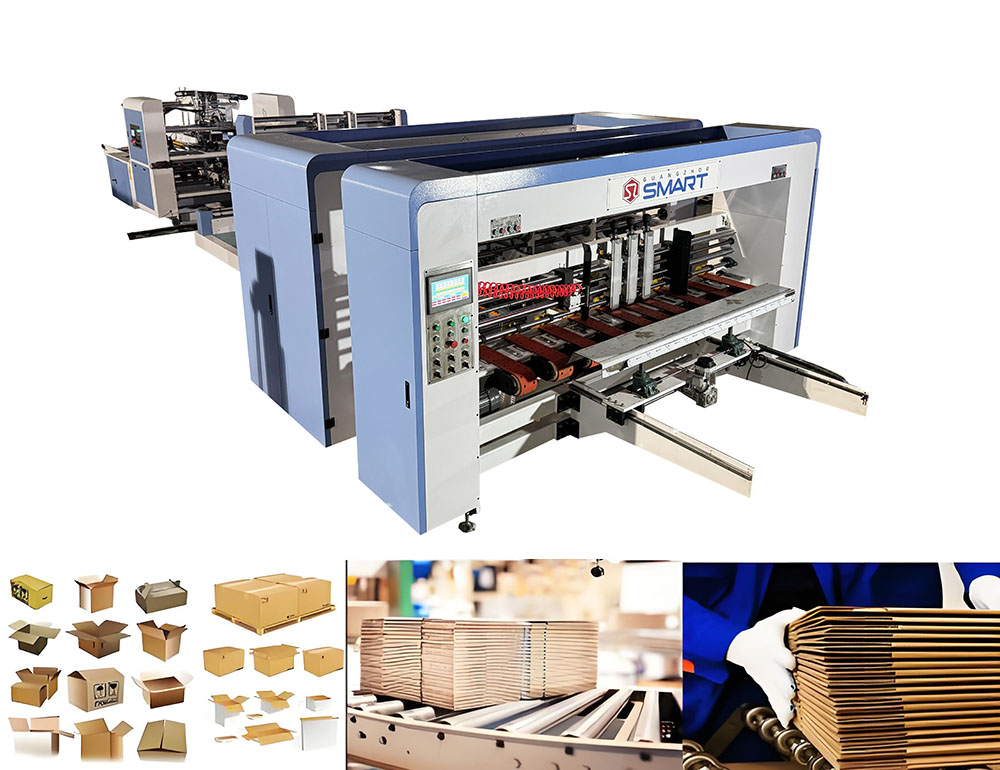
https://gzsmartmachinery.com/product/eco-automatic-folder-gluer-and-stitcher-machine/
Engineering Benchmark: Supplier Tier Comparison
| Engineering Criterion | Entry-Level Semi-Automatic | Mid-Tier Automated | Guangzhou Smart Machinery (Full-Servo Integrated) |
|---|---|---|---|
| Drive Architecture | Single motor, mechanical linkages | Servo on feed axis only | Independent multi-servo: feed, fold, glue, stitch |
| Folding Precision | ±3–5 mm (±0.12–0.20 in) | ±1.0 mm (±0.04 in) | ±0.5 mm (±0.02 in) |
| Rated Line Speed | Up to 80 m/min (262 FPM) | Up to 120 m/min (394 FPM) | Up to 180 m/min (590 FPM) |
| Control Logic | Relay-based / entry PLC | Basic PLC, no remote access | Siemens/Mitsubishi PLC, remote IoT diagnostics |
| Adhesive System | Fixed cold-glue wheel | Cold glue only | Cold glue + hot-melt, high-precision nozzles |
| Stitching Integration | Offline, separate machine | Limited inline capability | Integrated, 30–120 mm (1.18–4.72 in) adjustable |
| Feed System | Friction rollers (flute-crushing risk) | Basic vacuum assist | High-accuracy vacuum, single-sheet separation |
Inside a Fully Automatic Folder Gluer Machine: The Continuous-Pass Architecture
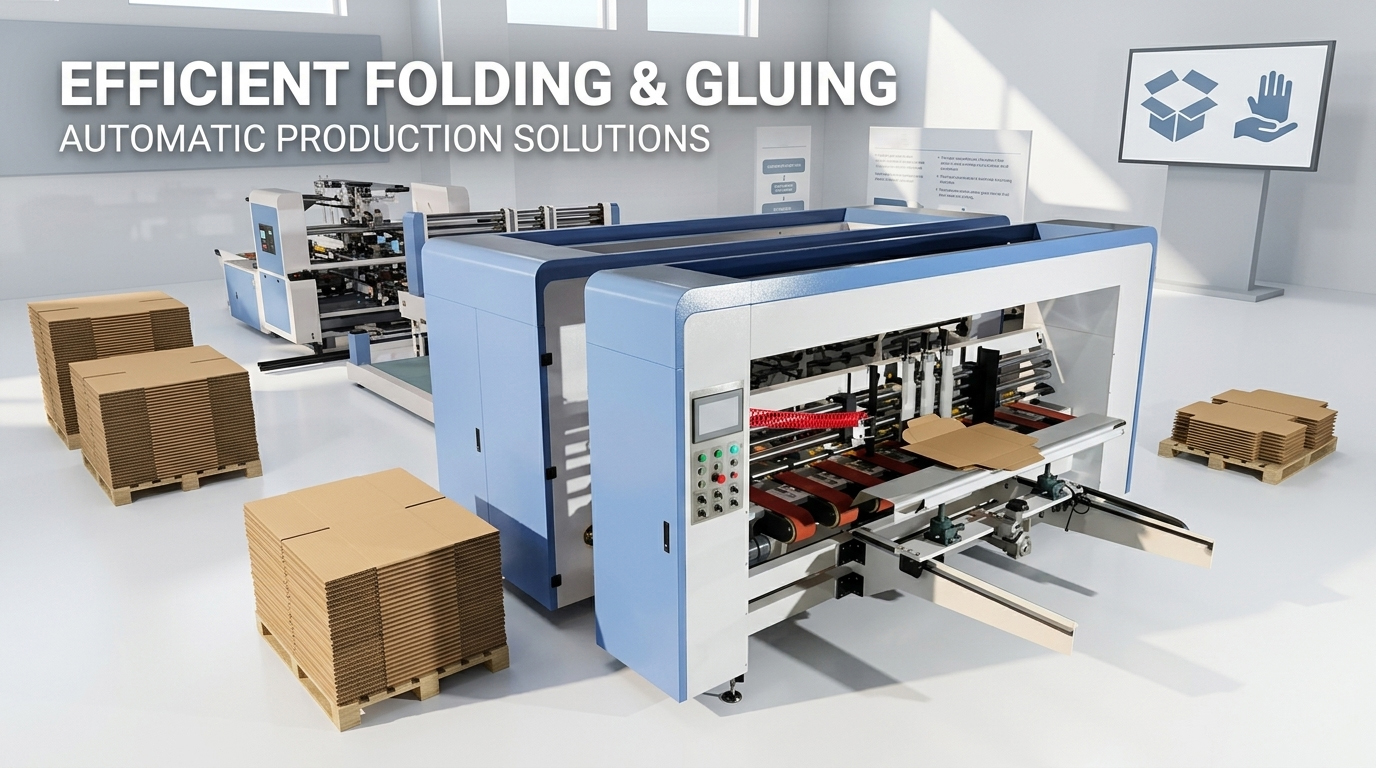
A modern fully automatic folder gluer machine earns that label only when feeding, folding, gluing, stitching, and stacking run as one continuous, servo-synchronized pass. Five separate machines an operator babysits in sequence do not qualify, no matter what the spec sheet claims. The architecture has to be judged station by station.
The Precision Feeder Unit is the first checkpoint. A high-accuracy vacuum suction system separates and feeds carton blanks one at a time, holding perfect alignment and preventing the double-feeds that jam downstream stations. Machines relying on friction rollers instead of vacuum transfer crush the flute structure before the board ever reaches folding.
For stiff or multi-ply stock, an Advanced Pre-Breaking section pre-fractures the crease lines ahead of final folding. Corrugated board retains physical memory — a crease folded only once will fight to spring back open at the exact moment wet glue needs to set. Pre-breaking neutralizes that tension before it reaches the glue joint.
Downstream, precisely positioned guides and hooks route the panel through Intelligent Folding & Gluing, compatible with both water-based cold glue and hot-melt adhesive delivered through high-precision nozzles. The Integrated Stitching Section then closes heavy-duty joints across an adjustable 30–120 mm (1.18–4.72 in) range, a structural reinforcement pure gluing cannot replicate on transit-heavy cartons. A final pressure, counting, and stacking stage seals the bond under uniform pressure before automated counting hands off to palletizing.
Precision Under Load: Servo Synchronization and the ±0.5 mm Standard
Folding precision only means something at production speed. Independent servo drives on the leading and trailing fold axes are calibrated in real time to eliminate the “fishtail” — the scissor-like lag between panel edges that appears the instant line speed climbs. Without dual-servo calibration, tolerance degrades from a clean ±0.5 mm at idle to several millimeters at full throughput.
At a rated 180 m/min (590 FPM), this architecture holds ±0.5 mm (±0.02 in) folding accuracy continuously, not just in a demo run. That tolerance is what lets a box clear automated squaring checks at a client’s receiving dock instead of getting flagged for manual inspection. Procurement teams auditing a fully automatic folder gluer machine should request tolerance data captured under full-speed load, not static bench measurements.
Secondary correction technology adds a closed-loop check after the initial fold, measuring panel alignment and micro-adjusting before the glue sets. That closed loop is the mechanical difference between a machine rated for high accuracy on paper and one that actually holds it, shift after shift, for years.
Material Science: Why Wear Components Decide Machine Lifespan
Wear components determine whether a machine holds tolerance for a decade or for two years. High-grip, tensile-resistant folding belts maintain constant panel pressure through millions of fold cycles without stretching out of calibration. Belt drift is the single most common cause of gradual precision loss on any folder gluer, so replacement intervals belong in the purchase contract, not a footnote.
Tungsten-carbide-coated feed friction plates resist the abrasive wear of high-volume corrugated dust far longer than untreated steel. This is why Guangzhou Smart Machinery’s spare parts program stocks tungsten-steel knife and friction components as standard-issue replacement items rather than special-order parts. High-frequency electronic glue valves deliver metered adhesive shots instead of a continuous bead, cutting waste while keeping the bond line consistent at 180 m/min (590 FPM).
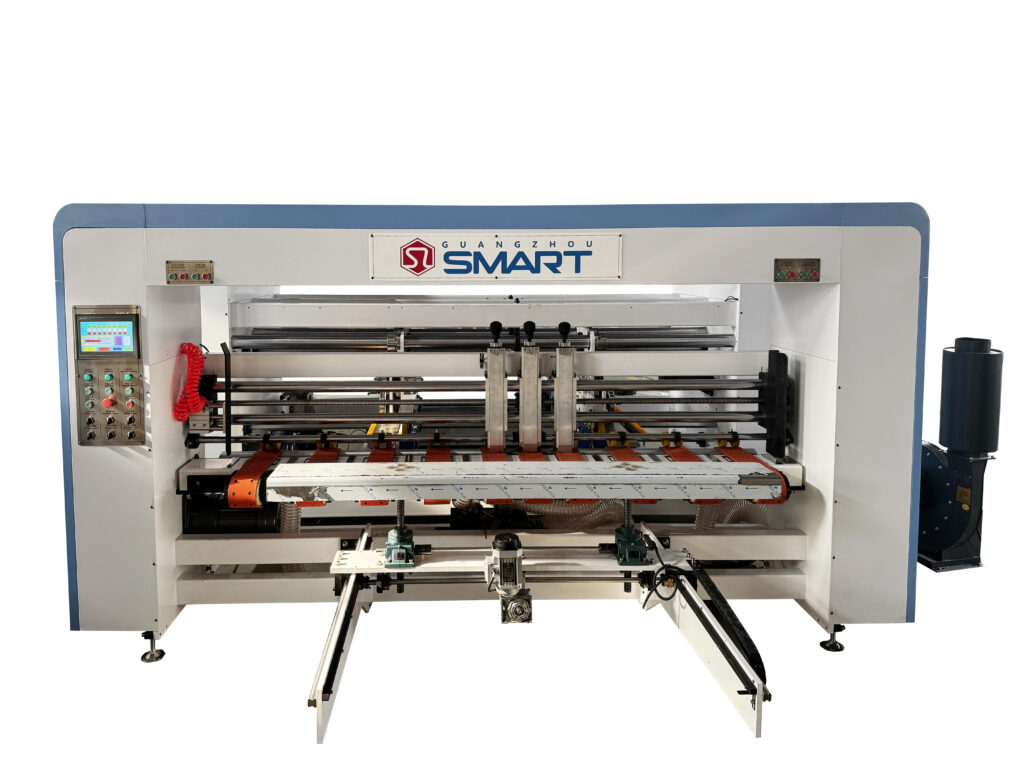
Before specifying a machine on brochure claims alone, request a Factory FAT (Factory Acceptance Test) Protocol Sheet that documents wear-component grade, tolerance testing method, and run-in hours prior to shipment. A supplier that hesitates to share this documentation is telling you something about the other specifications too.
The Total Cost of Ownership Equation: Adhesive, Labor, and Downtime
Adhesive consumption is a recurring cost most TCO models underweight. Intelligent glue metering, paired with a zero-discharge circulating system, cuts starch consumption from the industry average of over 22 kg (48.5 lbs) per metric ton of board processed to under 18 kg (39.7 lbs) per metric ton — an operating cost reduction of up to 20% that compounds over the life of the machine.
Labor is the second lever. Consolidating feeding, folding, gluing, stitching, counting, and stacking into one servo-synchronized pass replaces what used to be several manually tended stations with a single line an operator runs from a digital touchscreen. Rapid order changeover through that interface also protects margin on small-batch runs, where manual re-tooling previously ate into the time between SKUs.
Downtime is the lever procurement teams price incorrectly most often. A vacuum-fed, servo-synchronized line that does not crush board on entry generates far fewer jams than friction-roller feeding, and fewer jams mean fewer unplanned stops per shift. Model total cost of ownership on jam frequency and changeover minutes, not the machine’s sticker price alone.
Configuring the Machine for Your Grid, Climate, and Box Mix
Electrical configuration is not universal. Guangzhou Smart Machinery builds to 380V/50Hz (standard across Europe, Asia, and the Middle East) or 480V/60Hz (standard in North America), with Siemens or Mitsubishi PLC control selectable to match your maintenance team’s existing familiarity.
Humid or dust-heavy environments need IP54 or IP65-rated electrical cabinets to keep servo drives and PLCs from failing prematurely — a detail worth confirming before signing, not after installation. Ambient plant conditions should shape the cabinet spec, not the other way around.
Box-style versatility is the final configuration question. This architecture handles standard straight-line RSC boxes, crash-lock bottom e-commerce packaging, and multi-corner designs without a change of machine, which is why it serves food and pharma cartons, electronics and luxury packaging, and heavy-duty shipping boxes from the same production line.
Vetting a First-Tier Supplier: The Non-Negotiable Checklist
Return to the three benchmarks that opened this audit — wall-panel metallurgy, multi-axis servo synchronization, and globally sourced componentry — and demand documentation for each, not marketing language. A supplier unwilling to share tolerance data captured under full-speed load, wear-component specifications, or PLC brand and sourcing lead time is not operating at first-tier standard.
A practical due-diligence checklist before you sign:
- Request tolerance data at rated speed, not static bench figures
- Confirm PLC brand and spare-parts sourcing lead time in writing
- Verify cabinet IP rating against your actual plant environment
- Ask for wear-component replacement intervals, not just the base warranty term
- Confirm voltage/frequency configuration matches your site before ordering
Guangzhou Smart Machinery’s Eco Automatic Folder Gluer and Stitcher Machine (1224/1230 series) is the fully automatic folder gluer machine this audit was built around: independent multi-servo drive, ±0.5 mm (±0.02 in) precision at 180 m/min (590 FPM), integrated 30–120 mm (1.18–4.72 in) stitching, and Siemens/Mitsubishi control.
Frequently Asked Questions
Q: What is the real difference between a “fully automatic” and a “semi-automatic” folder gluer machine? A: A fully automatic system synchronizes feeding, folding, gluing, stitching, and counting through independent servo drives with no manual handling between stations. A semi-automatic machine still needs an operator to manually transfer, align, or restack board between at least one stage, which caps both speed and consistency.
Q: Can this machine run both cold glue and hot-melt adhesive without changing equipment? A: Yes. The Intelligent Folding & Gluing section is built for both water-based cold glue and hot-melt adhesive through the same high-precision nozzle system, so adhesive choice is a settings change, not a hardware swap.
Q: How does integrated stitching change the box specification versus gluing alone? A: Adjustable 30–120 mm (1.18–4.72 in) stitching adds mechanical closure strength that adhesive bonds alone cannot match on heavy-duty or transit-stressed cartons, which is why export-grade and pharma boxes typically specify a stitched joint over a glued-only one.
Q: What should I request before signing a purchase order? A: A Factory FAT (Factory Acceptance Test) Protocol Sheet documenting tolerance testing at rated speed, wear-component specifications, PLC brand, and the voltage/frequency configuration built for your site.
Ready to Specify Your Next Production Line?
Brochure specifications are a starting point, not a purchase decision. Request a Factory FAT Protocol Sheet documenting tolerance data, wear-component grade, and run-in hours before you commit capital.
For plants ready to move on pricing and lead times, inquire for Direct-Factory Wholesale B2B Pricing & Lead Times and speak directly with Guangzhou Smart Machinery’s engineering team about your box mix, board weight, and site voltage.