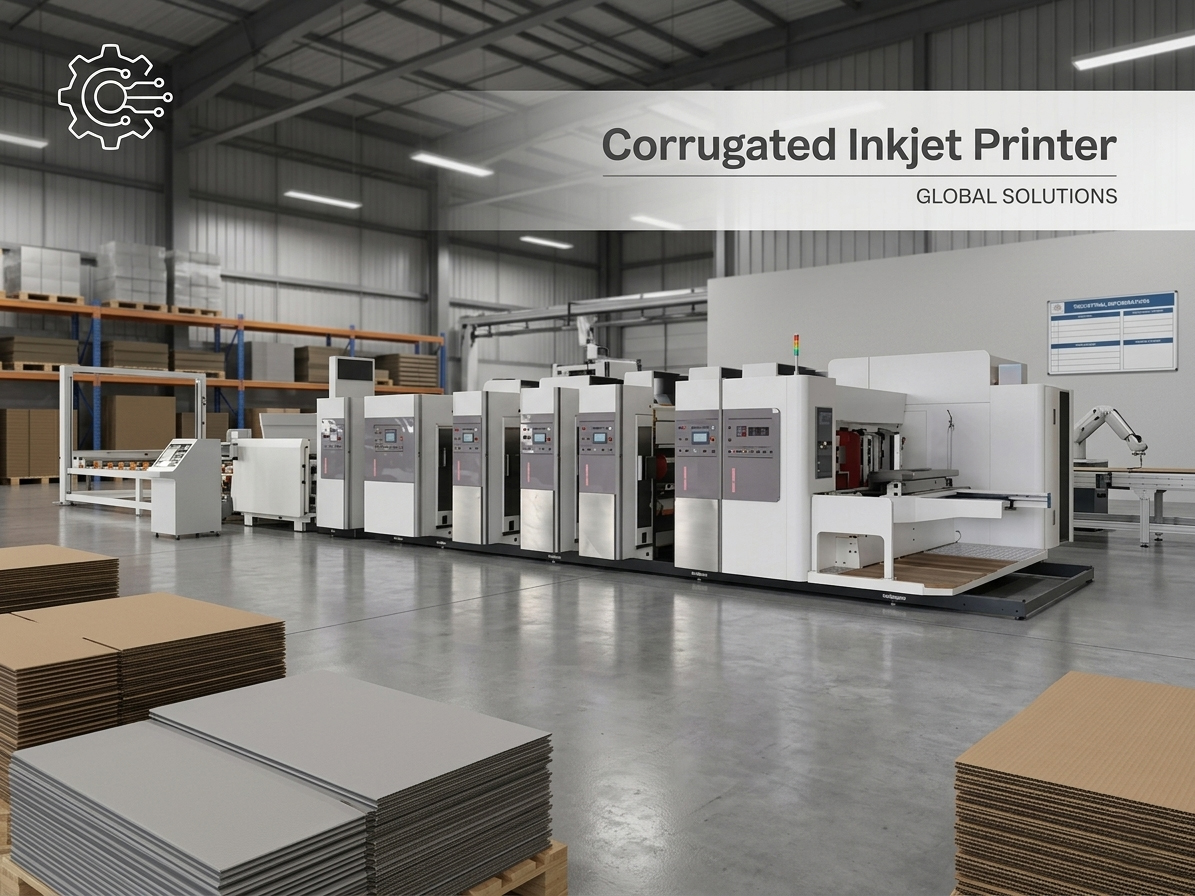
A corrugated box inkjet printer manufacturer&supplier is an industrial Original Equipment Manufacturer (OEM) that engineers, fabricates, and integrates advanced digital printing systems utilizing piezoelectric drop-on-demand (DOD) printheads to apply high-resolution text, graphics, and variable data directly onto corrugated substrates. For modern packaging plants, partnering with a tier-one OEM in this sector is a strategic mandate to permanently eliminate analog flexographic printing plates, dramatically reduce order changeover times to zero, and enable the highly profitable execution of high-mix, low-volume (HMLV) packaging runs while maintaining microscopic graphic registration at industrial line speeds.
A leading corrugated box inkjet printer manufacturer & supplier in today is defined by its ability to provide Single-Pass or High-Definition Multi-Pass digital solutions. Unlike traditional flexo, industrial inkjet systems from suppliers like Guangzhou Smart Machinery eliminate plate-making costs and setup waste, making them ideal for high-mix, low-MOQ e-commerce packaging. These printers utilize Piezoelectric printhead technology to achieve resolutions up to 1200 DPI on corrugated substrates ranging from E-flute to heavy-duty 5-ply board.”
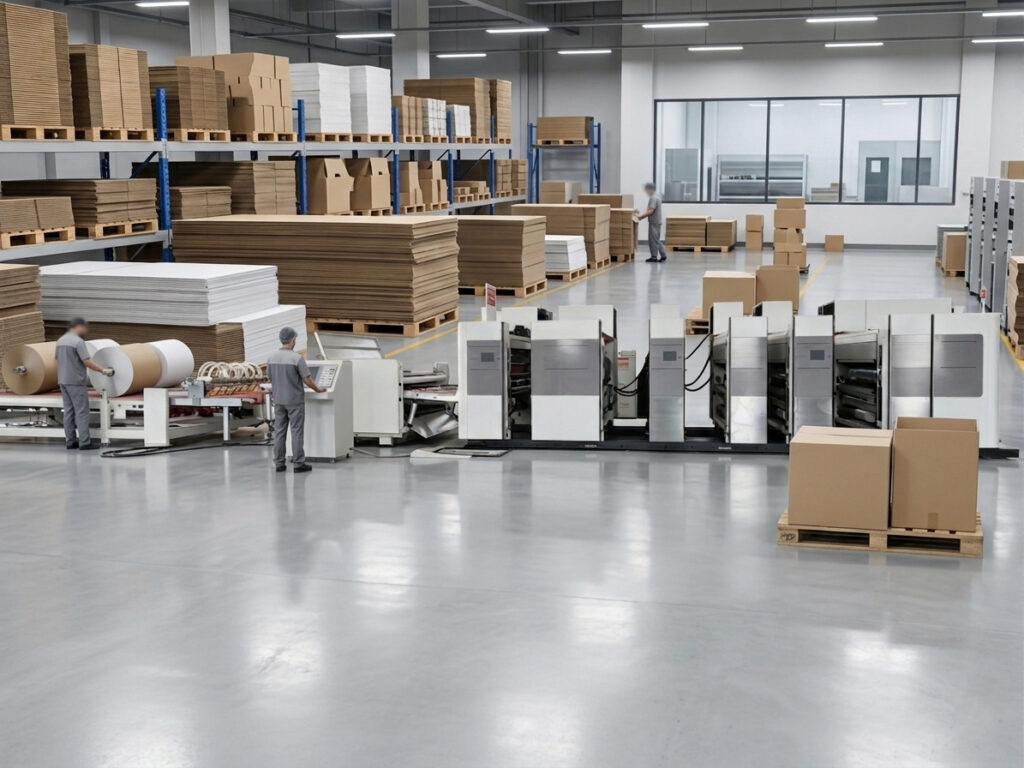
Fast Check Product: https://gzsmartmachinery.com/product/corrugated-box-printing-machine/
| Feature | Technical Specification | Manufacturing Benefit |
| Printing Technology | Single-Pass / Multi-Pass Digital | Zero plate costs; instant order changeover. |
| Printhead Brand | Industrial Piezo (Epson / Ricoh / Kyocera) | Long lifespan with high registration accuracy. |
| Max Resolution | 600 DPI – 1200 DPI | Photographic quality for retail-ready packaging. |
| Ink Type | Water-based Pigment / UV Ink | Environmentally friendly & food-safe options. |
| Board Compatibility | 3-Ply, 5-Ply, Kraft, White Top | Versatile for shipping and luxury gift boxes. |
| Production Speed | 30 m/min – 150+ m/min | Optimized for industrial-scale digital fulfillment. |
| Automation | Fully Integrated PLC & IIoT | Remote diagnostics and smart ink-level monitoring. |
The primary advantage is the elimination of plate-making costs and setup time. For runs under 1,000 units, inkjet printing is significantly more cost-effective. Additionally, Guangzhou Smart Machinery’s inkjet solutions allow for Variable Data Printing (VDP), enabling manufacturers to print unique QR codes or personalized graphics on every box—a critical requirement for modern e-commerce logistics.
While digital ink has a higher cost per liter than flexo ink, the total savings come from reduced waste. Digital printers do not require “trial sheets” for color matching, saving up to 15% in substrate waste. Modern Industrial Box Printers also feature “Smart Ink Consumption” algorithms that optimize droplet size, reducing ink usage by 10-20% for high-density graphics.
What is the corrugated box inkjet printer manufacturer for modern plants?
In the architecture of an Industry 4.0-enabled corrugated facility, a corrugated box inkjet printer manufacturer is no longer a mere vendor of printing presses; they are the architects of your facility’s digital agility. Historically, the corrugated industry relied entirely on analog flexographic slotter die-cutters. While excellent for massive, continuous runs of identical boxes, analog processes suffer from crippling setup times. Mounting polymer plates, mixing physical ink to match Pantone specifications, and washing down the anilox rollers consumes hours of potential production capacity.
A premier corrugated box inkjet printer manufacturer solves the “changeover bottleneck” entirely. By utilizing heavy-duty digital architecture, a plant can transition from printing a batch of heavily branded electronics packaging to a completely different set of variable-data e-commerce mailers instantly, without ever halting the primary drive motors. The digital file is sent from the Raster Image Processor (RIP) directly to the print engine. This capability allows Tier-2 and Tier-3 plants to capture highly lucrative, short-to-medium run regional orders that large, rigid, flexo-dependent mega-plants are forced to reject due to setup inefficiencies.
Brand Audit Value: Securing Tier-1 Global Contracts
For global packaging enterprises, the technological caliber of the printing equipment bolted to the factory floor rigidly dictates the tier of multinational clients the facility can secure. Giant multinational corporations such as Amazon, Coca-Cola, and Nestlé enforce zero-tolerance supplier audit standards regarding print fidelity, data tracking, and material compliance.
- Amazon’s Frustration-Free Packaging (FFP) & Data Integration: Amazon’s massive sorting hubs rely on extreme-velocity automated optical barcode scanners. If a printed barcode on a secondary corrugated shipper bleeds into the kraft paper fibers due to poor ink control, the barcode contrast ratio drops, and the automated scanners fail. This leads to immediate vendor chargebacks. By partnering with an elite corrugated box inkjet printer manufacturer, you deploy systems that dynamically adjust ink drop sizes to ensure razor-sharp edges and perfect contrast on variable data matrix codes, securing compliance with Amazon’s automated logistics networks.
- Coca-Cola’s Agile Marketing & Shelf-Ready Packaging (SRP): Beverage giants frequently deploy hyper-localized, seasonal, and event-driven marketing campaigns requiring complex, highly decorated shelf-ready trays. These designs change weekly. Analog printing cannot keep pace with this marketing velocity without incurring massive plate costs. Digital inkjet allows a plant to print exactly what is ordered for that specific region on that specific day, making your facility an indispensable, agile partner to Coca-Cola’s regional bottlers.
- Nestlé’s Stringent Food Safety Compliance: For primary and secondary food packaging, Nestlé aggressively audits for ink migration risks. Standard industrial UV inks contain photoinitiators that can migrate through the corrugated board and contaminate food products. A highly capable corrugated box inkjet printer manufacturer provides advanced, highly pigmented water-based polymer ink sets that are fully compliant with Swiss Ordinance and Nestlé guidance, allowing your plant to confidently pass the most rigorous food safety audits on the planet.
The Physics of Precision
Achieving flawless operational execution during high-speed digital printing on highly porous, physically inconsistent corrugated board is a brutal exercise in applied physics, fluid dynamics, and dynamic kinetic control. The architecture developed by a premium corrugated box inkjet printer manufacturer relies on an uncompromising orchestration of microscopic tolerances.
Drop-on-Demand (DOD) Piezoelectric Mechanics At the core of the system are the industrial printheads. Unlike continuous inkjet, DOD technology utilizes microscopic piezoelectric crystals located behind thousands of individual nozzles. When an electrical pulse is applied, the crystal physically deforms in a matter of microseconds, generating a precise acoustic pressure wave that forces a singular, microscopically measured drop of ink out of the nozzle. Top-tier systems manipulate drop sizes down to 3 to 5 picoliters. At web speeds of 150 m/min (492 FPM), these printheads are firing tens of thousands of times per second. If the firing timing is off by a nanosecond, the ink drop will land in the wrong physical coordinate, causing catastrophic image banding or color shifting.
Fluid Rheology and Recirculation Industrial digital inks are highly complex chemical suspensions. For the printhead to fire accurately, the ink must maintain perfect viscosity and surface tension. A premier corrugated box inkjet printer manufacturer engineers highly complex negative-pressure ink delivery systems. These systems continuously recirculate the ink directly past the back of the printhead nozzles. This constant fluid motion prevents heavy color pigments from settling and ensures that any trapped micro-air bubbles are actively purged from the system, preventing nozzle “drop-outs” (clogging) during continuous multi-shift operations.
Substrate Transport and Vacuum Stabilization Corrugated board is inherently flawed. It is rarely perfectly flat, frequently exhibiting “up-warp” or “down-warp” due to moisture variations in the single-facer process. To achieve high-resolution printing, the printheads must be positioned incredibly close to the passing substrate—typically hovering just 1.5 mm to 2.5 mm (0.05 Inches to 0.09 Inches) above the board. If a warped board lifts and physically strikes the printhead array, it will permanently destroy hardware worth tens of thousands of dollars in a fraction of a second. To counter this, an elite corrugated box inkjet printer manufacturer designs extreme-capacity vacuum transport belts. Massive variable-frequency centrifugal blowers create a severe low-pressure zone beneath the transport belt, physically forcing the rigid corrugated board perfectly flat against the conveyor surface before it enters the print engine zone.
How to Select the Right System
Procuring a heavy digital printing line requires a massive capital allocation that will rigidly dictate your facility’s graphic capabilities and profitability margins. A rigorous engineering assessment is mandatory prior to issuing a purchase order. You must critically evaluate the architecture provided by the corrugated box inkjet printer manufacturer against the brutal realities of your factory floor.
Single-Pass vs. Multi-Pass Architecture
- Single-Pass Systems: Engineered for massive volume. The printhead array spans the entire width of the machine, and the board passes underneath only once at extreme speeds, frequently exceeding 80 m/min (262 FPM). This is ideal for plants transitioning high-volume flexo work to digital. However, the capital expenditure (CAPEX) is massive, and the system requires highly sophisticated operators.
- Multi-Pass Systems (Scanning): The printheads are mounted on a heavy gantry that rapidly scans back and forth across the board as it indexes forward, similar to a massive desktop printer. While slower, these systems offer unparalleled photographic resolution and require significantly lower initial CAPEX, making them ideal for plants focusing on ultra-premium, low-volume point-of-purchase (POP) displays.
Commercial Equipment Protection and Abrasive Environments Secondary corrugated post-processing generates massive, continuous volumes of highly abrasive cellulose paper dust. This dust is the absolute enemy of microscopic inkjet nozzles. When auditing a prospective corrugated box inkjet printer manufacturer, you must scrutinize their environmental isolation engineering. The print engine housing must be actively pressurized with heavily filtered air. By maintaining positive pressure inside the print carriage, abrasive dust is physically repelled from the nozzle plates. Furthermore, the central electrical control cabinets housing the RIP servers and servo drive amplifiers must be entirely sealed to IP65 standards and climate-controlled with industrial heat exchangers.
The Raster Image Processor (RIP) Bottleneck A common engineering oversight is focusing entirely on the mechanical speed of the machine while ignoring the computational power of the RIP software. If you are printing variable data (where every single box has a unique high-resolution graphic or serial number), the RIP must process massive amounts of data in real-time. If the RIP server provided by the manufacturer cannot compute the data faster than the machine’s physical transport belt, the machine will literally stall and wait for the computer to catch up, destroying your operational throughput. Always specify enterprise-grade RIP hardware with massive multi-core processing architecture.
Total Cost of Ownership (TCO)
Factory managers, Chief Financial Officers, and international procurement teams must pivot their analytical framework from focusing solely on the upfront purchase price to aggressively analyzing the comprehensive Total Cost of Ownership (TCO). In the digital printing sector, OPEX (Operational Expenditure) often drastically outweighs CAPEX over a 10-year lifecycle.
The Paradigm of Ink Consumption Unlike analog flexography where ink is relatively inexpensive, digital inkjet ink is highly refined, thoroughly filtered, and significantly more expensive per liter. A lower-tier vendor may offer a suspiciously cheap machine but lock you into exorbitant proprietary ink contracts. A reputable corrugated box inkjet printer manufacturer will provide transparent, mathematically sound ink consumption calculation software during the procurement phase. You must evaluate the cost per square meter of print, not just the hardware invoice.
Printhead Lifecycle and Replacement Costs Piezoelectric printheads are the single most expensive consumable on the machine. While engineered to last for billions of actuations, they degrade over time due to fluid shear forces or accidental physical board strikes. You must demand clear data on the expected lifecycle of the specific printheads utilized by the manufacturer and exactly how much a replacement head costs, including the engineer’s labor to calibrate it.
ROI and Commercial Insights The ROI of a digital press is calculated differently than an analog machine. You are not just calculating speed; you are calculating the total elimination of photopolymer plates, the elimination of setup waste (which routinely consumes dozens of raw corrugated sheets per order on analog presses), and the elimination of physical ink mixing labor. Furthermore, digital capabilities allow your sales team to charge a premium for ultra-fast turnaround times and variable data campaigns, actively expanding your top-line revenue while simultaneously crushing setup-related OPEX.
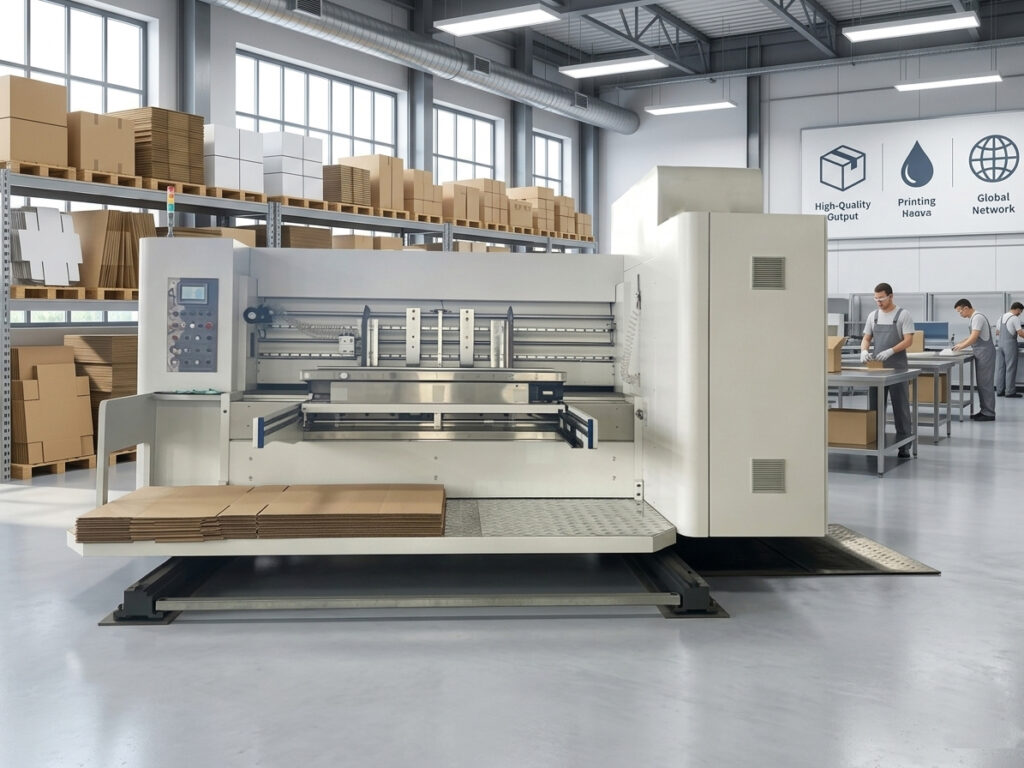
Common Mistakes in Procurement: Avoid these 5 expensive errors
Cross-national corporate procurement teams frequently fall into predictable, highly expensive commercial traps when evaluating digital systems. Avoid these five critical engineering missteps when sourcing your next line from a corrugated box inkjet printer manufacturer:
- Failing to Demand Substrate Testing (The FAT): Never purchase a digital machine based on glossy brochures. You must demand a Factory Acceptance Test (FAT) where the manufacturer runs your specific, highly flawed, warped, and dusty corrugated board from your regional supplier through their machine at maximum speed. This reveals the true capability of their vacuum transport and printhead protection systems.
- Under-speccing the Dust Extraction System: Buying a digital press without installing a massive, standalone vacuum web-cleaner prior to the print zone is a fatal error. If you allow loose cellulose fibers to enter the print zone, they will be sucked onto the wet printhead nozzle plates, causing immediate, catastrophic nozzle clogging and massive daily downtime.
- Ignoring the Color Gamut Limitations: Standard CMYK (Cyan, Magenta, Yellow, Black) digital printing cannot hit every specific Pantone color perfectly, particularly vibrant oranges or deep greens. If your major clients demand strict Pantone matching, you must ensure the manufacturer provides extended gamut options (CMYK + Orange + Green + Violet) to guarantee brand color compliance.
- Inadequate Software Integration: Procuring an isolated mechanical island of digital printing is a massive strategic failure. The system engineered by the corrugated box inkjet printer manufacturer must natively communicate bidirectionally with your plant’s central Enterprise Resource Planning (ERP) software. It must automatically pull job files, RIP them, and push real-time ink consumption data back to central management dashboards.
- Neglecting OEM Remote Diagnostics (Industry 4.0): Digital presses are incredibly complex networks of sensors, fluid pumps, and data cables. When an error occurs, your mechanical maintenance team will likely lack the IT expertise to fix it. Ensure the manufacturer provides a secure VPN gateway for rapid remote diagnostic troubleshooting. Their senior engineers should be able to log into your machine’s PLC from across the globe to diagnose pressure faults or electronic errors instantly.
FAQ
1. What is the maximum continuous running speed of a single-pass digital corrugated press? High-tier industrial single-pass systems are meticulously engineered to operate continuously at linear web speeds between 75 m/min to 150 m/min (246 FPM to 492 FPM). This allows for the production of thousands of high-fidelity boxes per hour, rivaling traditional flexographic throughput but with zero setup time.
2. Can digital inkjet systems print on highly porous, uncoated brown kraft board? Yes, but it requires highly specific ink chemistry. Standard water-based inks will soak deeply into brown kraft, resulting in dull, washed-out graphics. An elite corrugated box inkjet printer manufacturer will utilize specially formulated inks with high pigment loads or integrate a rapid inline primer/pre-coat station that seals the porous surface fractions of a second before the digital ink is applied, ensuring vibrant colors.
3. What is the standard installation and commissioning cycle for a massive digital line? A professional installation by an experienced OEM, including the massive mechanical chassis leveling, precise optical alignment of the printhead arrays, fluid system priming, and intensive software training for your operators, typically requires 14 to 30 days on-site prior to achieving consistent, sellable commercial production.
4. How does the machine handle automatic printhead cleaning and maintenance? Modern enterprise systems utilize fully automated maintenance modules. During planned pauses or shift changes, the print carriage automatically parks over a capping station. The machine then initiates automated positive-pressure ink purging to clear micro-debris, followed by a non-abrasive mechanical wiping sequence or vacuum extraction, ensuring all nozzles remain perfectly open and ready for the next job without manual human intervention.
5. What are the electrical power requirements for these massive digital lines? Depending on the curing technology, power demands vary wildly. Systems utilizing high-intensity IR (Infrared) dryers or massive hot-air blowers to cure water-based inks consume immense power. Systems utilizing low-temperature UV LED curing arrays are significantly more energy-efficient. Facility managers must prepare for heavy three-phase industrial power drops and ensure completely stable, spike-free voltage, as the sensitive RIP servers and printhead drive boards will critically fail under power fluctuations.
6. Do I need a climate-controlled room for a digital corrugated press? While some extremely robust systems are designed to operate on the open factory floor, the absolute best practice recommended by any tier-one corrugated box inkjet printer manufacturer is to enclose the digital press in a highly controlled environment. Stabilizing the ambient temperature and humidity strictly controls the fluid viscosity of the expensive inks and minimizes the expansion/contraction of the corrugated board, directly translating to superior microscopic print registration and prolonged hardware life.
7. How do I mathematically justify the premium capital cost of digital over analog? The justification relies strictly on calculating the total elimination of analog inefficiencies. Calculate your current annual costs associated with photopolymer plate manufacturing, plate storage space, physical ink mixing labor, massive setup board waste, and the highly lucrative short-run orders your sales team currently rejects. Digital printing transforms your facility from a rigid, high-volume commodity producer into an agile, premium-margin service provider.
In the highly competitive, razor-margin arena of global secondary packaging manufacturing, your printing technological infrastructure is your absolute ultimate commercial differentiator. Transitioning from legacy analog bottlenecks to a highly synchronized, variable-data capable digital manufacturing system is the defining step toward total operational dominance and securing the world’s most lucrative brand contracts. Ensure your plant floor is fully equipped to aggressively meet the massive capacity, uncompromising precision, and rigorous agility demands of tomorrow’s global supply chain.
Request a Custom TCO Analysis & Quote directly from our senior engineering team, and contact us to receive comprehensive Technical Specification Sheets and highly aggressive Global B2B Wholesale Pricing tailored precisely to your specific region for your next high-performance corrugated box printing machine integration.