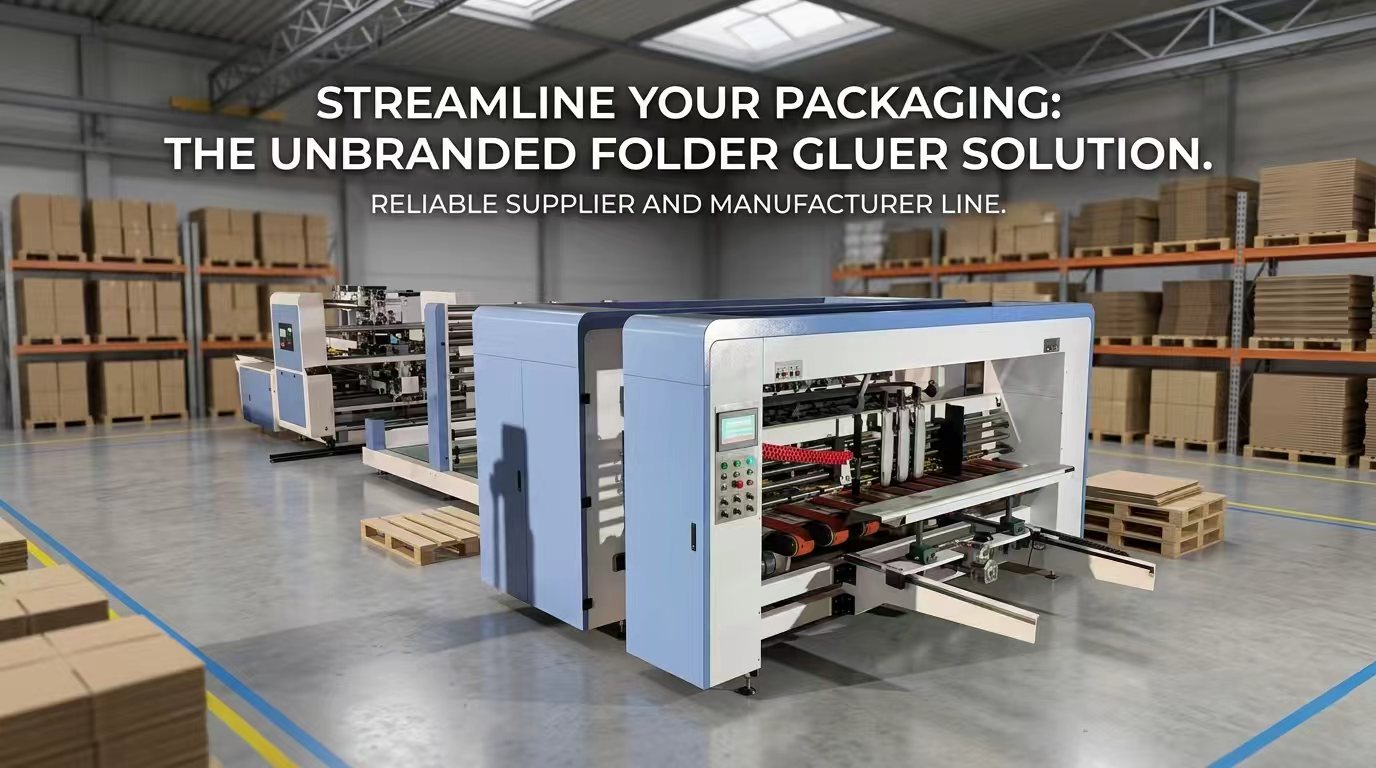
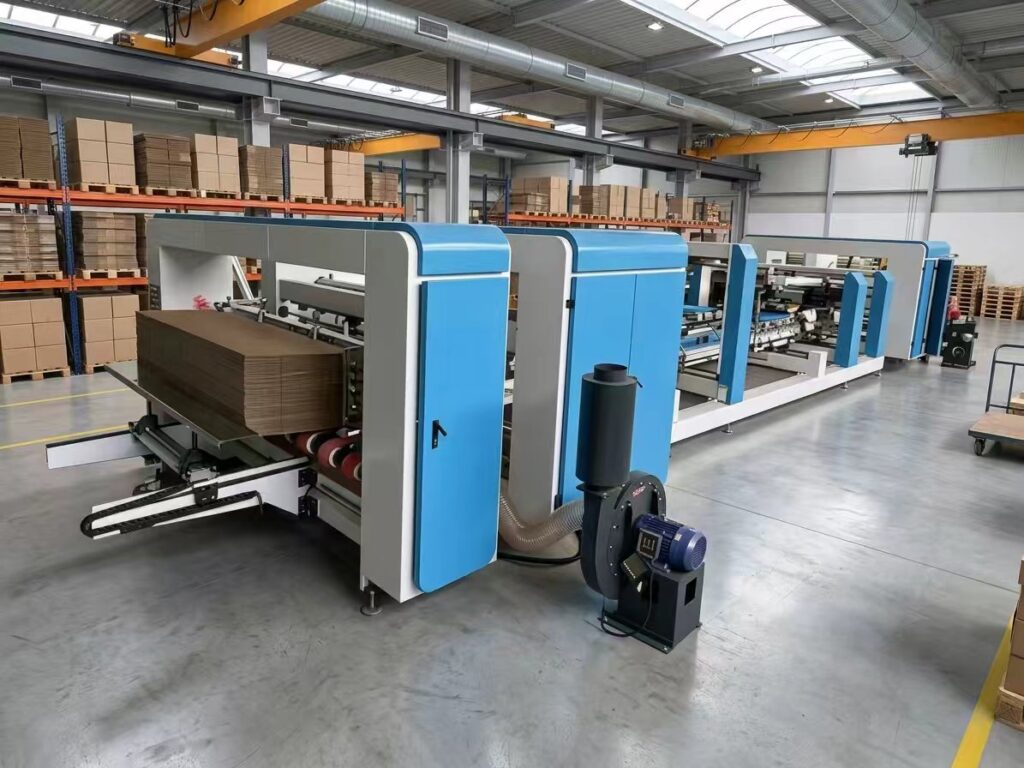
Anyone can bolt a servo motor to a bought-in steel frame and call it engineering. The question that actually separates real automatic folder gluer machine manufacturers from assemblers is who cast and machined the frame in the first place, and three benchmarks matter before a purchase order: in-house frame casting and CNC machining rather than a sourced chassis with a badge on it, independent servo synchronization across every station — feeder, pre-fold, fold, glue, stitch — rather than one motor driving shared linkages, and documented wear-component metallurgy you can verify in writing. Skip any of these and precision decays the moment the warranty period ends.
https://gzsmartmachinery.com/product/eco-automatic-folder-gluer-and-stitcher-machine/
Manufacturer Tier Comparison: Who Actually Builds the Machine
| Engineering Criterion | Trading Company / Reseller | Contract Assembler (Bought-In Frame) | Guangzhou Smart Machinery (In-House OEM) |
|---|---|---|---|
| Frame Origin | Rebadged, source unverified | Sourced chassis, assembled on-site | Cast and CNC-machined in-house |
| Drive Architecture | Single motor, shared linkage | Servo on lead axis only | Independent servo per station |
| Folding Precision | ±3–5 mm (±0.12–0.20 in), unverified | ±1.0 mm (±0.04 in) | ±0.5 mm (±0.02 in) |
| Rated Line Speed | Quoted, rarely load-tested | Up to 120 m/min (394 FPM) | Up to 180 m/min (590 FPM) |
| Control Logic | Unbranded / relay-based | Basic PLC, no remote access | Siemens/Mitsubishi PLC, documented support |
| Feed Technology | Mechanical kick-feeder | Partial vacuum assist | Full vacuum suction, single-sheet separation |
| QC Documentation | Rarely offered on request | Bench-test certificate only | Factory Acceptance Test (FAT) protocol available |
A contract assembler can hit a respectable number on paper because the servo they bought is genuinely capable. What they cannot fix is a chassis they did not design, which is why vibration and frame flex under load — not the servo itself — are usually where precision quietly erodes on a rebadged machine.
Inside the Machine: Feed, Pre-Break, Fold, Glue, Stitch
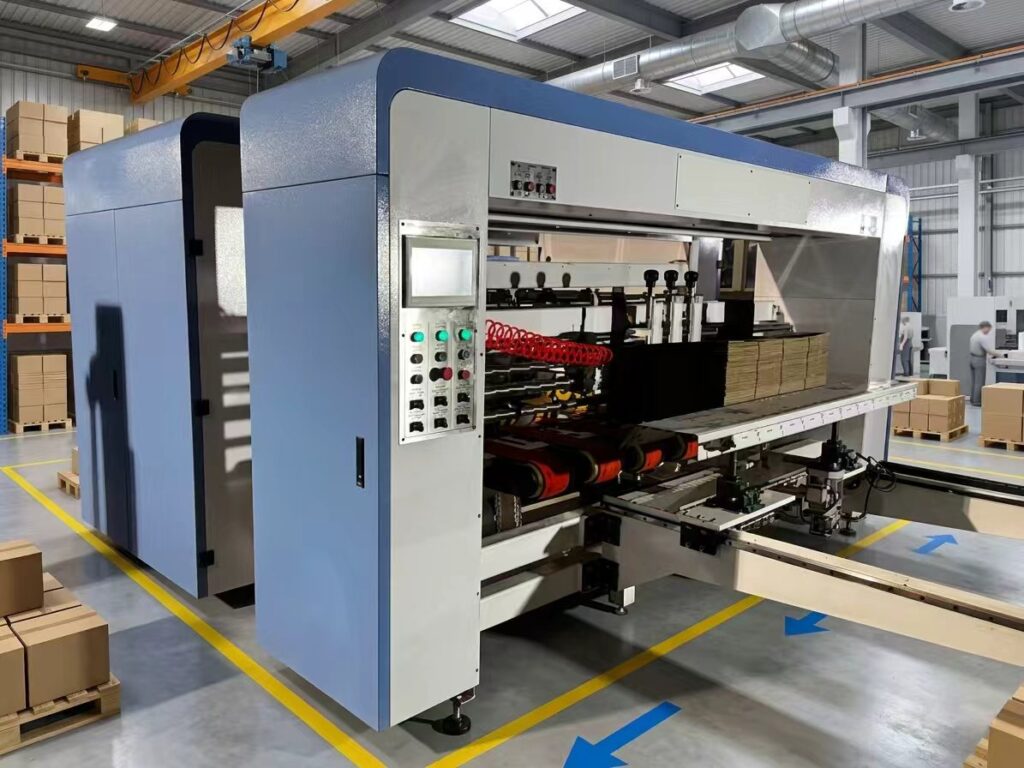
The Precision Feeder Unit opens the line with a high-accuracy vacuum suction system that separates and feeds carton blanks one at a time, holding alignment and preventing the double-feeds that cascade into jams downstream. An Advanced Pre-Breaking section conditions creases ahead of the fold, which matters most on stiff or multi-ply board that would otherwise fight the final fold and spring back against wet glue.
Intelligent Folding & Gluing routes the blank through precisely positioned guides and hooks, supporting both water-based cold glue and hot-melt adhesive through high-precision nozzles rather than a splashing mechanical wheel. The Integrated Stitching Section closes heavy-duty joints across an adjustable 30–120 mm (1.18–4.72 in) range, giving mechanical reinforcement that adhesive alone cannot replicate on transit-stressed shipping cartons.
Precision Under Load: The 180 m/min Standard
A rated top speed means nothing if tolerance collapses the moment the line actually runs at it. Independent servo drives on the leading and trailing fold axes are calibrated in real time to eliminate “fishtailing” — the scissor-like lag between panel edges that appears as speed climbs — and hold ±0.5 mm (±0.02 in) folding accuracy continuously at a rated 180 m/min (590 FPM). That consistency is what lets a carton clear automated squaring checks at a client’s receiving dock instead of getting flagged for manual rework.
Before specifying any automatic folder gluer machine manufacturer on brochure claims alone, request a Factory FAT (Factory Acceptance Test) Protocol Sheet documenting how that tolerance was measured, at what run duration, and under what board weight. A manufacturer who hesitates on this one document is telling you something about the rest of the spec sheet too.
Wear-Component Metallurgy: What Determines Year-Eight Performance
High-grip, tensile-resistant folding belts hold constant panel pressure through millions of cycles without stretching out of calibration — belt drift is the single most common cause of gradual precision loss on any folder gluer, regardless of how good the servo control was on day one. Tungsten-carbide-coated feed friction plates resist the abrasive wear of high-volume corrugated dust far longer than untreated steel, which is why a real manufacturer stocks them as standard replacement items rather than special-order parts.
High-frequency electronic glue valves fire metered adhesive shots instead of running a continuous bead, cutting starch waste while keeping the bond line consistent at full line speed. Ask any competing manufacturer for the coating spec and replacement interval on these three components before you ask about paint color or logo placement — they determine whether year eight looks like year one.
Support after the sale is the other half of the metallurgy question, and it is harder for a reseller to fake. A manufacturer that machines its own frame typically also documents its own control logic, which is what allows an engineering team to log into a shipped unit’s PLC framework over an encrypted connection to diagnose faults and validate servo timing remotely instead of waiting on a technician to cross a border. Ask directly whether that remote access is standard on your unit or an add-on quoted separately — the answer tells you how seriously the manufacturer treats the electronics they build in-house.
Total Cost of Ownership: Starch, Labor, and Downtime
Adhesive consumption is the recurring cost most TCO models underweight. Intelligent glue metering cuts starch consumption from the industry average of over 22 kg (48.5 lbs) per metric ton of board processed to under 18 kg (39.7 lbs) per metric ton — a reduction of up to 20% that compounds over the machine’s operating life.
Labor is the second lever. Consolidating feeding, pre-breaking, folding, gluing, and stitching into one servo-synchronized pass replaces several manually tended stations with a line an operator runs from a digital touchscreen, and downtime is the lever most procurement teams underprice: a vacuum-fed line that does not crush board on entry generates measurably fewer jams than mechanical kick-feeding, and every avoided jam is throughput you don’t make up on overtime.
Manufacturing Footprint: What “In-House” Actually Means
An in-house manufacturer casts and CNC-machines its own frame components rather than bolting a servo package onto a chassis sourced from a third party — this is the single fact a reseller cannot replicate, no matter how good the servo brand on their spec sheet is. Electrical configuration follows the same in-house discipline: builds run on 380V/50Hz (standard across Europe, Southeast Asia, and the Middle East) or 480V/60Hz for North America, with Siemens or Mitsubishi PLC control and IP54 or IP65-rated electrical cabinets to protect servo drives in humid or dust-heavy plant environments.
On the substrate side, the platform processes 3-ply single-wall and 5-ply double-wall corrugated board into straight-line RSC, crash-lock bottom, and multi-corner box styles, serving food and pharma cartons, electronics and luxury packaging, and e-commerce shipping boxes off the same line. None of this substrate flexibility matters if the frame underneath it flexes under load, which circles back to the casting question — a chassis that was never engineered for your board weight will show it in belt wear and drift long before the servo motors themselves fail. A genuine automatic folder gluer machine manufacturer will confirm which of these builds — voltage, PLC brand, cabinet rating — applies to the specific unit you’re ordering, not a generic catalog spec.
Vetting Checklist: What to Request Before You Sign
Return to the benchmarks that opened this audit — in-house casting, per-station servo synchronization, and documented metallurgy — and require evidence for each, not marketing copy. A quick due-diligence list before committing capital:
- Ask directly whether the frame is cast and machined in-house or sourced from a third party
- Request tolerance data at rated speed, not static bench figures
- Confirm PLC brand and spare-parts sourcing lead time in writing
- Verify electrical cabinet IP rating against your actual plant environment
- Ask for wear-component replacement intervals, not just the base warranty term
Frequently Asked Questions
Q: How can I tell if a manufacturer casts its own frame or sources it from a third party? A: Ask directly, and ask for a factory tour or video walkthrough of the casting and CNC machining floor. A manufacturer that owns this process will show it without hesitation; one that doesn’t will redirect to marketing language about “premium materials.”
Q: What folding precision should I expect from a tier-one manufacturer? A: ±0.5 mm (±0.02 in) at a rated 180 m/min (590 FPM) is the documented standard for a properly engineered platform in this class, verified under continuous load rather than a static demo.
Q: Can one machine handle both cold glue and hot-melt adhesive? A: Yes. The Intelligent Folding & Gluing section is built for both water-based cold glue and hot-melt adhesive through the same high-precision nozzle system, so adhesive choice is a settings change, not a hardware swap.
Q: What should I request before signing a purchase order? A: A Factory FAT Protocol Sheet documenting tolerance data at rated speed, wear-component specifications, PLC brand, and the voltage/frequency build matched to your site.
Ready to Audit Your Next Supplier?
Brochure specifications are a starting point, not a purchase decision. Request a Factory FAT Protocol Sheet documenting tolerance data, wear-component grade, and run-in hours before you commit capital.
For plants ready to move on pricing and lead times, inquire for Direct-Factory Wholesale B2B Pricing & Lead Times and speak directly with Guangzhou Smart Machinery’s engineering team about your board weight, box mix, and site voltage.