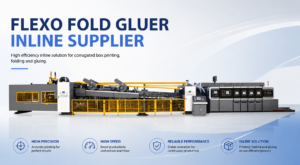
A mini folder gluer machine supplier is an elite industrial Original Equipment Manufacturer (OEM) specializing in the advanced engineering, precise metallurgical fabrication, and mechatronic integration of compact, high-velocity converting lines explicitly designed for small-format corrugated and carton board packaging. These manufacturers provide critical processing architecture utilized to fold and permanently seal micro-flute (F, E, and B-flute) and rigid carton substrates. For Chief Technology Officers, facility managers, and multinational procurement directors overseeing secondary packaging, partnering directly with a tier-one mini folder gluer machine supplier is a strategic operational imperative. It guarantees the integration of machinery capable of achieving microscopic geometric tolerances, rapid high-mix order changeovers, and continuous, violent kinetic production speeds often exceeding 300 m/min (985 FPM) for small, highly intricate multi-corner box designs before they are integrated into global distribution networks.
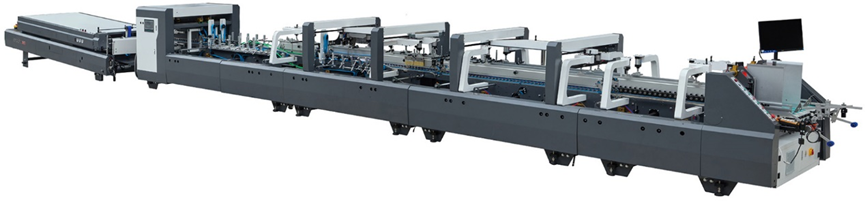
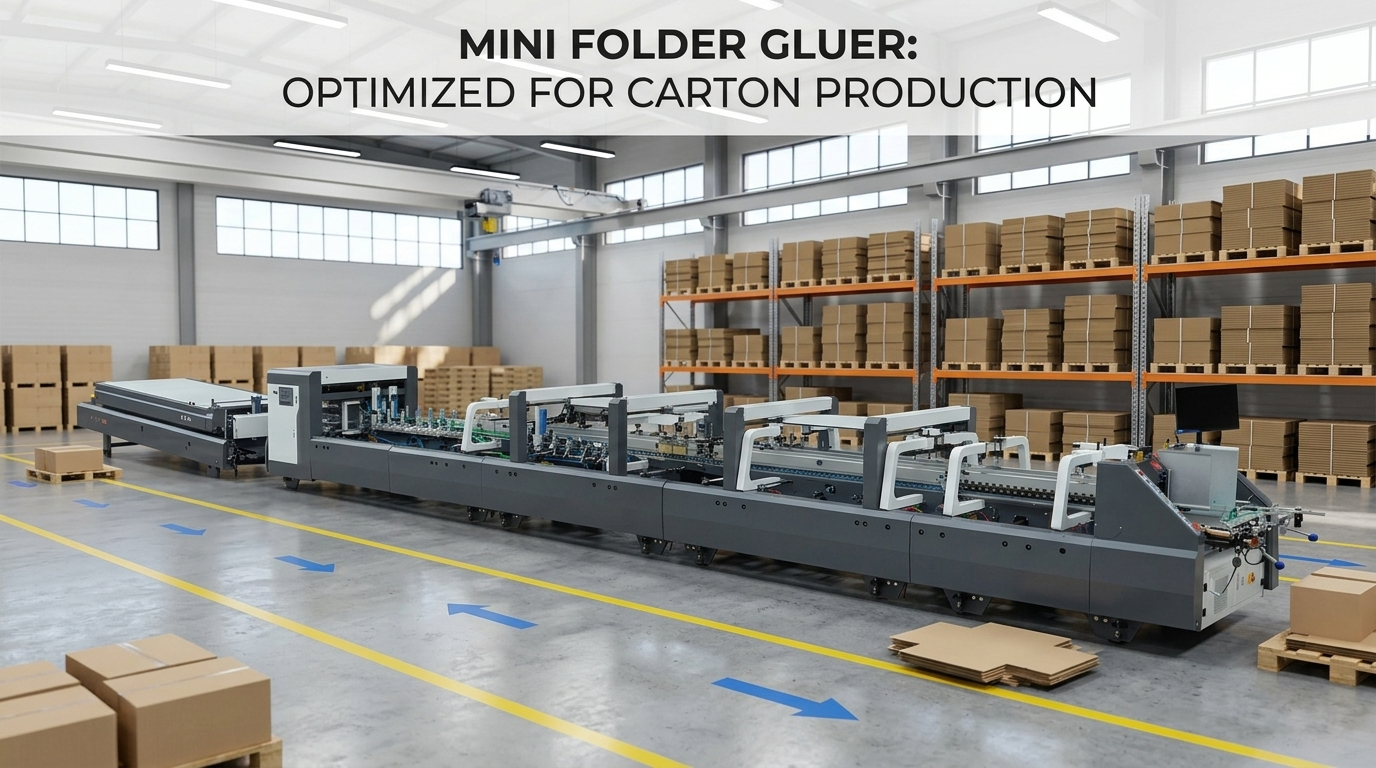
A mini folder gluer machine is a specialized conversion system designed for small-format packaging, typically handling box widths as small as 20mm to 50mm. Leading suppliers like Guangzhou Smart Machinery engineer these compact lines to process both folding carton (200-800 gsm) and small corrugated (E/F/N flute) board. Key features include independent servo-driven carriers and electronic cold-glue spray systems, which provide the high registration accuracy required for pharmaceuticals, cosmetics, and small electronic components while maintaining a significantly reduced factory footprint.

Fast Check Product: https://gzsmartmachinery.com/product/mini-flexo-folder-gluer/
| Feature | Technical specifications | Manufacturing advantages |
| Max Linear Speed | 200 – 300 m/min | High-speed output despite compact size. |
| Min Box Size | 30mm x 60mm | Ideal for pharma and cosmetic “lipstick” boxes. |
| Board Compatibility | Paperboard & Micro-Corrugated | Versatile for retail-ready and shipping boxes. |
| Glue System | 2-Gun Electronic Cold Spray | Precision application with zero adhesive waste. |
| Setup Time | < 5 Minutes (Digital Recall) | Optimized for “Small Batch” e-commerce runs. |
| Machine Footprint | Approx. 6m – 8m Length | Fits into smaller workshop or modular lines. |
| Automation Level | Full-PLC Touchscreen Control | Reduces labor costs with “Smart-Set” technology. |
Standard folder gluers often struggle with the mechanical stability required for very small blanks (under 100mm). A mini folder gluer utilizes narrower belts and specialized side-guides to prevent the blank from skewing. This specialized geometry is essential for high-speed pharmaceutical packaging where folding precision of ± 0.5mm is mandatory for automated filling lines.
High-quality mini gluers from suppliers like Guangzhou Smart Machinery are built with reinforced carriers to handle the higher “memory” of micro-flute board. This allows manufacturers to produce sturdy, small-scale corrugated boxes for electronics and high-end consumer goods without the need for a massive, full-scale industrial line.
What is the mini folder gluer machine supplier for modern plants?
To accurately conceptualize the strategic leverage provided by your equipment infrastructure, one must redefine the relationship with the vendor. In the highly complex architecture of a modern, Industry 4.0-enabled corrugated plant, a premier mini folder gluer machine supplier is not merely a transactional machinery vendor; they are a direct extension of your facility’s engineering and profitability matrix. Processing small-format boxes—such as pharmaceutical lock-bottom cartons, cosmetic crash-lock trays, and miniaturized e-commerce mailers—presents a unique set of kinetic challenges. Because the physical mass of the corrugated or carton blank is so low, maintaining absolute control over the substrate at high operational velocities requires exceptional mechatronic sophistication.
When you engage with a highly capable mini folder gluer machine supplier, you are procuring an ecosystem of continuous mechanical stability. A true enterprise-grade supplier does not simply take a large-format machine and scale down the chassis geometry. Downsized legacy equipment inevitably fails in small-format production due to disproportionate belt tensions, excessive pulley inertia, and inadequate vacuum zones. Instead, an elite supplier engineers the architecture from the ground up. They cast specialized, vibration-dampening side frames, manufacture miniaturized multi-axis servo carriers, and develop proprietary programmable logic controller (PLC) algorithms specifically tuned for the rapid kinetic acceleration required by lightweight substrates.
Brand Audit Value: Securing Tier-1 Global Contracts
For global packaging enterprises, the technological caliber of the finishing equipment bolted to the factory floor rigidly dictates the tier of multinational clients the facility can secure and retain. Massive multinational corporations such as Amazon, Coca-Cola, and Nestlé enforce zero-tolerance supplier audit standards. Their global fulfillment centers and high-speed robotic bottling plants operate on the razor’s edge of automation, where microscopic packaging variance triggers catastrophic systemic failure.
When procurement auditing teams from these global behemoths inspect a corrugated facility, they aggressively evaluate the risk of automated line jams.
- Amazon’s Frustration-Free Packaging (FFP) and E-commerce Scannability: Amazon’s massive sorting hubs rely on high-speed optical barcode scanners and automated bagging systems. If a small e-commerce mailer processed by an inferior machine exhibits “fishtailing”—an asymmetrical skew where the folded panels deviate by even 1.5 mm (0.06 Inches)—the barcode will wrap around the edge of the carton. The optical scanners will fail to read it, leading to immediate rejection, vendor chargebacks, and the loss of lucrative supply contracts.
- Nestlé’s Confectionary and Small FMCG Standards: For small confectionary and consumer health products, Nestlé utilizes extreme-velocity automated case erectors and product mandrels. If the polyvinyl acetate (PVA) glue line on a small crash-lock bottom box is misaligned by a fraction of a millimeter, the bottom will inevitably rupture when the robotic mandrel punches the product into the carton at 300 cycles per minute.
- Coca-Cola’s Promotional and Shelf-Ready Packaging (SRP): Beverage giants frequently require complex, small-format shelf-ready trays for promotional items. These require absolute structural integrity to survive multi-modal global logistics while remaining visually pristine for retail display.
Deploying a state-of-the-art platform engineered by a verified mini folder gluer machine supplier guarantees the geometric stability required to pass these unforgiving commercial audits. When your facility can definitively demonstrate to a Coca-Cola procurement director that your folding sequence is monitored by inline optical cameras validating the glue line presence and geometric squaring on every single carton—automatically ejecting defective units at full production velocity—your operational status elevates from a high-risk commodity vendor to a highly defended, strategic global supply chain partner.
The Physics of Precision
Achieving flawless operational execution during high-speed, small-format corrugated conversion is a brutal, uncompromising exercise in applied physics and dynamic control. The mechanical architecture developed by a premium mini folder gluer machine supplier relies on an exact orchestration of kinetic energy, fluid dynamics, and friction coefficients. From a senior engineering perspective, the machine is not a singular entity, but a highly synchronized sequence of microscopic tolerance zones.
The Feeder Section: Overcoming Static Inertia in Low-Mass Substrates The operation originates at the primary feeder, where the static pile of die-cut blanks must be systematically separated and accelerated into the machine gap perfectly parallel to the chassis frames. Substandard machinery utilizes rudimentary friction belts that severely struggle with warped micro-flute board, frequently dragging multiple sheets simultaneously or skewing the blank before it even enters the pre-fold section. An elite machine sourced from a specialized mini folder gluer machine supplier utilizes an independent, highly responsive servo-driven electronic feed system augmented with variable-frequency vacuum suction. High-capacity centrifugal blowers generate a localized low-pressure zone beneath the feed belts, forcing the lightweight, often severely warped die-cut blank flat against the high-friction elastomer belts. This aerodynamic mastery ensures perfectly timed, single-sheet separation, entirely eliminating the micro-stoppages that routinely cripple daily factory throughput.
The Pre-Folding Section: Fracturing the Memory of Micro-Flutes Corrugated board and heavy carton board possess strong inherent physical “memory.” If a score line is only folded 90 degrees during final assembly, the internal tension of the crushed flutes and kraft liners will actively attempt to pull the tiny box open, placing immense, concentrated shear stress on the wet adhesive joint. To neutralize this physical resistance, high-tier equipment engineered by a leading mini folder gluer machine supplier is equipped with an extended, highly aggressive pre-folding section. Specialized helical plows and motorized continuous belts forcefully break the primary crease (fold number one) to a full 180 degrees, and the secondary crease (fold number three) to 135 degrees, before instantly returning them to a flat trajectory. This aggressive pre-fracturing completely destroys the resistance of the substrate. When the miniature box reaches the main folding section, it folds with absolute zero mechanical resistance, ensuring perfectly square geometry and preventing the glue joint from detonating in the compression section.
Fluid Dynamics in Micro-Adhesive Deposition The ultimate structural integrity of any packaging vessel relies entirely on the precise deposition of a polyvinyl acetate (PVA) adhesive bead. Applying this fluid at extreme velocities to miniature glue flaps—often narrower than 12 mm (0.47 Inches)—is a highly complex exercise in fluid rheology. Legacy systems rely on bottom-mounted mechanical glue wheels rotating in an open physical sump. While robust for massive agricultural boxes, these wheels suffer from violent centrifugal splashing at speeds exceeding 250 m/min (820 FPM) and cannot physically apply glue to the complex upper flaps required for 4-corner and 6-corner miniature designs. Modern engineering mandates the integration of non-contact, high-pressure electronic extrusion systems. Top-tier platforms from a reputable mini folder gluer machine supplier utilize electromagnetically actuated applicator heads. These advanced valves open and close in fractions of a single millisecond, firing precise micro-beads of adhesive onto the exact coordinates of the rapidly moving board without ever physically touching the substrate. This entire fluid deposition process is continuously monitored by integrated ultra-high-speed optical sensors.
The Main Folding Section: Eliminating Uncontrolled Trajectory Deviation As the lightweight board travels rapidly through the main folding section, the lateral panels are swept upward and over by precisely tensioned helical folding belts. At extreme operational speeds, maintaining total physical control of a small, low-mass corrugated blank is exceptionally difficult. Inferior chassis designs or poorly synchronized upper carrier belts lead to a total loss of physical kinetic control, resulting in uncontrolled trajectory deviation at the crash-lock station—a catastrophic physical failure where the blank twists violently out of alignment and impacts the safety guards. To definitively prevent this kinetic chaos, an advanced system provided by a dedicated mini folder gluer machine supplier utilizes highly synchronized independent AC servo motors on all lateral folding belts. If the sensor arrays detect the carton beginning to skew even fractionally, the primary PLC micro-adjusts the velocity of one belt relative to the other, dynamically steering the miniature carton back into perfect geometric alignment while moving at maximum velocity.
Trombone and Compression: The Critical Curing Phase Once folded, the miniature cartons enter the trombone (shingle) section in a continuous overlapping stream, before finally passing into the heavy compression delivery unit. The physics here violently shift from kinetic acceleration to heavy static pressure. The overlapping ratio (shingle pitch) must be precisely calculated by the PLC based on the exact millimeter length of the miniature carton to ensure the correct distribution of heavy pressure across the delicate glue joint. The compression section, utilizing heavily weighted, synchronized upper and lower sponge belts, must hold the boxes under firm, perfectly flat, and even pressure for a sufficient duration to allow the water carrier in the PVA adhesive to migrate deeply into the porous kraft paper fibers, creating an unbreakable, fiber-tearing bond. If the compression section engineered by the mini folder gluer machine supplier is inadequately specified or too short for the required line speed, the small boxes will forcefully spring open the moment they reach the robotic palletizing station.
How to Select the Right System
Procuring a new manufacturing line is a massive, highly strategic capital allocation that will rigidly dictate your facility’s downstream finishing capabilities and profitability margins for decades. A rigorous, uncompromising engineering and commercial assessment is mandatory prior to issuing a purchase order. The selection process must critically account for your specific regional market demands, existing product mix volatility, substrate variations, and harsh ambient environmental factory conditions. A universally perfect machine does not exist in industrial manufacturing; there is only the perfect technical configuration engineered explicitly for your operational profile by a highly competent mini folder gluer machine supplier.
Analyze Your Order Mix and Changeover Dynamics: The primary determining factor in specifying complex converting equipment is understanding your facility’s order volatility. To deeply illustrate this critical concept, we analyze distinct global deployment environments based on extensive international project histories:
- High-Mix, Low-Volume (HMLV) Near-Shoring Markets (e.g., North America, Western Europe): Facilities servicing agile e-commerce brands, local bespoke cosmetic displays, and highly regulated pharmaceutical sectors face constant, relentless SKU (Stock Keeping Unit) changes. In these high-wage markets, mechanical setup time is the absolute enemy of plant profitability. A system deployed here by a leading mini folder gluer machine supplier must feature fully computerized, multi-axis motorized carriers. When the factory operator scans a barcode from the central ERP production ticket, the machine’s internal PLC recalls the exact recipe. Dozens of servo motors automatically traverse the heavy side frames, upper carriers, and electronic glue pots to the exact millimeter coordinates within 3 to 5 minutes. Relying on manual wrench-and-ruler adjustments is commercially unviable, destroys OEE (Overall Equipment Effectiveness), and rapidly consumes labor margins.
- High-Volume, Extreme-Fidelity Markets (e.g., Japan, South Korea): Premium electronics packaging and high-end consumer goods in these regions demand zero-defect, highly decorated visual fidelity. Installations engineered for these unforgiving markets by a specialized mini folder gluer machine supplier prioritize fixed-architecture, ultra-rigid drive systems with maximum vacuum stabilization and exhaustive inline optical defect ejection matrices. The machine must be capable of processing delicate, highly coated carton boards without inducing a single micro-scratch on the printed surface, necessitating specialized non-marking synthetic belts and advanced aerodynamic transit technology.
Commercial Equipment Protection and Operational Stability: When actively auditing a prospective manufacturer, you must look far beyond the gleaming exterior paint and meticulously scrutinize the internal component protection mechanisms. Secondary corrugated post-processing generates massive, continuous volumes of highly abrasive cellulose paper dust, which acts as a ruthless grinding compound on exposed linear guides, bearings, and transmission gears. Ensure the platform provided by the mini folder gluer machine supplier features fully enclosed, sealed linear guide rails and centralized automated micro-dosing lubrication systems. These critical systems push a continuous, precisely measured film of synthetic grease to aggressively purge external contaminants from the bearing blocks. Furthermore, the electrical control cabinets housing the central nervous system of the machine must be entirely sealed to strict IP65 standards and climate-controlled, utilizing industrial heat exchangers to prevent conductive carbon dust from infiltrating the cabinet and short-circuiting the highly sensitive, massively expensive servo drive amplifiers.
Total Cost of Ownership (TCO)
Factory managers, Chief Financial Officers, and international procurement teams must radically pivot their analytical framework from focusing solely on the upfront procurement purchase price (CAPEX) to aggressively analyzing the comprehensive, long-term Total Cost of Ownership (TCO). In the heavy packaging machinery sector, the cheapest initial invoice from a lower-tier vendor almost universally results in the most devastating long-term financial liabilities and lost commercial opportunities.
The Danger of the Secondary Market Trap: While facility managers operating under incredibly strict budget constraints are frequently tempted to explore the secondary machinery market—where used carton gluing machines often trade at highly deceptive price points ranging from 30% to 60% of the cost of a new model—the hidden TCO of these degraded assets quickly obliterates any theoretical initial capital savings. A heavily used machine typically harbors crystallized grease deep within inaccessible bearings, micro-fractures in the main mechanical drive shafts, and most dangerously, obsolete proprietary electrical components. When a 15-year-old proprietary servo drive amplifier catastrophically fails, and the original manufacturer no longer supports the software architecture, your entire downstream finishing department is completely paralyzed for weeks while engineers attempt to painstakingly retrofit modern controls. Investing exclusively in a brand-new, tier-1 system guarantees uninterrupted access to current-generation remote telemetry, comprehensive OEM warranties, and highly responsive global spare parts networks.
Energy Consumption and Regenerative Efficiency: Legacy converting equipment relied entirely on massive, continuously running AC induction motors mechanically coupled to long, heavy line shafts that wasted staggering amounts of electricity generating useless heat, harmonic vibration, and ambient factory noise. Modern enterprise systems engineered by an elite mini folder gluer machine supplier utilize highly intelligent, regenerative AC servo drives. These advanced drives dynamically capture kinetic energy during the rapid deceleration phases of the machine cycle and redistribute that precise electrical energy directly back to other accelerating axes via a shared internal DC bus. Coupled with intelligent, sensor-driven variable frequency vacuum blowers that only engage when substrate board is actively present, a modern system can mathematically reduce the specific energy consumption per thousand boxes by up to 35%, drastically lowering overhead operational expenses (OPEX).
Scrap Reduction, Material Yield, and ROI Analysis: Raw packaging material costs constitute the absolute largest operating expense line item in any converting business. A poorly calibrated, budget-tier machine might generate 2% to 5% scrap daily due to extended manual setup waste, catastrophic glue smearing, geometric skewing, or crushing in the primary feed section. Because micro-flute and premium coated carton boards are significantly more expensive per square meter than standard brown kraft, high scrap rates on small boxes are financially ruinous. By utilizing a high-precision platform engineered by an elite mini folder gluer machine supplier, equipped with electronic memory recall, motorized positional adjustments, and highly aggressive inline optical defect ejection, modern plants can aggressively drive their finishing scrap rates well below 0.3%. When a facility is processing tens of millions of square meters of board annually, saving just 1.5% in raw materials immediately amortizes the premium cost of top-tier equipment, frequently yielding a full return on investment (ROI) well within the initial 18 to 24 months of continuous operation.
Common Mistakes in Procurement: Avoid these 5 expensive errors
Cross-national corporate procurement teams, particularly those operating strictly from remote financial spreadsheets and heavily disconnected from the abrasive, highly dynamic physical realities of the factory engineering floor, frequently fall into predictable, highly expensive commercial traps. Avoid these five critical engineering missteps when sourcing your next finishing line from a mini folder gluer machine supplier:
- Purchasing “Downsized” Large Machines Instead of Purpose-Built Platforms: Buying a large-format machine that claims it can “also run small boxes” to save on purchasing two distinct lines is a fatal strategic error. Large machines lack the precise, tightly spaced upper carriers and miniaturized folding plows required to manipulate tiny panels. They physically cannot maintain control of low-mass substrates at high speeds. You must explicitly demand a purpose-built, miniaturized platform from your mini folder gluer machine supplier.
- Under-speccing Drive Synchronization: Procuring a machine reliant on long mechanical chains and universal joints to save on initial capital expenditure guarantees kinetic backlash. Mechanical chains physically stretch over time, systematically destroying microscopic folding accuracy at high speeds. Always specify full independent AC servo drives on all major mechanical sections (feeder, pre-fold, final fold, trombone) to guarantee perfect electronic synchronization.
- Ignoring Automated Optical Glue Inspection Systems: Shipping a highly condensed pallet of pharmaceutical or cosmetic boxes where the structural adhesive line is missing is a catastrophic failure that triggers immediate customer rejections, massive financial chargebacks, and the loss of the account. Failing to integrate optical camera inspection systems directly after the extrusion valves allows defective boxes to be palletized. An enterprise machine from a tier-1 mini folder gluer machine supplier must automatically verify the glue bead and pneumatically eject non-conforming cartons without human intervention.
- Inadequate Compression Section Length: Procurement teams often attempt to aggressively save factory floor space and capital by specifying a noticeably shorter final compression unit. This is a critical mechanical error, particularly when operating in cold, high-humidity environments. If the machine operates at 350 m/min (1148 FPM) but the compression section is too short, the miniature cartons will not remain under static pressure long enough for the PVA adhesive to fully cross-link and cure. The boxes will subsequently burst open on the pallet.
- Neglecting Industry 4.0 Software Integration and Telemetry: Purchasing an isolated mechanical island of automation is a massive strategic failure. Your new equipment must natively communicate bidirectionally with your plant’s central Enterprise Resource Planning (ERP) software. The equipment provided by the mini folder gluer machine supplier must seamlessly download complex job recipes automatically and push real-time production data, precise waste metrics, and machine state telemetry back to central management dashboards. Furthermore, ensure the manufacturer provides a secure VPN gateway for rapid remote diagnostic troubleshooting by their senior engineers.
FAQ
1. What is the maximum continuous running speed of a specialized small-format folder gluer? Top-tier industrial systems meticulously engineered specifically for small substrates operate continuously at linear web speeds frequently between 300 to 450 meters per minute. Depending on the specific millimeter length of the miniature carton, this equates to approximately 984 FPM to 1476 FPM, allowing for the astonishing production of over a hundred thousand miniature cartons per hour. Sustaining these extreme kinetic velocities necessitates the heavy integration of automated high-speed packers.
2. Can this high-speed machinery handle both extremely delicate carton board and micro-flute corrugated? Yes, provided the platform engineered by the mini folder gluer machine supplier is explicitly specified during the preliminary engineering phase with precise motorized electronic caliper controls and robust, non-crush carrier designs. Advanced systems can seamlessly adjust the upper carrier heights and pressure parameters via PLC control to perfectly process highly delicate solid bleached sulfate (SBS) carton board at 0.3 mm (0.01 Inches) up to rigid E-flute corrugated without crushing the internal flutes or scratching the printed graphics.
3. How long does a full dimensional and complex structural order changeover take on a modern machine? With full multi-axis servo automation and heavily motorized carriers specified from an elite mini folder gluer machine supplier, a complete dimensional changeover from a standard straight-line box to a highly complex crash-lock bottom configuration can be flawlessly executed without manual wrenches or rulers in just 3 to 6 minutes. The operator simply recalls the saved SKU recipe from the primary touchscreen HMI, and the machine automatically adjusts all lateral widths, belt tensions, and glue gun firing coordinates simultaneously.
4. Why is electronic extrusion gluing strictly required for small boxes instead of traditional mechanical wheel gluing? While mechanical wheel gluing is highly robust for standard straight-line bottom gluing on large boxes, it is fundamentally incapable of processing complex small boxes. Electronic extrusion utilizes high-pressure piston pumps and electromagnetically actuated non-contact valves to shoot precise, microscopic dots or thin lines of glue onto tiny, highly specific coordinates on the upper flaps. Extrusion is absolutely mandatory for complex crash-lock bottoms, 4-corner, and 6-corner miniature boxes where glue must be applied to specific upper panels without touching or smearing the rest of the board surface.
5. How does the machine prevent highly lightweight boxes from skewing during high-speed transit? Elite equipment decisively prevents skewing through the independent servo control of the left and right main folding belts, intimately combined with precise pre-folding conditioning and high-volume vacuum assistance. If the micro-flute board is perfectly scored on the die-cutter, aggressively pre-folded to destroy its physical memory, and driven by belts that are electronically synchronized to within fractions of a millimeter by the mini folder gluer machine supplier, the miniature carton is physically forced to close perfectly square.
6. Do these specialized machines require heavily customized environmental controls within the factory? While not requiring a fully classified cleanroom, extreme ambient environments heavily impact the chemical curing dynamics of standard PVA adhesive and the physical moisture content of the board. Operating in freezing conditions drastically slows the glue curing time, while extreme heat and low humidity can cause the glue to skin over before the box is folded. An elite system from a mini folder gluer machine supplier is often specified with specialized heated compression belts or specific adhesive applicator heads to mathematically compensate for regional environmental extremes and ensure consistent joint integrity.
7. How do I mathematically justify the premium capital cost of a top-tier machine over a budget alternative? The commercial justification is purely mathematical and relies entirely on Total Cost of Ownership (TCO). Calculate your current annual factory costs associated with manual setup downtime, scrapped raw material (expensive micro-flute and coated carton board), completely rejected shipments from multinational clients due to poor dimensional quality, and emergency reactive maintenance on legacy equipment. A premium machine systematically slashes changeover times, heavily reduces scrap to below 0.3%, and guarantees the microscopic quality that actively attracts highly lucrative, tier-one global brand contracts. The ROI is typically achieved incredibly rapidly through sheer operational efficiency.
In the highly competitive, razor-margin arena of global secondary packaging manufacturing, your post-processing technological infrastructure is your absolute ultimate commercial differentiator. Transitioning from legacy, mechanically worn manual processes or inappropriately sized machinery to a highly synchronized, precisely miniaturized automated manufacturing system is the defining step toward total operational dominance. Ensure your plant floor is fully equipped to aggressively meet the massive capacity, uncompromising precision, and rigorous efficiency demands of tomorrow’s global supply chain.
Request a Custom TCO Analysis & Quote directly from our senior engineering team, and contact us to receive comprehensive Technical Specification Sheets and highly aggressive Global B2B Wholesale Pricing tailored precisely to your specific region for your next high-performance mini folder gluer machine supplier partnership.