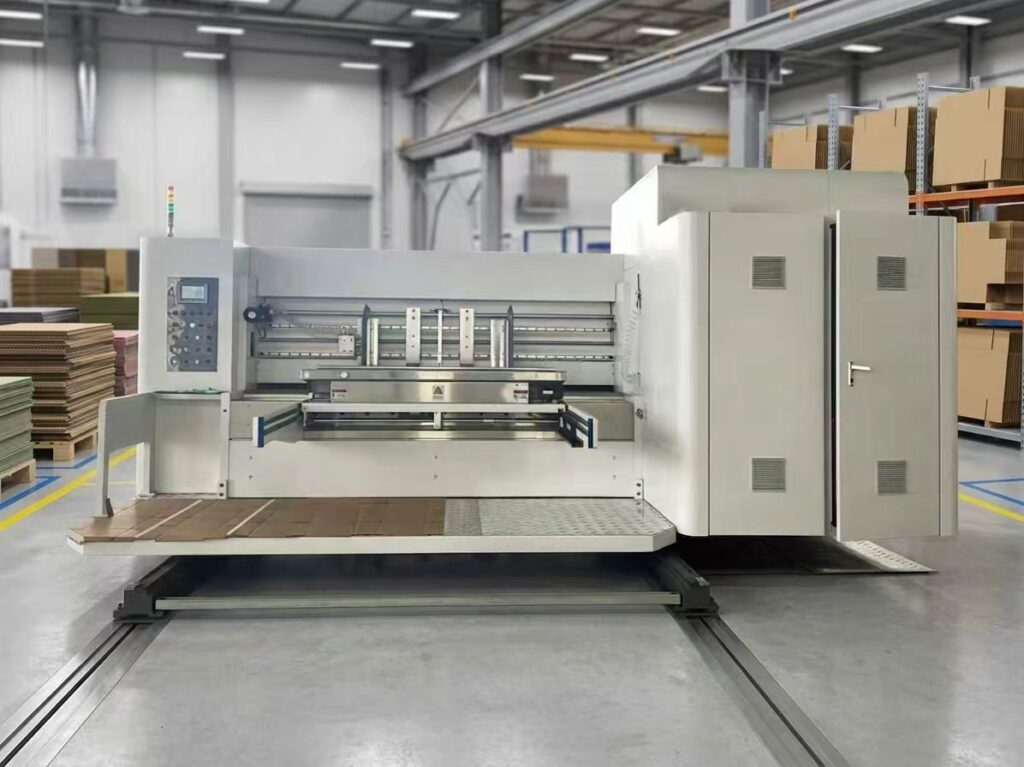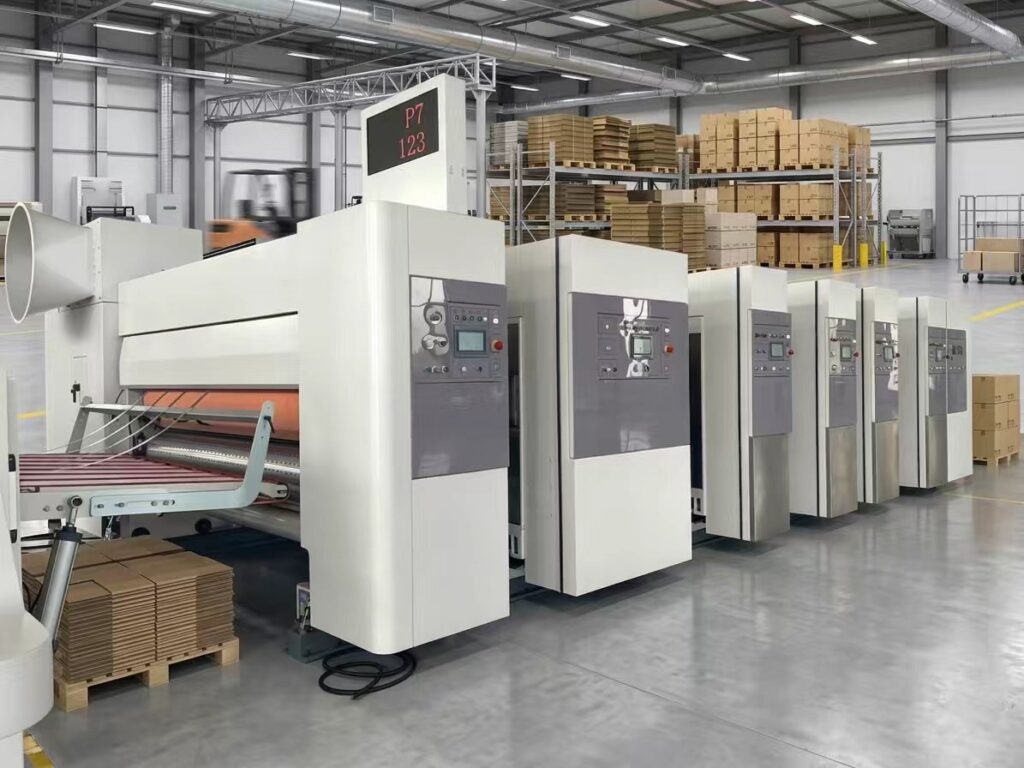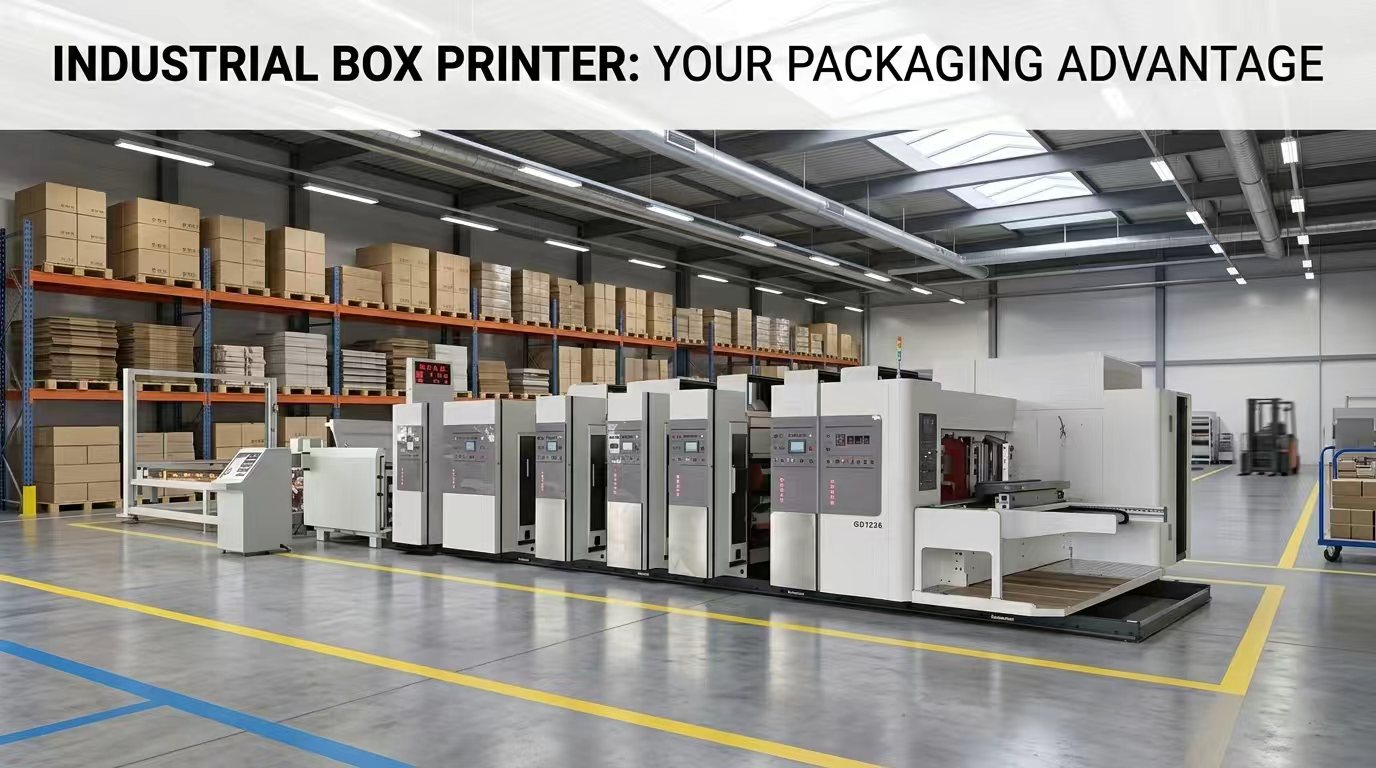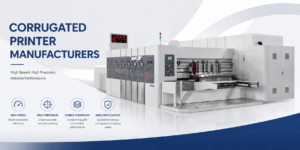
For factory managers, Chief Technology Officers, and cross-national procurement directors evaluating capital equipment for high-volume corrugated packaging production, understanding the core technology of your primary converting center is paramount. When addressing the fundamental question of how to optimize throughput and minimize material waste, the definitive answer is the strategic implementation of an advanced industrial box printer. Fundamentally, this equipment is a heavy-duty, high-speed rotary flexographic manufacturing system engineered to precisely deposit specialized water-based inks onto fluted corrugated substrates at extreme operational scale. It forms the critical primary node of any carton manufacturing line, dictating the overall quality, dimensional stability, and graphical fidelity of the final secondary or tertiary packaging. At Guangzhou Smart Machinery, our two decades of engineering doctrine dictate that deploying this foundational architecture with exact specifications eliminates severe operational bottlenecks, directly driving down labor overhead and drastically reducing work-in-progress inventory on the factory floor.
An industrial box printer is a heavy-duty production system engineered for high-speed graphics application on corrugated board and folding cartons. In today, the industry standard has shifted toward high-definition flexographic units and industrial-pass digital printers that feature vacuum transfer systems and servo-driven registration. These machines enable packaging plants to achieve printing speeds of 250+ sheets per minute while maintaining a registration precision of ±0.35mm, essential for retail-ready packaging (RRP).
Fast Check Product:https://gzsmartmachinery.com/product/corrugated-box-printing-machine/

| Feature | Technical Specification | Industrial Benefit |
| Max Production Speed | 200 – 350+ sheets/min | Ideal for high-volume wholesale fulfillment. |
| Printing Technology | High-LPI Flexo / Single-Pass Digital | Crisp, high-contrast logos and barcodes. |
| Registration Control | Independent Servo-Drive System | Eliminates mechanical backlash and gear wear. |
| Feeding Mechanism | Vacuum Lead-Edge (Non-Crush) | Preserves structural ECT (Edge Crush Test) value. |
| Ink Management | Automated Wash-up / Circulation | Reduces downtime during color changes by 60%. |
| Automation Level | Industry 4.0 PLC Integration | Real-time production tracking |
The choice depends on Run Length and Graphics Complexity. For short-run, highly customized e-commerce boxes, digital printers offer zero-plate costs. However, for industrial-scale production (wholesale), High-Speed Flexo Printers from manufacturers like Guangzhou Smart Machinery remain the superior choice due to significantly lower consumable costs and higher mechanical durability.
Vacuum transfer uses suction to hold the corrugated sheet firmly against the transport belt. This is critical for multi-color registration, as it prevents the sheet from slipping between printing units, ensuring that colors align perfectly even at maximum production speeds.
What is the flexo printer folder gluer inline casemaker for modern plants?
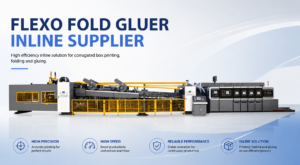
To fully grasp the capabilities of a modern facility, one must understand how an industrial box printer integrates into the broader automated ecosystem. The optimal machinery infrastructure for a modern corrugated plant is one that seamlessly balances ultra-high-speed processing with zero-defect quality control. While bespoke standalone printers have their place for highly specialized, ultra-low-volume displays, the undisputed workhorse for Regular Slotted Cartons (RSC) and standard die-cut wrap-arounds is the integrated continuous line, commonly known as the flexo printer folder gluer inline casemaker. Within this integrated behemoth, the industrial box printer serves as the technological vanguard. It is the section responsible for the primary value addition: transforming a blank brown or white kraft board into a branded, compliant, and scannable commercial asset.
The defining characteristic of a premium inline system is its capability to maintain microscopic registration at continuous production speeds exceeding 350 m/min (1148 FPM) while processing board calipers ranging from delicate E-flute micro-corrugated to heavy-duty double-wall AB-flute up to 11 mm (0.43 Inches) thick. A true enterprise-grade architecture fundamentally transforms plant floor dynamics by consolidating up to four separate machine centers (printing, slotting, die-cutting, and folding/gluing) into one linear footprint. This architectural consolidation minimizes material handling, which is the primary source of board crush and caliper loss that degrades structural integrity. Furthermore, modern equipment architecture mandates closed-loop quality assurance. High-speed optical camera inspection systems, integrated immediately after the printing stations of the industrial box printer, monitor register accuracy and color density in real-time, instantaneously ejecting non-conforming cartons without interrupting the main drive velocity.
Brand Audit Value: Securing Tier-1 Global Contracts
For global packaging manufacturers, the capital equipment active on your floor dictates the caliber of multinational clients you can secure. Multinational corporations such as Amazon, Coca-Cola, and Nestlé enforce rigorous, zero-tolerance supplier audit standards. These brands utilize highly automated, high-speed robotic box erectors and case packers in their fulfillment centers and bottling plants. If a corrugated box exhibits “fishtailing” (a geometric skew in the folded box), barcode smearing due to poor ink drying, or a manufacturer’s joint gap variation exceeding 2 mm (0.08 Inches), it will inevitably jam the automated case packers, causing catastrophic downtime on a multi-million dollar distribution line.
Deploying a state-of-the-art industrial box printer integrated within a high-fidelity inline system guarantees the dimensional and graphical stability required to pass these stringent commercial audits. Coca-Cola’s supplier guidelines, for instance, demand absolute color consistency across thousands of pallets, while Amazon requires perfect barcode legibility to ensure their automated sorting centers function without interruption. Advanced inline squaring sections and independent servo-driven folding belts ensure the leading and trailing edges of the carton align with geometric perfection. When your facility can demonstrate to a Nestlé procurement director that your machinery automatically measures color densitometry and corrects print registration on every single box at production rates of 300 boxes per minute, you elevate your operational status from a high-risk commodity vendor to a strategic, irreplaceable packaging partner capable of protecting their global supply chain.
The Physics of Precision
Achieving flawless execution at high kinetic speeds is an exercise in applied physics. The modern industrial box printer relies on an exact, unyielding orchestration of pneumatics, kinematics, and fluid dynamics. From a senior engineering perspective, the machine must be viewed not as a single assembly of steel, but as a sequence of highly synchronized, microscopic tolerance zones.
Vacuum Transfer and Substrate Control: Legacy mechanical roll-to-roll transfer systems inevitably crushed the corrugated flutes during the printing process, severely compromising the structural Edge Crush Test (ECT) and Box Compression Test (BCT) values of the final carton. Contemporary iterations of the industrial box printer utilize full vacuum transfer across the entire printing section. High-efficiency variable-speed centrifugal blowers create a localized, precisely controlled low-pressure zone, pulling the corrugated board upward against precision-ground, perforated transport belts. This aerodynamic control ensures the board is held perfectly flat during transit between individual color printing units, entirely eliminating mechanical slippage and maintaining print registration tolerances of ± 0.5 mm (± 0.02 Inches). This non-crush transit is the critical differentiator when processing lightweight, recycled linerboards that are increasingly mandated by global sustainability initiatives.
Servo-Drive Synchronization and Kinetic Backlash Elimination: The transition from traditional mechanical gear-train drives to independent direct-drive AC servo motors is the most significant technological leap in modern converting history. A traditional mechanical drivetrain suffers from kinetic backlash—the microscopic play between gear teeth that magnifies exponentially at high operational speeds, systematically destroying print and slotting accuracy. In a modern high-tier industrial box printer, every critical station (feed roll, print cylinder, anilox roll, slotting shaft) is driven by its own dedicated, high-torque servo motor. These motors communicate via proprietary fiber-optic EtherCAT networks, synchronizing their rotational positions thousands of times per second. This electronic line shaft technology allows for instantaneous dynamic adjustments and actively compensates for minor substrate warping or stretching, ensuring that the cyan, magenta, yellow, and black (CMYK) plates hit identical coordinates on every single board.
Fluid Dynamics in Flexographic Ink Deposition: Precision industrial printing requires exact, continuous control of ink viscosity and volumetric deposition. The interaction between the carbon fiber chambered doctor blade and the laser-engraved ceramic anilox roller determines the exact microscopic ink film thickness transferred to the photopolymer printing plate. A high-specification industrial box printer utilizes automated wash-up systems and sophisticated peristaltic pumping mechanisms that continuously monitor and adjust the pH and viscosity of the water-based inks. If the ambient temperature in the factory rises, water evaporates from the ink, altering its dynamic viscosity. The machine’s internal fluid management system automatically doses exact micro-liters of amines and water to stabilize the fluid dynamics. This ensures absolute color density consistency from the first box of the shift to the final unit of a long run, which is mandatory for maintaining strict corporate branding guidelines across massive production volumes.
Metallurgical Integrity and Vibration Dampening: Heavy machinery in a continuous corrugated environment is subjected to extreme operational violence. Processing thousands of sheets per hour creates severe harmonic vibrations. To combat this, the chassis design of an elite industrial box printer relies on advanced metallurgy. Solid cast-iron side frames, artificially aged to relieve internal material stress, with a minimum thickness of 80 mm (3.15 Inches) are non-negotiable. This immense mass dampens harmonic vibrations during high-speed rotary die-cutting and heavy ink deposition. If the side frames flex by even a fraction of a millimeter under load, the print registration will instantly drift out of specification.
How to Select the Right System
Procuring a new manufacturing line is a massive capital allocation that will dictate your plant’s operational throughput capabilities for a generation. A rigorous engineering and commercial assessment is mandatory. The selection process must account for regional market demands, existing downstream equipment integrations, ambient environmental conditions, and raw material variations. A universally perfect machine does not exist; there is only the perfect configuration for your specific regional operational profile.
Analyze Your Order Mix and Global Market Demands: The operational profile dictates the physical architecture of the industrial box printer you must source. To illustrate this critical concept, we analyze distinct global deployment environments based on recent international project deliveries:
- European Near-Shoring Facilities (e.g., Czech Republic, Belgium, Switzerland): Plants servicing the advanced European automotive, pharmaceutical, and high-end e-commerce sectors operate in extremely high-mix, low-volume environments. Here, rapid changeover is the paramount performance metric. An industrial box printer deployed in these zones must feature fully computerized preset capabilities. The slotting heads, print cylinders, and lateral side guides must automatically traverse into position for the next SKU within 3 to 5 minutes, driven entirely by multi-axis servos pulling recipe data from the factory’s central ERP. Manual wrench adjustments are completely obsolete in this operating environment.
- High-Fidelity East Asian Markets (e.g., Japan, South Korea): Consumer electronics and premium fruit packaging in these regions demand zero-defect, highly decorated visual fidelity that rivals offset printing. Installations here prioritize fixed-architecture, independent-drive systems with maximum vacuum stabilization, ultra-high screen count ceramic anilox rollers, and exhaustive inline optical defect ejection systems. The industrial box printer configured for Tokyo or Seoul must be capable of holding microscopic register on coated white-top kraft boards without smearing, necessitating extended infrared or hot-air drying sections between each color unit.
- Heavy Agricultural and Export Hubs (e.g., Brazil, Latin America): Processing robust 5-ply and 7-ply heavy-duty corrugated boards for bulk meat, poultry, and fruit export requires extreme mechanical torque and crushing resistance. The ideal industrial box printer for this application features oversized heavy-duty feed rollers, extended gap clearances to handle rigid calipers exceeding 12 mm (0.47 Inches), and maximum motor torque allocations on the rotary die-cutting anvils. Delicate, overly complex servo setups often fail in these high-dust, heavy-impact environments; robust, over-engineered mechanical stability is the priority.
Commercial Equipment Protection and Operational Stability: When auditing an industrial box printer, you must look beyond the gleaming exterior and scrutinize the internal component protection mechanisms. Corrugated converting generates massive volumes of abrasive cellulose dust, which acts as a grinding compound on exposed bearings and linear guides. Ensure all critical bearings feature centralized, automated micro-dosing lubrication systems that push a continuous, measured film of synthetic grease to purge contaminants. Furthermore, the electrical cabinets must be entirely sealed and climate-controlled, utilizing industrial heat exchangers to prevent conductive carbon dust from short-circuiting the sensitive servo drive amplifiers.

Total Cost of Ownership (TCO)
The initial capital expenditure of a heavy industrial line typically represents only a fraction of its Total Cost of Ownership over an expected lifecycle. Factory managers and CTOs must radically pivot their analytical framework from focusing solely on the procurement purchase price to analyzing the comprehensive, long-term cost-per-thousand-boxes produced.
Energy Consumption and Power Efficiency: Legacy printing equipment relied on oversized, continuously running AC induction motors coupled to mechanical line shafts that wasted massive amounts of electricity generating heat and noise. Modern systems utilize regenerative servo drives. These intelligent drives capture kinetic energy during the rapid deceleration phases of the machine cycle and redistribute it directly to other accelerating axes on the shared DC bus. This closed-loop power sharing reduces the overall factory power draw by up to 30%. Furthermore, intelligent vacuum management systems utilize Variable Frequency Drives (VFDs) to actively adjust centrifugal blower speeds based on the exact width of the board being processed, preventing the highly wasteful, continuous suction of ambient dead air.
Maintenance, Remote Telemetry, and Uptime: Downtime is the silent destroyer of plant profitability and B2B vendor ratings. An hour of unplanned stoppage on a high-volume industrial box printer can cost tens of thousands of dollars in lost revenue and delayed supply chain shipments. TCO calculations must heavily weight the machine’s onboard diagnostic capabilities. We advocate exclusively for systems engineered with secure remote telemetry via encrypted VPN hardware. This allows senior engineers at Guangzhou Smart Machinery to remotely dial directly into the machine’s Programmable Logic Controller (PLC) across the globe. From our headquarters, we can troubleshoot logic faults, bypass defective proximity sensors in the software to keep the machine running, and dispatch targeted mechanical replacement components before a minor anomaly escalates into a catastrophic mechanical failure.
Scrap Reduction and Material Yield: Raw paper material costs constitute the absolute largest operating expense in corrugated packaging manufacturing. A poorly calibrated legacy machine might generate 3% to 5% scrap due to setup waste, poor print registration, color mismatch, or flute crushing in the feed section. By utilizing a high-precision industrial box printer with automated register control, electronic lead-edge feeding, and non-crush aerodynamic vacuum transfer, modern plants can aggressively drive scrap rates below 0.5%. When a facility is processing millions of square meters of paper annually, saving just 2% in raw corrugated materials immediately amortizes the cost difference between a budget machine and premium tier equipment.
Common Mistakes in Procurement: Avoid these 5 expensive errors
Cross-national procurement teams, particularly those operating strictly from spreadsheets and disconnected from the daily abrasive realities of the engineering floor, frequently fall into predictable, highly expensive commercial traps. Avoid these five critical missteps when sourcing your next production line:
- Under-speccing the Drive System for Future Demands: Buying mechanical gear-trains or lower-tier hybrid stepper-drives to save on initial capital expenditure is a fatal strategic error. As global consumer brands increasingly demand more complex, multi-color graphics with tighter tolerances, a mechanically driven industrial box printer will inevitably fail to hold register at high speeds, rendering the multi-million dollar asset obsolete for high-margin, value-added work. Always specify full independent AC servo drives on all axes.
- Ignoring Dust Extraction and Environmental Controls: Corrugated converting operations generate massive, continuous volumes of abrasive cellulose dust. Failing to integrate high-velocity, statically neutralized dust extraction systems prior to the printing units results in “hickies” (unsightly print voids caused by dust particles on the plate) and accelerates premature wear on optical sensors, gears, and main drive bearings.
- Overlooking Operator Ergonomics and Safety Interlocks: A machine that is physically difficult, dangerous, or exhausting to set up will suffer from extended changeover times, regardless of its theoretical maximum line speed. Ensure the architecture features safe, ground-level access to printing plates, quick-change cantilevered anilox roll sleeves, and comprehensive, zone-based safety interlocking laser systems that protect personnel from moving parts without crippling operational efficiency.
- Neglecting Software Integration (Industry 4.0): Purchasing an isolated island of automation is a strategic failure in the modern era. Your new equipment must communicate bidirectionally with your plant’s Enterprise Resource Planning (ERP) and upstream corrugator scheduling software. The machine should automatically download complex job recipes and push real-time production data, waste metrics, and machine states back to central management dashboards for overarching efficiency analysis.
- Miscalculating the Ink Management and Wash-Up Systems: Relying on basic, manual ink pumping systems leads to excessive water usage during color changes and inconsistent color density on the board. Always specify automated, enclosed-chamber doctor blade systems with integrated automatic wash-up cycles. This ensures that anilox cells are thoroughly purged of dried ink, maintaining exact volumetric transfer rates and preventing the slow degradation of print quality over months of operation.
FAQ
1. What is the maximum continuous running speed of a modern industrial box printer? Top-tier industrial systems are meticulously engineered to operate continuously at speeds between 300 to 400 boards per minute. Depending on the specific cylinder circumference and the blank board length, this equates to approximately 350 m/min (1148 FPM) to 420 m/min (1378 FPM). Sustaining these extreme kinetic velocities necessitates the integration of automated pre-feeders and robotic palletizers to manage the sheer volume of material flow.
2. Can this machinery handle both delicate micro-flute and heavy double-wall board equally well? Yes, provided the machine is explicitly specified with motorized electronic caliper controls and full vacuum transport. Advanced systems can seamlessly, via PLC control, adjust the nip pressure, feed gate tolerances, and pull-collar geometry to process boards ranging from delicate F-flute at 1.2 mm (0.05 Inches) up to BC double-wall at over 8 mm (0.31 Inches) without crushing the internal flutes or losing vital structural BCT (Box Compression Test) strength.
3. How long does a full dimensional and graphical order changeover take? With full multi-axis servo automation and dual-shaft slotting stations, a complete dimensional and multi-color print changeover can be flawlessly executed in 3 to 5 minutes. Some ultra-advanced architectures allow for “setup while running,” where idle print units can be safely washed, plated, and prepared for the next SKU while the machine continues to process the current order, drastically increasing overall equipment effectiveness (OEE).
4. Does a heavy-duty industrial box printer require a specialized civil engineering foundation? Absolutely. Due to the extreme kinetic forces, rapid oscillating masses, and the sheer total static weight of the machine—often easily exceeding 45,000 kg (99,200 lbs)—it requires a heavily reinforced, steel-tied, and vibration-isolated concrete foundation. This civil engineering preparation is vital to prevent microscopic harmonic vibrations from traveling through the floor and disrupting print registration and high-speed slotting accuracy.
5. How is the ink dried quickly enough to prevent smearing at 350 meters per minute? Modern high-speed lines utilize inter-station drying technology. Between each flexographic printing unit, highly focused infrared (IR) lamps or high-velocity hot air knives flash-dry the water-based ink. This rapidly evaporates the water carrier and cures the acrylic resins, ensuring the ink from the first down unit is completely solid before the board enters the nip of the second down unit, preventing offset smearing or ghosting.
6. What are the core utility requirements for a successful factory installation? Typical industrial utility requirements include a robust, stabilized three-phase electrical supply (often exceeding 200 kW or 268 HP total connected load depending on the heating and drying modules specified), clean, refrigerated, and dried compressed air at a minimum constant pressure of 6 bar (87 PSI) for pneumatic actuators, and a consistent, temperature-controlled water supply for the automated ink wash-up sequencing.
7. How do I maintain color consistency on long production runs exceeding 50,000 boxes? Consistency on massive runs is achieved through automated fluid dynamics. The machine must be equipped with automatic viscosity controllers that constantly measure the resistance of the ink. As water naturally evaporates from the open ink sumps, these sensors detect the thickening and automatically dose precise amounts of pH stabilizer and water, ensuring the exact same color delta-E value on box number 50,000 as on box number one.
In the highly competitive, razor-margin arena of global secondary packaging manufacturing, your technological infrastructure is your primary commercial differentiator. Transitioning from legacy, decoupled manual processes to a synchronized, high-fidelity manufacturing system is the defining step toward operational dominance and securing tier-one global brand contracts. Ensure your plant floor is fully equipped to meet the capacity, precision, and efficiency demands of tomorrow’s supply chain by upgrading your corrugated converting capabilities today.
Request a Custom TCO Analysis & Quote directly from our senior engineering team, and contact us to receive comprehensive Technical Specification Sheets and Global B2B Wholesale Pricing tailored to your region for your next industrial box printer.