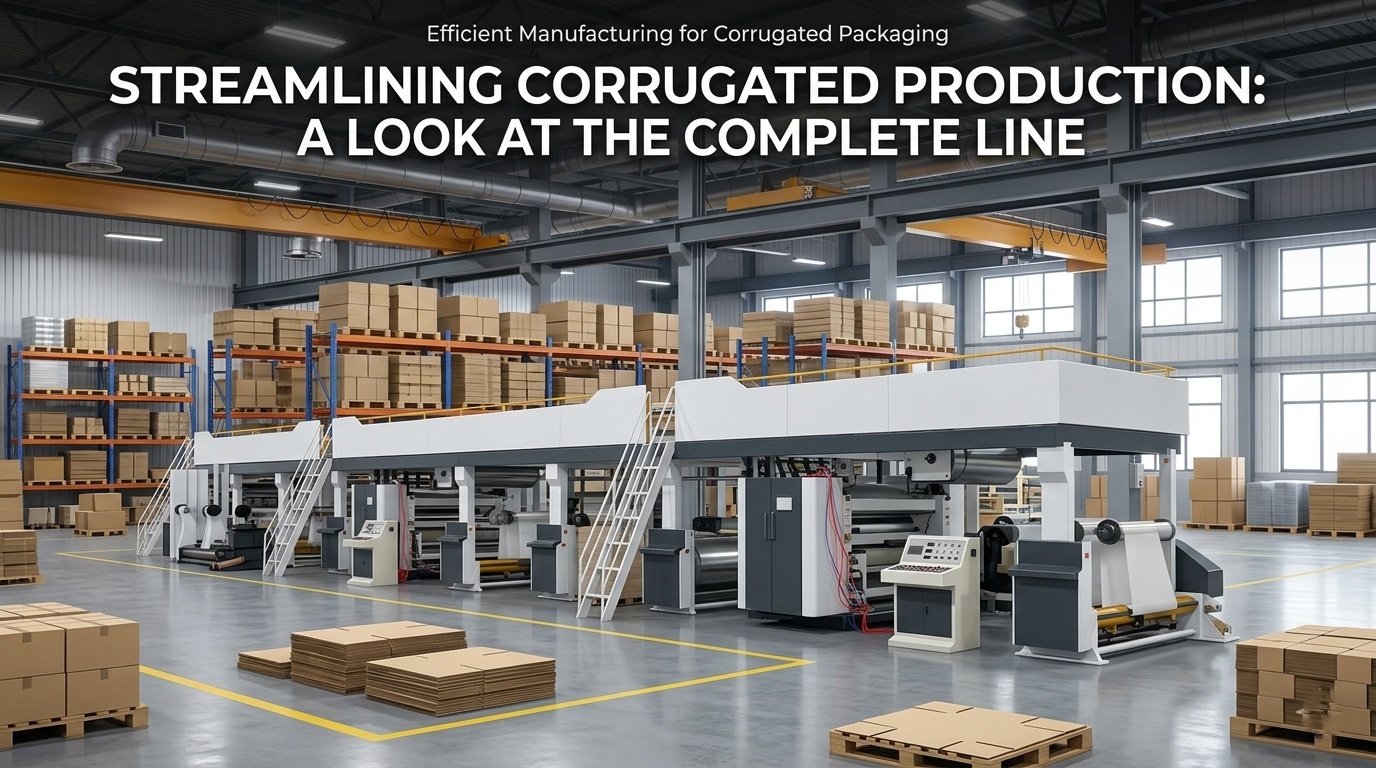
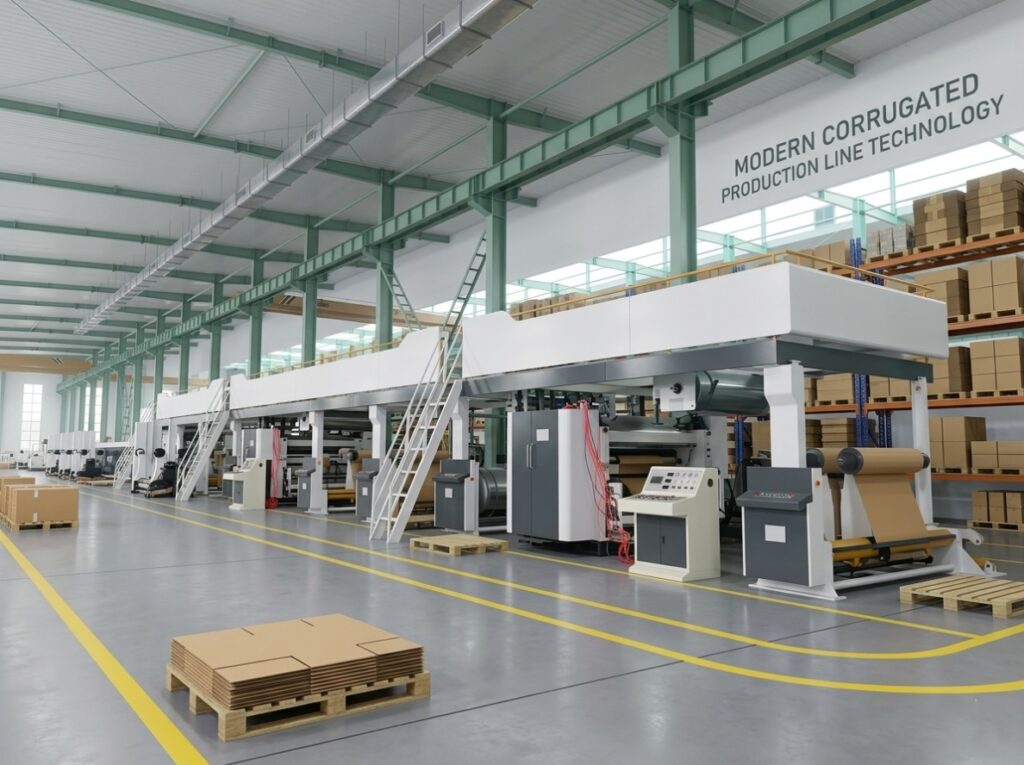
Vetting corrugated cardboard production line manufacturers comes down to three checks that a brochure speed claim won’t answer. First, confirm roller metallurgy — tungsten carbide-coated corrugating rolls hold flute height over years of abrasive paper contact, while bare steel wears and drifts. Second, verify the line is centrally synchronized from single facer to stacker, not a set of standalone modules a trading company bolted together.
Third, get the working-width and flute-profile range in writing. A single “up to 300 m/min” claim means nothing if the line can’t hold that speed across your actual order mix.
https://gzsmartmachinery.com/product/corrugated-cardboard-production-line/
Engineering Benchmark Matrix: Comparing Corrugator Manufacturer Tiers
Plenty of suppliers sell a corrugator. Few can document what happens to that machine’s tolerance after year three of running against recycled fiber — which is exactly the gap this table is built to close.
| Engineering Criterion | Tier-3 Trading Co. (Rebadged Modules) | Tier-2 Semi-Integrated Assembler | Tier-1 Vertically-Integrated Manufacturer (Smart Machinery) |
|---|---|---|---|
| Corrugating roller metallurgy | Unknown coating, undocumented | Standard steel, uncoated | Tungsten carbide alloy, supersonic-spray coated |
| Line synchronization | Standalone modules, manual handoff | Partial PLC linkage | Central Monitoring Industrial PC, single facer to stacker |
| Roller changeover | Manual, hours | Semi-motorized | Quick-change drawer design, 10-minute swap |
| Glue/bonding control | Fixed-rate application | Single-zone servo | Independent servo-motor control per layer |
| Cut-off accuracy disclosed | Not published | Approximate | ±0.5 mm (±0.02 in), AC servo helical knife |
| Flute/width range | 1–2 flute profiles | 3–4 profiles | A, B, C, E, F, BC/AAA; 1800–3300 mm (70.9–129.9 in) width |
A rebadged line can hit a brochure speed number on day one. What it can’t do is tell you what that roller coating looks like at hour 15,000 — because nobody in that supply chain sprayed it.
What “Manufacturer” Should Actually Mean on the Shop Floor
A genuine corrugated cardboard production line manufacturer controls the metallurgy and the control architecture, not just final assembly. At Smart Machinery, the corrugating rollers get a tungsten carbide alloy coating applied via supersonic spraying — a wear-resistant layer that keeps flute height constant instead of eroding into out-of-spec board within the first operating years. That single detail determines whether your downstream folder-gluer and printer keep registering correctly, because a corrugator producing inconsistent flute height passes that instability straight to every machine after it.
Synchronization is the second half of the claim. The line runs off a Central Monitoring Industrial PC that keeps single facers, double backers, and stackers on one control logic instead of independent modules communicating through manual handoffs. That’s the difference between a “production line” and a collection of machines standing next to each other — ask any prospective supplier to show you the control architecture, not just the roller specs, before you sign anything.
Cut-Off Accuracy and Roller-Change Data — Not a Rounded Speed Number
The number that belongs on your RFQ is cut-off accuracy under running conditions: the current line holds ±0.5 mm (±0.02 in) via an AC servo-controlled helical knife, not a mechanical cross-cutter prone to drift as blades wear. Single facers on this line run up to 300 m/min (984 FPM), using vacuum suction structures rather than pressure rollers to hold the flute during forming — the detail that actually protects Edge Crush Test strength, since crushing the medium at the forming stage is difficult to correct downstream.
Roller changeover uses a quick-change drawer design rated for a complete swap in 10 minutes, which matters more for a Tier-2/Tier-3 sheet plant running mixed flute profiles than any peak-speed figure — a corrugator that can’t change rolls fast loses more throughput to changeovers than it ever gains from a higher top speed.
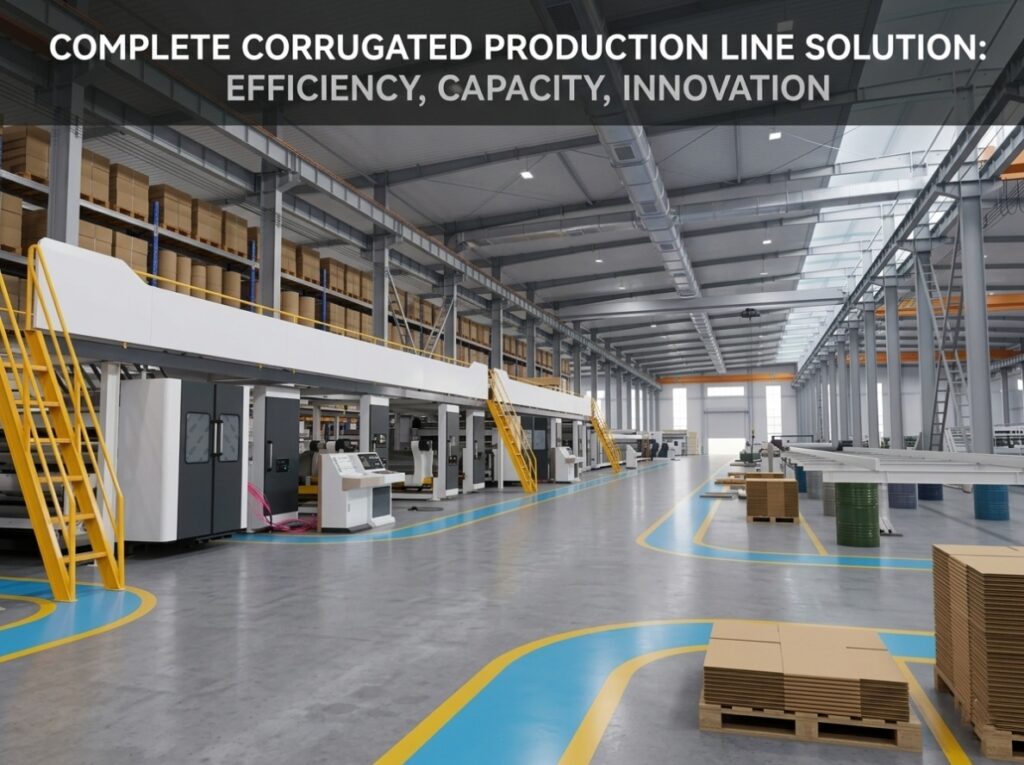
Request a Factory FAT (Factory Acceptance Test) Protocol Sheet before finalizing an order — ask specifically for cut-off accuracy and roller-change timing verified on your target flute profile, not a demo run on a different configuration.
Glue Control and Flute Integrity, Layer by Layer
Bonding quality on a 3/5/7-ply line is a per-layer problem, not a single global setting. Independent servo-motor controls on each gluing station keep film thickness uniform even as line speed changes, which is what prevents the “starved joint” that shows up as delamination weeks after boxes leave the plant. Double-facer heating plates are PLC-controlled for precise pressure, which is the mechanism that actually preserves flute structure across 3-ply, 5-ply, and 7-ply configurations rather than crushing the outer layers to compensate for an inconsistent inner bond.
This is also where a rebadged trading-company line shows its weakness fastest: fixed-rate glue application that isn’t zoned per layer works fine on a single 3-ply configuration and falls apart the moment a plant needs to run 7-ply without re-tooling the entire bonding section.
Vetting Checklist Before You Commit Capital
Electrical infrastructure is the genuinely regional variable here: 380V/50Hz is standard across Europe, most of Asia, and the Middle East, while 480V/60Hz is standard in North America — confirm this before a quote is finalized, since a retrofit after delivery costs real installation time. Beyond voltage, the checklist that actually separates a documented manufacturer from a rebadged one is short:
- Ask for the roller coating specification in writing — tungsten carbide alloy, coating method, and expected service life
- Confirm the control architecture: one Central Monitoring Industrial PC across the line, or separate modules with manual handoffs
- Get cut-off accuracy and roller-changeover timing verified for your flute profile, not a generic brochure claim
- Confirm the working-width range covers your actual sheet sizes — this line spans 1800–3300 mm (70.9–129.9 in)
- Request a Factory Acceptance Test on your actual paper grade before capital changes hands
Working through that list against any corrugated cardboard production line manufacturers shortlist will tell you more about long-term board consistency than any single speed claim on a data sheet.
FAQ
What’s the real difference between a corrugator manufacturer and a rebadged trading-company line? A genuine manufacturer controls the roller coating process and writes the synchronization logic tying single facer to stacker together, so flute-height consistency and changeover timing are engineered outcomes rather than assembled guesses.
Why does roller metallurgy matter more than top speed? Tungsten carbide-coated rollers hold flute height over years of abrasive paper contact; bare or lower-grade steel wears unevenly, and once flute height drifts, every downstream printer and folder-gluer inherits that inconsistency.
What flute profiles and widths should a modern line cover? This line supports A, B, C, E, F, and BC/AAA flute combinations across a 1800–3300 mm (70.9–129.9 in) working width — confirm any shortlisted line covers your actual sheet-size range, not just your most common job.
How fast should a roller changeover be? The quick-change drawer design on this line completes a full roller swap in 10 minutes — ask any competing supplier for their documented changeover time, since this is where mixed-flute-profile plants lose or gain real daily output.
What should a Factory Acceptance Test verify on a corrugator specifically? Cut-off accuracy (target ±0.5 mm / ±0.02 in) and flute-height consistency on your actual paper grade and flute profile, run on the exact unit you’re purchasing — not a reference demo on a different configuration.
Get Verified Roller and Sync Data Before You Order
The gap between a documented manufacturer and a rebadged trading-company line shows up in exactly three places: roller coating specification, line synchronization architecture, and disclosed cut-off accuracy. None of that is visible in a brochure speed number.
Request a Factory FAT (Factory Acceptance Test) Protocol Sheet to see cut-off accuracy and roller-change timing on your target configuration before capital changes hands, or Inquire for Direct-Factory Wholesale B2B Pricing & Lead Times to get a quote built around your actual flute-profile mix. Contact Smart Machinery’s engineering team directly to start either request.