Vetting an OEM auto folder gluer machine supplier requires three checks that a wholesale price quote won’t answer. First, genuine customization depth — can the manufacturer actually swap PLC brands or add specialized modules to your spec, or are you buying a fixed catalog unit with an OEM label on the crate. Second, spare parts supply chain control, since a supplier that doesn’t manufacture its own wear components can’t guarantee lead times when a part fails on your line.
Third, a real total-cost-of-ownership number spanning the machine’s full 15-to-20-year service life, not a capital price compared against a competitor’s capital price in isolation. A supplier who can’t speak to all three is selling a transaction, not an OEM partnership.
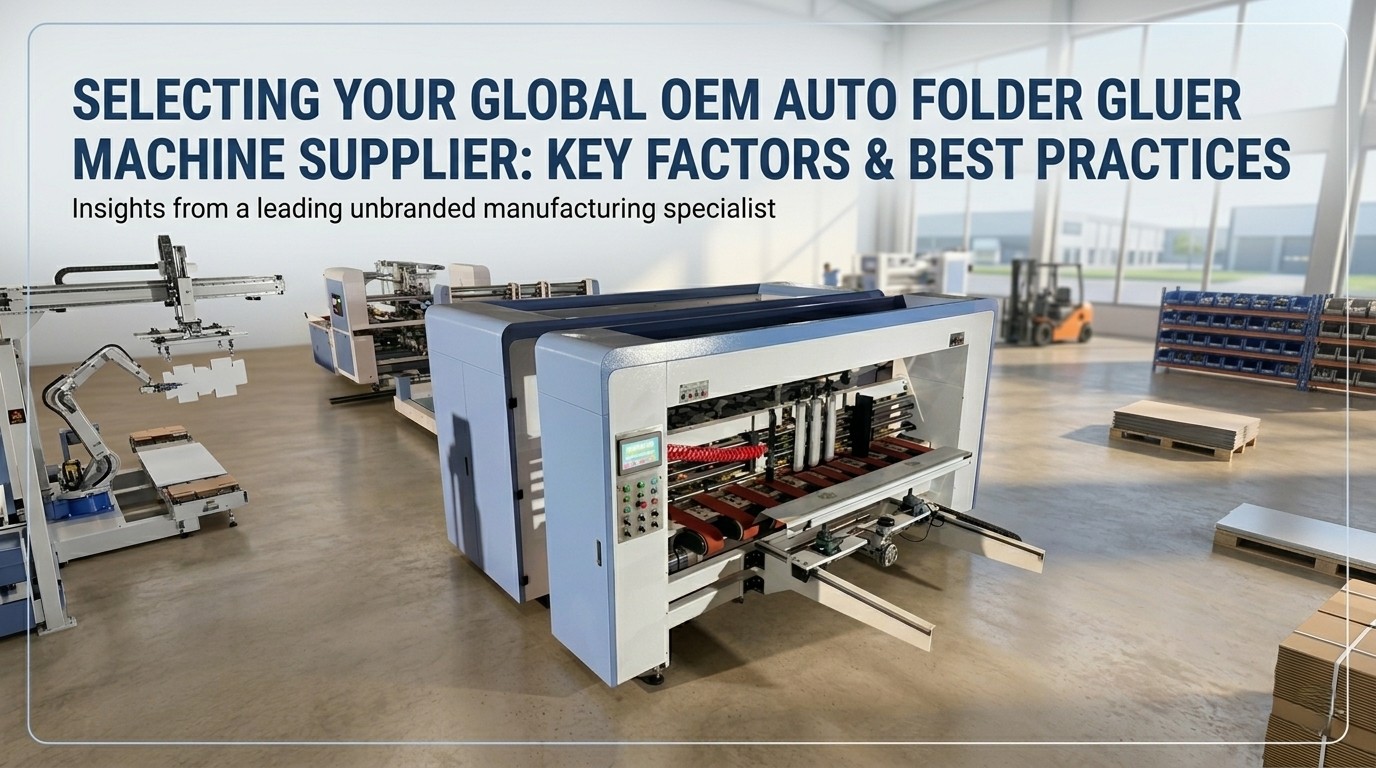
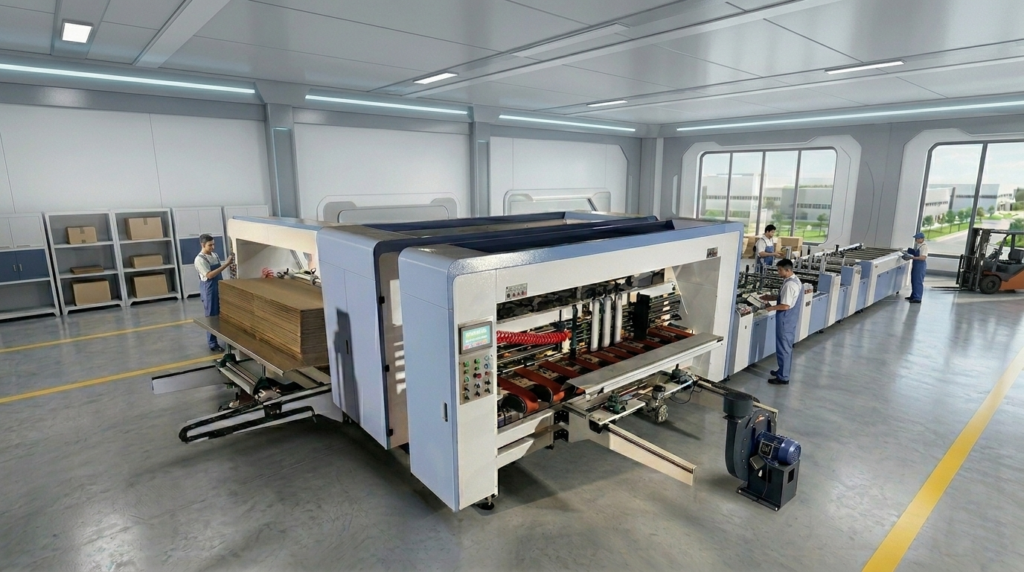
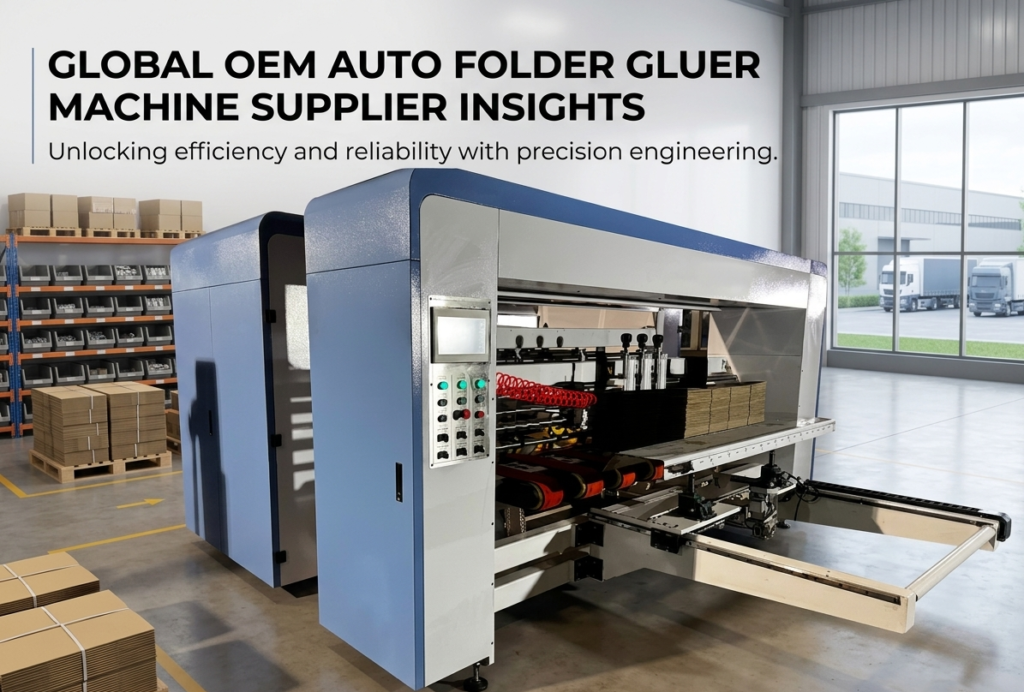
An OEM auto folder gluer machine supplier provides factory-direct, customizable solutions for high-speed carton and corrugated box conversion. Specialized manufacturers like Guangzhou Smart Machinery offer OEM services that allow for the integration of independent servo-drive systems, and multi-point electronic glue sprayers. These OEM lines are specifically engineered to handle heavy-duty 3-ply and 5-ply corrugated board, ensuring perfect squaring and structural integrity for industrial-scale moving box (RSC) production.
https://gzsmartmachinery.com/product/eco-automatic-folder-gluer-and-stitcher-machine/
Engineering Benchmark: OEM Supplier Tier Comparison
| Engineering Criterion | Trading Company / Reseller | Licensed Local Assembler | Guangzhou Smart Machinery (Direct-Factory OEM) |
|---|---|---|---|
| PLC Brand Customization | Fixed, whatever the OEM shipped | Limited to assembler’s stock | Selectable — Siemens or Mitsubishi, per your maintenance team’s familiarity |
| Module Add-Ons | Not available post-order | Aftermarket retrofit only | Factory-integrated options, e.g. Plasma Surface Treaters for UV-coated boxes |
| Spare Parts Control | Depends on original OEM’s schedule | Regional stock, inconsistent | Factory-direct sourcing, manufacturer controls the supply chain |
| Documented Lifecycle | Rarely disclosed | Assembler estimate only | Engineered for a 15-to-20-year production duty cycle |
| FAT Protocol Availability | Rarely offered | Case-by-case | Available on request before shipment |
| Line Speed Consistency | Varies by source OEM batch | Consistent within assembler’s build | Up to 180 m/min (590 FPM), factory-verified per unit |
Filtering an OEM Auto Folder Gluer Machine Supplier from a Private-Label Reseller
Most companies marketing as an oem auto folder gluer machine supplier are trading companies re-badging another factory’s standard build, with no control over PLC sourcing, module integration, or the wear-component supply chain behind the machine. A genuine OEM manufactures the base platform itself, which is the only arrangement that lets a buyer specify PLC brand, add specialized modules, and get a documented spare-parts commitment in the same purchase order.
That distinction is invisible on a spec sheet and very visible eighteen months into operation, when a reseller’s promised “OEM support” turns out to mean forwarding your support ticket to a factory that doesn’t recognize the reseller’s markup as a service relationship.
OEM Customization: PLC Brand Selection and Module Integration
A direct-factory OEM relationship means the control architecture is a specification, not a fixed component. Buyers can request PLC brand selection between Siemens or Mitsubishi, matched to whichever platform their maintenance team already knows, instead of inheriting whatever controller happened to be on the shelf when the machine was built. That single choice determines how fast your own technicians can diagnose a fault without waiting on the supplier’s remote support queue.
Factory-integrated module options extend the same logic further — a Plasma Surface Treater for UV-coated box stock is a genuine OEM add-on for factories running premium printed packaging, not an aftermarket bolt-on retrofitted after the fact. Request a Factory FAT (Factory Acceptance Test) Protocol Sheet listing every module and control option available at the OEM stage, since options unavailable at time of order are rarely retrofittable later without a full rebuild.
The TCO Framework: Capital Cost Against a 15-to-20-Year Duty Cycle
A capital price comparison in isolation is close to meaningless once the machine is rated for 15 to 20 years of production — the real comparison is total cost per year of service, not cost per unit at delivery. Labor is the first line item: consolidating feeding, folding, gluing, and stitching into a single automated workflow removes multiple manual handoff stations, which is a recurring headcount saving that compounds every year the machine runs, not a one-time benefit.
Consumables are the second line item, and even a modest reduction compounds significantly over two decades — an intelligent glue system holding starch consumption under 18 kg/t (36 lb/ton) against an industry average above 22 kg/t (44 lb/ton) is a real, trackable saving worth building into your own TCO model rather than accepting a supplier’s summary figure. Spare parts and downtime are the third and most volatile line item, which is exactly why supply-chain control belongs in the same conversation as the purchase price.
Spare Parts Supply Chain: Why Factory-Direct Sourcing Changes the Downtime Math
A trading company’s spare-parts promise is only as reliable as its relationship with whatever factory actually built your machine, and that relationship is invisible to you until a part fails and the reseller has to escalate a request rather than pull from its own inventory. Factory-direct sourcing means the manufacturer controls the wear-component supply chain directly — the same organization that engineered the part is the one stocking and shipping the replacement.
That control matters most for components with predictable wear cycles, where a supplier who manufactures its own parts can quote a realistic replacement interval instead of a vague “as needed” answer. Ask any OEM supplier for their average spare-parts lead time on core wear components in writing, and treat a non-answer as a downtime risk you’re pricing into the deal whether the quote reflects it or not.
Run that lead-time question against your own downtime cost before comparing quotes on price alone. A trading company sourcing parts through an unnamed third-party factory may quote a competitive part price but a multi-week shipping and customs timeline once the request actually gets forwarded, while a direct-factory OEM stocking its own wear components can typically commit to a specific dispatch window in writing — the gap between those two numbers is often worth more than the discount that made the trading company’s quote look attractive in the first place.
Labor Cost Reduction and Changeover Speed Across the Line’s Working Life
Digital touchscreen controls and single-workflow automation are what actually determine labor cost over the equipment’s lifetime, not just at commissioning — a line requiring a dedicated operator per manual stage carries that headcount cost every single year of the 15-to-20-year service period. Confirm how many operator positions the automated workflow actually eliminates against your current line, not a generic “reduces labor” claim.
Changeover speed compounds the same way. A digitally controlled oem auto folder gluer machine supplier build that reconfigures for a new box style in minutes rather than requiring mechanical readjustment saves production hours every time your order book shifts, and that saving repeats for as long as the machine stays in service.
Vetting an OEM Auto Folder Gluer Machine Supplier: The Non-Negotiable Checklist
Return to the three checks that opened this audit — genuine customization depth, spare-parts supply chain control, and a real multi-year TCO number — and require documentation for each before signing.
A practical due-diligence checklist before you commit capital:
- Confirm PLC brand options and factory-integrated module add-ons in writing, not verbally
- Get the average spare-parts lead time on core wear components from the actual manufacturer
- Request a documented starch/adhesive consumption figure to model into your own TCO calculation
- Ask for a labor-reduction estimate specific to your current line, not a generic automation claim
- Confirm a Factory FAT Protocol Sheet is available before shipment, not after a dispute arises
inquire for Direct-Factory Wholesale B2B Pricing & Lead Times
Frequently Asked Questions
Q: What’s the practical difference between an OEM factory and a trading company selling the “same” machine? A: An OEM manufactures the base platform and controls PLC sourcing, module integration, and the spare-parts supply chain directly. A trading company resells another factory’s standard build and has no control over any of those three variables, which becomes visible the first time a customization request or a spare-parts emergency comes up.
Q: Can we really choose our own PLC brand on an OEM order? A: Yes — Guangzhou Smart Machinery offers Siemens or Mitsubishi PLC options on request, so your maintenance team can standardize on whichever platform it already supports rather than learning a new control system.
Q: How should we actually compare TCO between two supplier quotes? A: Model labor reduction, consumable cost (starch/adhesive per ton of board), and spare-parts lead time across the machine’s full 15-to-20-year service life, not just the capital price at delivery. A lower capital quote from a reseller with weak parts support frequently costs more over the full duty cycle.
Q: What should we request before signing a purchase order? A: A Factory FAT (Factory Acceptance Test) Protocol Sheet listing PLC and module options, documented starch/adhesive consumption figures, and the manufacturer’s average spare-parts lead time on core wear components.
Ready to Specify Your Next OEM Production Line?
A capital-price comparison alone doesn’t capture 15 to 20 years of operating cost. Request a Factory FAT Protocol Sheet documenting PLC options, module add-ons, and spare-parts lead times before you commit capital.
For plants ready to move on pricing and lead times, inquire for Direct-Factory Wholesale B2B Pricing & Lead Times and speak directly with Guangzhou Smart Machinery’s engineering team about your PLC preference, module requirements, and target duty cycle.