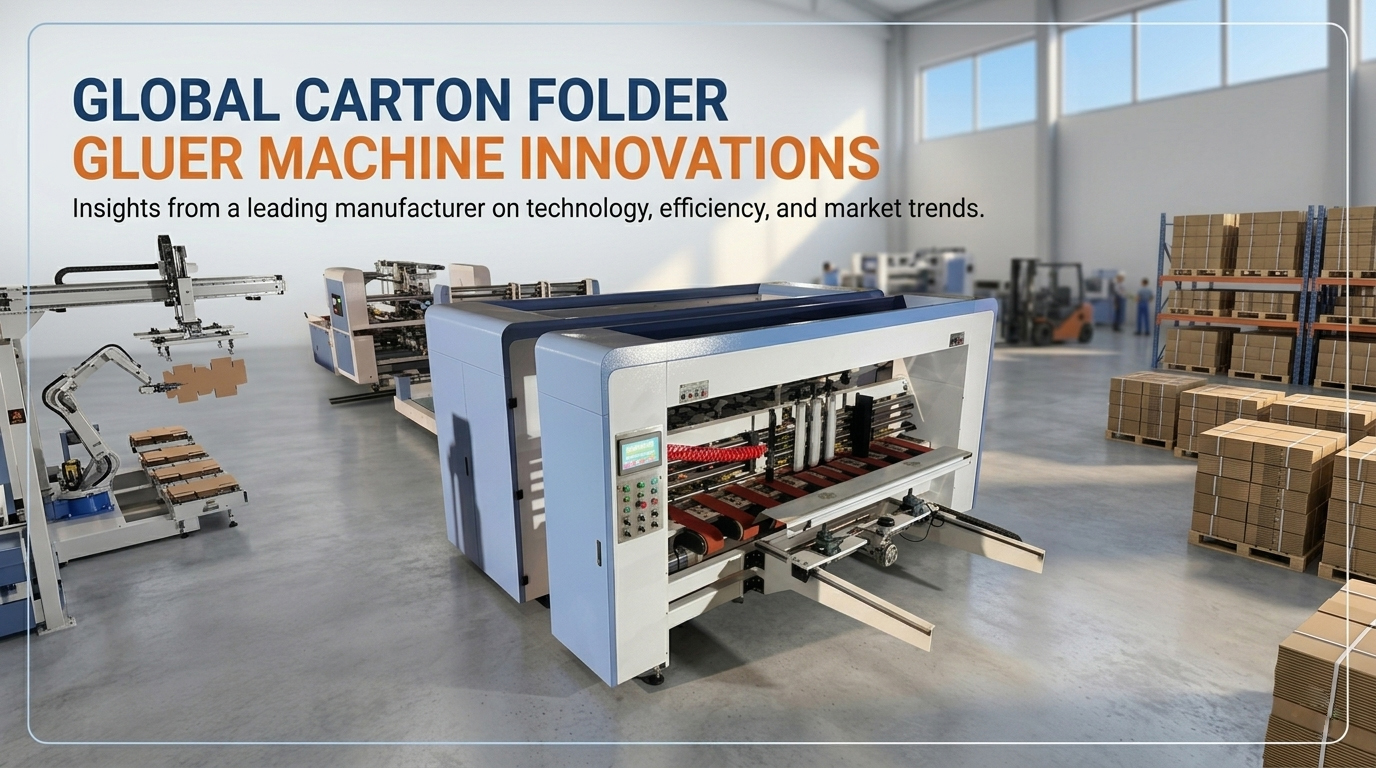
Vetting a carton folder gluer machine manufacturer comes down to three checks a spec sheet alone won’t answer. First, verified anti-skew correction — the mechanism that actually eliminates “fishtailing” at the fold, not just a speed rating achieved on a perfectly square test blank. Second, adhesive architecture that handles both water-based cold glue and hot-melt via independent high-precision nozzles, since a machine locked into one adhesive type can’t follow you into a new box category.
Third, documented starch consumption per ton of board — a real efficiency number, not a vague “eco” label. A manufacturer that can’t produce a written figure for any of these three is asking you to take their marketing copy on faith.
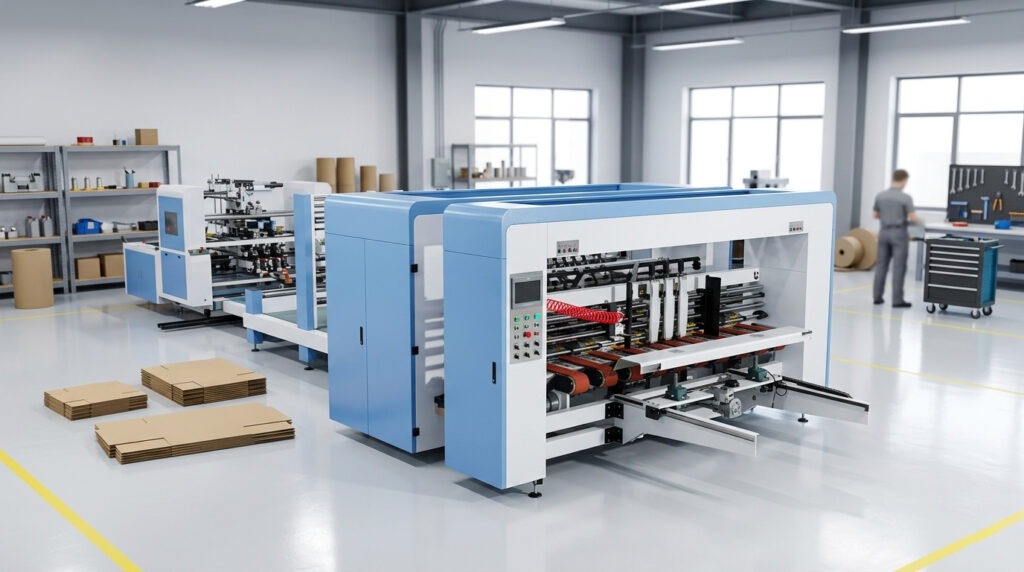
https://gzsmartmachinery.com/product/eco-automatic-folder-gluer-and-stitcher-machine/
Engineering Benchmark: Folder Gluer Manufacturer Tier Comparison
| Engineering Criterion | Entry-Level Line | Mid-Tier Automated Line | Guangzhou Smart Machinery (Eco Folder Gluer & Stitcher) |
|---|---|---|---|
| Feeding System | Friction-fed, manual alignment checks | Basic vacuum assist, periodic jams | High-accuracy vacuum suction, one-by-one feed, jam-resistant |
| Fold Correction | None — operator resets skewed blanks | Manual guide adjustment mid-run | Secondary correction technology, eliminates fishtailing automatically |
| Adhesive System | Single adhesive type, fixed nozzle | Cold glue OR hot-melt, not both | Cold glue AND hot-melt via independent high-precision nozzles |
| Stitching Integration | Separate standalone stitcher required | Basic inline stitching, fixed spacing | Integrated stitching, adjustable 30–120 mm (1.18–4.72 in) spacing |
| Starch Consumption | Industry average, >22 kg/t (44 lb/ton) | Marginal improvement, ~20–22 kg/t | Intelligent glue system, under 18 kg/t (36 lb/ton) |
| Line Speed | Under 100 m/min (328 FPM) | 100–150 m/min (328–492 FPM) | Up to 180 m/min (590 FPM) |
| Changeover Control | Manual mechanical adjustment | Partial digital control | Digital touchscreen, rapid order changeover |
| Maintenance Access | Full teardown for cleaning | Partial panel access | Daily-clean design for rollers, nozzles, and belts |
Filtering a Carton Folder Gluer Machine Manufacturer from a Generic Reseller
Most vendors selling under the label carton folder gluer machine manufacturer are reselling a fabricator’s standard line with a logo swapped on the control panel, with no ability to document correction-system performance or starch consumption in writing. An OEM that engineers its own feeder, correction system, and adhesive architecture as one integrated unit can put a number on those variables because they control them directly — a reseller cannot certify a spec they didn’t design.
That distinction shows up first in the fishtail problem. Fishtailing — a skewed, uneven fold on one or both flaps — is caused by inconsistent blank alignment entering the fold section, and it’s the single most common quality complaint on carton lines bought without checking correction technology first.
Feeding and Alignment: What Actually Eliminates Fishtailing
A high-accuracy vacuum suction feeder is the first line of defense, pulling carton blanks one by one into the fold section with consistent alignment rather than relying on friction rollers that slip once paper dust accumulates. That consistency matters most on complex or stiff cardboard, where an advanced pre-breaking section softens creases before folding so the board doesn’t fight the fold geometry.
Secondary correction technology is the component that actually earns the “zero-defect” claim manufacturers put on a spec sheet, since it detects and corrects skew during the fold pass rather than after the box has already left the line misaligned. Ask any carton folder gluer machine manufacturer to demonstrate this correction system on your own board weight, not a pre-squared demo blank, before you sign anything.
Adhesive Architecture: Cold Glue, Hot-Melt, and the Starch Consumption Number
A machine wired for a single adhesive type forces a hardware change the moment your product mix shifts from cold-glue-compatible food cartons to a hot-melt-bonded e-commerce shipper. Independent high-precision nozzles supporting both water-based cold glue and hot-melt adhesives on the same machine remove that constraint, which matters directly the first time a customer specifies a different substrate than your line was originally configured for.
Request a Factory FAT (Factory Acceptance Test) Protocol Sheet documenting starch consumption per ton of board before signing — this is where “eco” claims either hold up or fall apart. An intelligent glue system that brings consumption from the industry average of over 22 kg/t (44 lb/ton) down to under 18 kg/t (36 lb/ton) is a verifiable number your accounting team can track against invoices, not a marketing adjective.
Stitching Integration for Heavy-Duty Transit Cartons
Heavy-duty and multi-corner box designs often need a mechanical stitch in addition to adhesive bonding, and a separate standalone stitching unit means a second handoff, a second alignment check, and a second point of failure. An integrated stitching section with adjustable spacing from 30 mm to 120 mm (1.18 in to 4.72 in) covers the range from smaller retail cartons to reinforced transit boxes on one synchronized pass instead of two disconnected machines.
That range matters specifically for plants running mixed order books — a crash-lock bottom box and a straight-line shipping carton rarely call for the same stitch spacing, and resetting that on a standalone stitcher between orders costs changeover time a fully integrated line doesn’t spend.
Specifying for Your Box Mix, Changeover Speed, and Environmental Compliance
Digital touchscreen controls are what actually determine changeover speed in daily operation, since a line that requires mechanical readjustment between straight-line, crash-lock bottom, and multi-corner box styles loses that production time every time the order book changes. Confirm changeover time on a reference installation running your actual box-style mix, not a single-SKU demo run.
Environmental compliance is increasingly a procurement gate, not a nice-to-have — a carton folder gluer machine manufacturer offering zero-discharge circulating systems alongside the starch-reduction figures above gives your plant a documented efficiency case for export markets that increasingly ask for one.
A machine engineered for a 15-to-20-year duty cycle is only as good as the maintenance cadence built into its design. Daily clearing of paper dust and glue residue from rollers and nozzles prevents the exact buildup that causes friction-feed slippage and fold misalignment in the first place, which is why feeder and nozzle access should be part of any factory walkthrough before purchase. Confirm the supplier’s recommended lubrication schedule and belt-tension calibration interval in writing, since a machine that’s easy to keep in spec stays in spec — one that requires specialist intervention for routine belt checks will drift out of tolerance between service visits.
Vetting a Carton Folder Gluer Machine Manufacturer: The Non-Negotiable Checklist
Return to the three checks that opened this audit — verified correction technology, dual-adhesive flexibility, and documented starch consumption — and require evidence for each rather than accepting a “zero-defect” claim at face value. A manufacturer confident in its own engineering will hand over these figures without hesitation; one stalling on the request is signaling something about the rest of the spec sheet.
A practical due-diligence checklist before you sign:
- Request a correction-system demonstration on your own board weight, not a pre-squared sample
- Confirm the machine runs both cold glue and hot-melt without a hardware change
- Get a written starch-consumption figure (kg/t or lb/ton), not just an “eco” label
- Verify adjustable stitching range (30–120 mm / 1.18–4.72 in) matches your carton categories
- Confirm changeover time on a reference installation running your actual box-style mix
Frequently Asked Questions
Q: What causes “fishtailing” on a folder gluer, and how is it actually fixed? A: Fishtailing is caused by inconsistent blank alignment entering the fold section, usually from friction feeding that slips as paper dust builds up. Secondary correction technology paired with a vacuum suction feeder addresses the cause directly by keeping alignment consistent through the fold pass, rather than requiring an operator to manually reset skewed blanks after the fact.
Q: Can one machine really run both cold glue and hot-melt adhesive? A: Yes, provided it’s built with independent high-precision nozzles for each adhesive type rather than a single fixed nozzle system. That flexibility is what lets one line serve both cold-glue-compatible food cartons and hot-melt-bonded shipping cartons without a hardware change between runs.
Q: How much does starch consumption actually vary between manufacturers? A: Meaningfully — industry-average consumption runs above 22 kg per metric ton of board (44 lb/ton), while an intelligent glue system on a well-engineered line can bring that under 18 kg/t (36 lb/ton). That gap compounds directly into adhesive cost over a multi-year production run.
Q: What should we request before signing a purchase order? A: A Factory FAT (Factory Acceptance Test) Protocol Sheet documenting correction-system performance on your board weight, starch consumption figures, adjustable stitching range, and verified changeover time between your actual box styles.
Ready to Specify Your Next Folder Gluer Line?
Brochure claims about “zero-defect” folding are a starting point, not a purchase decision. Request a Factory FAT Protocol Sheet documenting correction-system performance, adhesive flexibility, and starch consumption before you commit capital.
For plants ready to move on pricing and lead times, inquire for Direct-Factory Wholesale B2B Pricing & Lead Times and speak directly with Guangzhou Smart Machinery’s engineering team about your box-style mix, adhesive requirements, and stitching specifications.