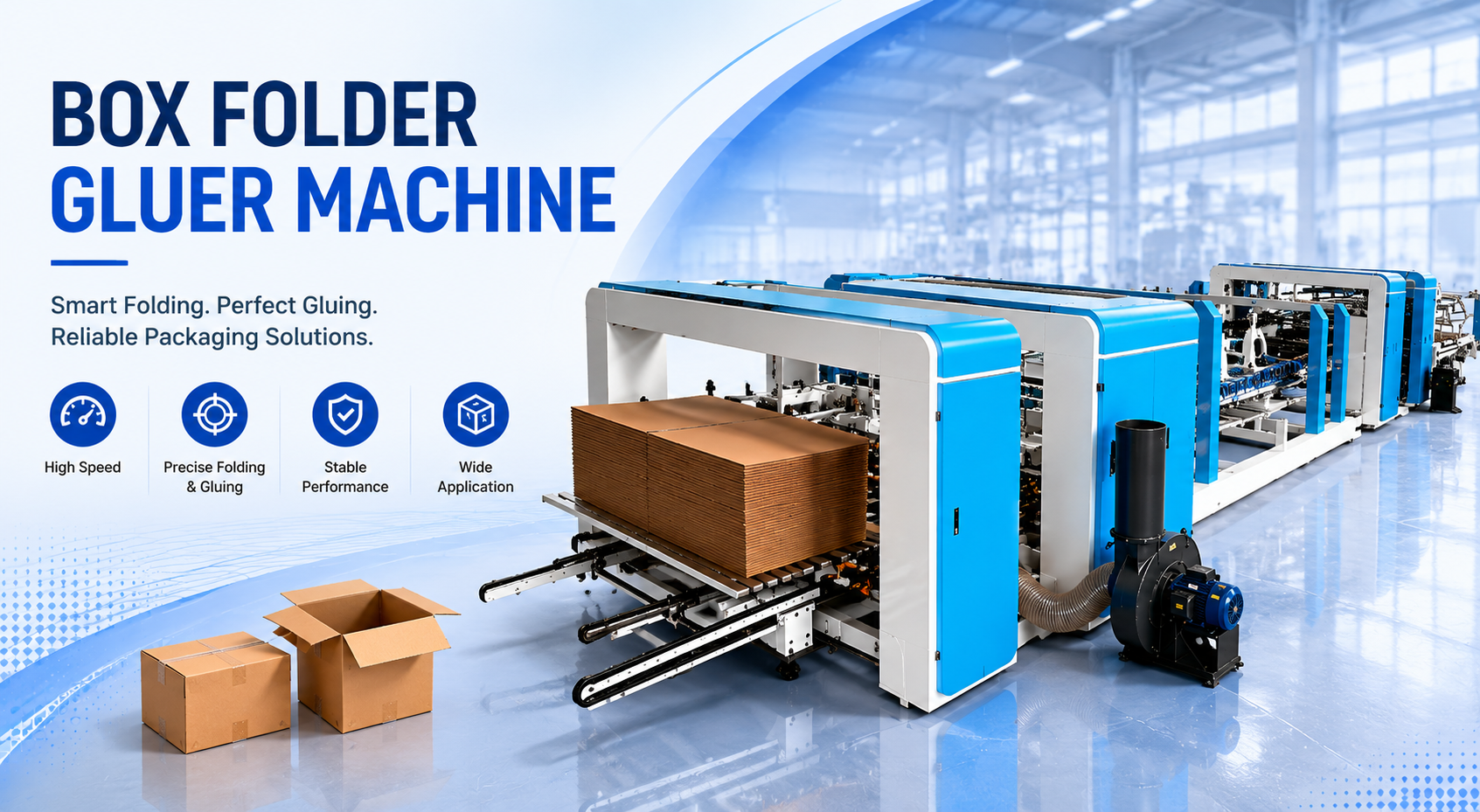
Vetting a box folder gluer machine supplier means auditing what happens after the sale, not just what the machine does on day one. Three benchmarks separate a genuine OEM partner from a transactional vendor: a documented maintenance protocol the supplier will put in writing before you sign, a correction system engineered into the line rather than bolted on after complaints, and safety-compliance documentation that ships with the machine instead of being assumed.
A supplier who answers maintenance and compliance questions verbally instead of in writing isn’t operating at first-tier standard.
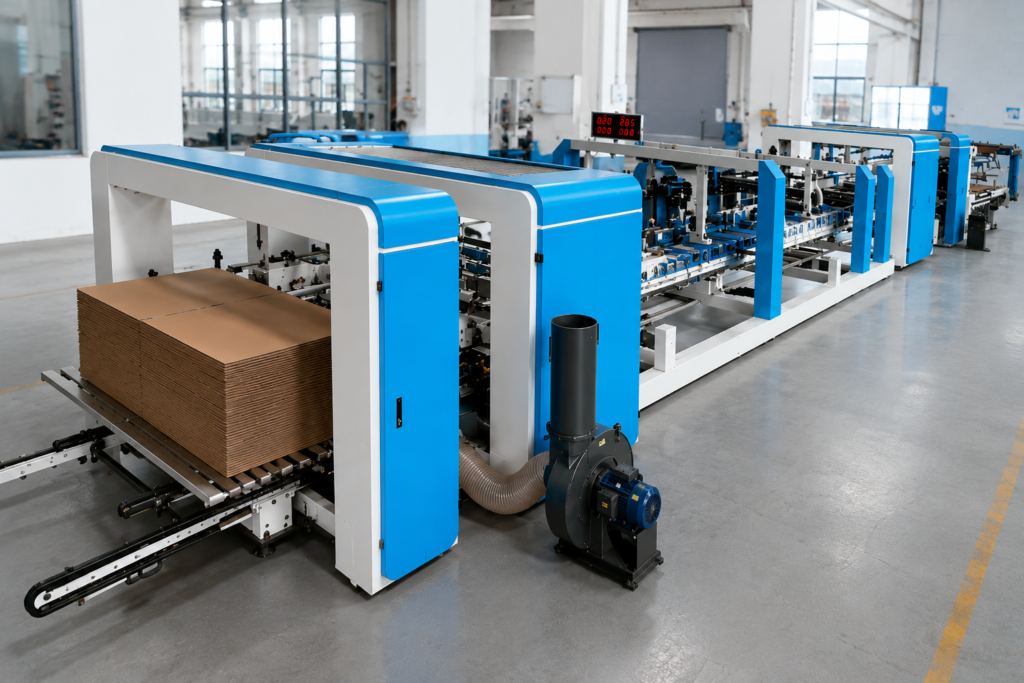
https://gzsmartmachinery.com/product/eco-automatic-folder-gluer-and-stitcher-machine/
Engineering Benchmark: Supplier Tiers for a Box Folder Gluer Machine Supplier
Most listings for a “box folder gluer machine supplier” lead with speed and price, and stop there. The real differentiator between a one-time vendor and a long-term OEM partner shows up in what’s documented for maintenance, safety, and application fit — the details that matter once the machine has been running for a year, not on delivery day.
Procurement teams that compare suppliers on price and peak speed alone tend to discover the real gap after the warranty period, when a machine with no documented maintenance schedule starts costing more in unplanned downtime than it ever saved on the purchase order.
| Engineering Criterion | Tier 3 Manual/Mechanical Shop | Tier 2 Semi-Servo Assembler | Guangzhou Smart Machinery (Eco Automatic Line) |
|---|---|---|---|
| Maintenance Protocol | No documented schedule; reactive repairs only | Basic manual, no calibration intervals | Scheduled lubrication, belt calibration, and safety checks documented for the operator |
| Fold Correction | None; fishtailing corrected by hand | Fixed mechanical guide, no compensation | Secondary correction technology engineered to eliminate fishtails |
| Safety Compliance | Guards and E-stops present, untested | E-stops present, periodic testing undocumented | Periodic testing of emergency stops and safety guards built into the maintenance schedule |
| Feeding System | Friction rollers, jam-prone | Basic vacuum assist | Precision Feeder Unit — vacuum suction, one-by-one alignment, jam prevention |
| Application Certification | Generic — single box style, no sector fit | Straight-line and basic lock-bottom only | Straight-line, crash-lock bottom, multi-corner — rated for Food & Pharma and Electronics & Luxury sectors |
| Stitching Integration | Not available or separate machine | Bolt-on stitcher, separate control logic | Integrated stitching section, 30–120 mm (1.18–4.72 in) adjustable distance |
Inside the Line: Feeder, Correction, and Fold-Glue-Stitch Architecture
A genuine box folder gluer machine supplier builds correction into the line rather than treating it as an optional upgrade. Board enters the Precision Feeder Unit, which uses high-accuracy vacuum suction to pull carton blanks one at a time with consistent alignment, preventing the jams that come with friction-only feeding at production rate.
Advanced Pre-breaking — an optional section that pre-breaks crease lines ahead of the fold — handles complex or stiff cardboard that would otherwise spring back after folding. Secondary correction technology then eliminates fishtails at running speed, while precisely positioned guides and hooks manage folding and gluing for straight-line, crash-lock bottom, and multi-corner box designs, using either water-based cold glue or hot-melt adhesive through high-precision nozzles.
An Integrated Stitching Section adds mechanical reinforcement across an adjustable 30–120 mm (1.18–4.72 in) distance for cartons that need more than a bonded seam. This is the same architecture behind the ±0.5 mm (±0.02 in) folding-precision standard Guangzhou Smart Machinery applies across its automatic folder gluer range.
Maintenance Transparency: What a First-Tier Supplier Documents in Writing
A brochure spec sheet tells you what the machine can do on delivery day. A maintenance protocol tells you what it will still be doing in year five, which is the question that actually determines total cost of ownership. This line ships with a scheduled lubrication routine to minimize component wear, belt calibration checks to catch tension drift before it causes misfeeds and shortens belt life, and periodic testing of emergency stops and safety guards built into the same schedule.
None of that is unusual to promise verbally. What separates a first-tier supplier is whether they’ll put the interval and the procedure in writing before the purchase order is signed, not after the first breakdown. Ask specifically for the lubrication interval, the belt-tension tolerance, and the E-stop testing frequency — three numbers that tell you more about long-term reliability than any peak-speed figure.
Treat these documents the same way you’d treat a warranty term: if a supplier hedges on putting maintenance intervals in writing, assume the real-world interval is worse than whatever number they eventually quote verbally. A written schedule also gives your own maintenance team a baseline to audit the machine against once it’s on your floor, rather than guessing at service intervals from a generic manual.
Don’t accept “regular maintenance” as an answer. Request a Factory FAT (Factory Acceptance Test) Protocol Sheet that documents the maintenance schedule, safety-check intervals, and correction-system tolerance alongside the standard performance specs.
Safety and Regional Compliance: Documentation, Not Assumptions
Emergency stop circuits and safety guards are standard equipment on any serious folder gluer, but standard equipment isn’t the same as documented compliance. The periodic testing schedule for E-stops and guards built into this line’s maintenance protocol is what actually satisfies an OSHA-style safety audit in North America or a CE risk-assessment review in Europe — a guard that’s present but never re-tested is a paperwork gap waiting to surface during a client’s own supplier audit.
For plants selling into regulated end markets — food, pharmaceutical, or export retail — that documentation gap becomes the buyer’s liability, not just the machine’s. A box folder gluer machine supplier worth partnering with hands over the safety-check schedule alongside the spec sheet, not after you ask twice.
This matters most during your own client’s supplier audits. A retail or FMCG buyer conducting a factory inspection will ask for the E-stop and guard testing log, not just visual confirmation that a guard is bolted in place — and a machine with no testing record on file reflects on your plant’s audit readiness, not just the equipment vendor’s.
Application Fit: Matching the Machine to Your Box Category
Not every box folder gluer machine supplier engineers for the same end markets, and application fit matters as much as raw throughput. This line is built for Food & Pharma packaging — safety-sealed cartons for cereal, snacks, and medicine — where fold integrity and clean bonding directly affect shelf security, and equally for Electronics & Luxury goods, where box presentation and structural rigidity protect premium products through distribution.
- Confirm the supplier documents box-style range against your actual SKU mix, not a generic capability claim
- Verify stitching-distance range (30–120 mm / 1.18–4.72 in) matches your heaviest carton category
- Ask which end markets the machine is already validated for — food-safe sealing differs from luxury-goods presentation
- Request maintenance-schedule documentation before comparing final pricing, not after
Vetting a First-Tier Supplier: The Closing Checklist
Return to the three benchmarks that opened this audit — a written maintenance protocol, correction technology engineered into the line, and documented safety compliance — and require evidence for each rather than a verbal assurance. A supplier who won’t put lubrication intervals, belt-calibration tolerances, or E-stop testing frequency in writing is not operating at first-tier standard.
A practical checklist before you sign:
- Request the Factory FAT Protocol Sheet with correction-system tolerance and maintenance intervals documented
- Get the lubrication schedule, belt-calibration interval, and safety-check frequency in writing
- Confirm application certification against your actual box category (Food & Pharma or Electronics & Luxury)
- Verify stitching-distance range and box-style compatibility against your product mix
Guangzhou Smart Machinery’s Eco Automatic Folder Gluer and Stitcher Machine — secondary correction technology, a documented maintenance and safety-check schedule, and application fit across Food & Pharma and Electronics & Luxury sectors — is the box folder gluer machine supplier this audit was built around.
Frequently Asked Questions
Q: What separates a first-tier supplier from a transactional vendor? A: Documentation. A first-tier supplier puts the maintenance schedule, safety-check intervals, and correction-system tolerance in writing before the purchase order is signed, rather than promising “regular maintenance” verbally.
Q: What maintenance does this line actually require? A: A scheduled lubrication routine to minimize component wear, periodic belt-calibration checks to catch tension drift before it causes misfeeds, and regular testing of emergency stops and safety guards — all built into the same documented schedule.
Q: Is this machine suitable for food or pharmaceutical packaging? A: Yes. It’s built for safety-sealed cartons across Food & Pharma applications including cereal, snacks, and medicine, alongside Electronics & Luxury packaging that requires structural rigidity and clean presentation.
Q: Can the machine handle both gluing and stitching on the same carton? A: Yes. The Integrated Stitching Section adds mechanical reinforcement alongside gluing, with an adjustable distance across 30–120 mm (1.18–4.72 in) for cartons that need more than an adhesive seam.
Q: What should I request before signing a purchase order? A: A Factory FAT Protocol Sheet documenting correction-system tolerance, the maintenance and safety-check schedule in writing, and confirmed application certification against your actual box category.
Ready to Vet Your Supplier?
A peak-speed number tells you almost nothing about who you’re actually partnering with — documented maintenance intervals, safety-compliance testing, and application-fit certification are what determine whether this relationship works in year five. Request a Factory FAT Protocol Sheet documenting all three before committing capital.
For plants ready to move on pricing and lead times, inquire for Direct-Factory Wholesale B2B Pricing & Lead Times and speak directly with Guangzhou Smart Machinery’s engineering team about your box category, order volume, and compliance requirements.