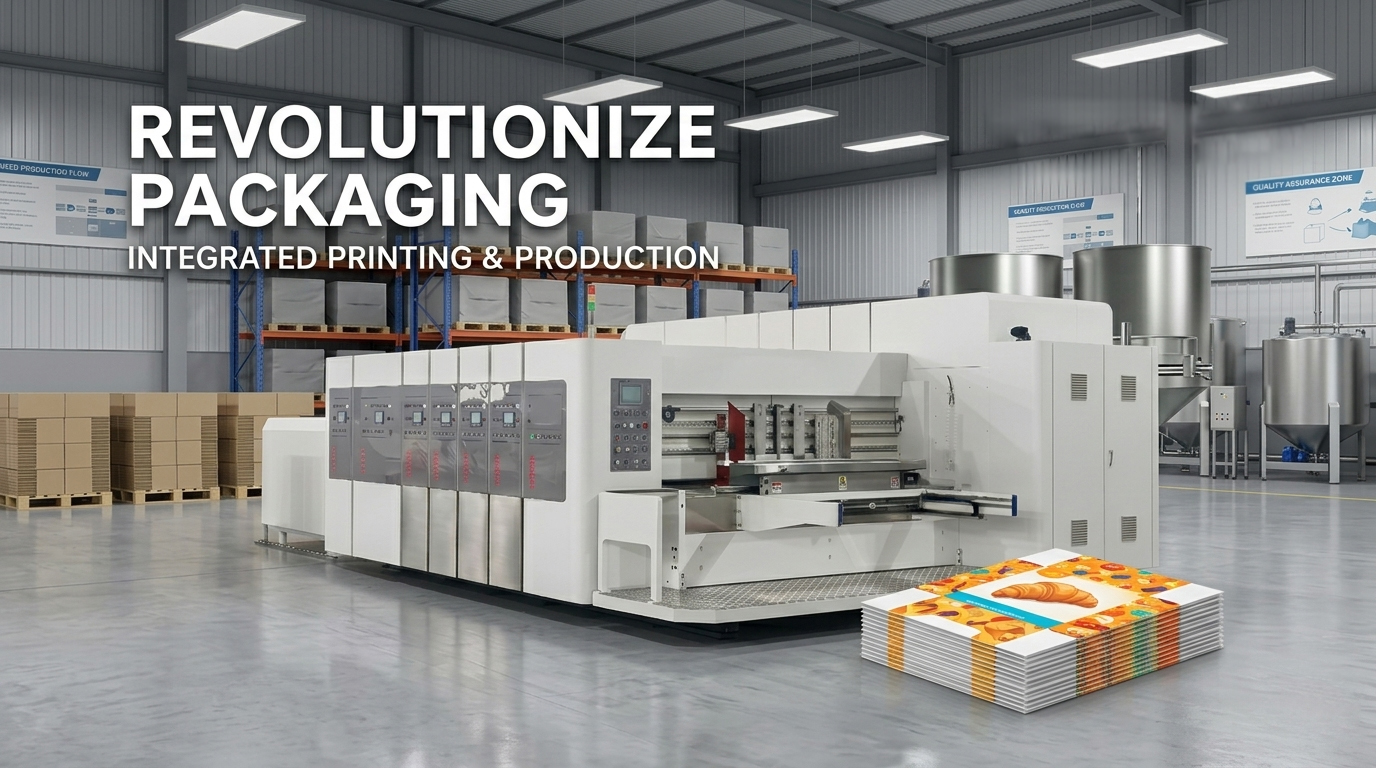
Most box plants asking where to order corrugated box printing machine are not short of options — they are short of the right criteria to separate a precision manufacturer from a trading company reselling rebranded equipment. This article gives you the engineering benchmarks, sourcing channel breakdown, and supplier audit questions used by procurement directors at integrated corrugated facilities across North America, Europe, Southeast Asia, and the Middle East.
For industrial-scale packaging operations, ordering a corrugated box printing machine is best executed through three primary channels: Original Equipment Manufacturers (OEMs) for custom high-speed lines, certified regional distributors for local maintenance, and direct-to-factory smart manufacturers like Guangzhou Smart Machinery.
When ordering, buyers should prioritize manufacturers that offer factory-direct commissioning, Industry 4.0 PLC integration, and Vacuum Transfer technology to ensure ±0.35mm printing registration. Sourcing directly from an established factory ensures a 30%–50% reduction in CAPEX compared to legacy European brands while maintaining ISO and CE industrial standards.
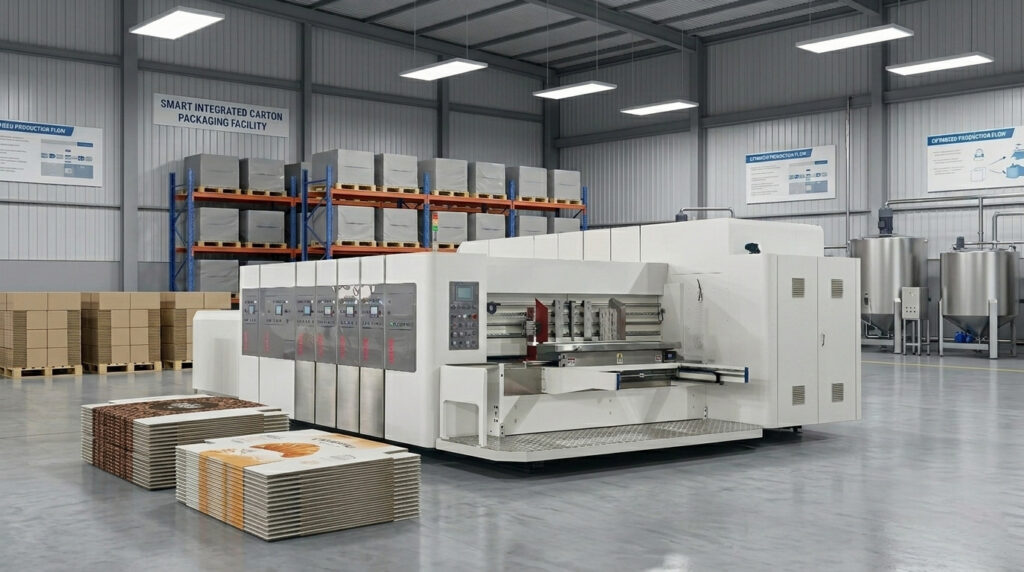
Fast Check Product: https://gzsmartmachinery.com/product/corrugated-box-printing-machine/
Guangzhou is a global hub for packaging innovation. Ordering directly from a factory like Guangzhou Smart Machinery allows for real-time customization of the slotting and die-cutting units to match your specific flute profiles (A, B, C, or 5-ply BC). Furthermore, direct factories provide Remote IIoT Diagnostics, allowing engineers to troubleshoot PLC systems anywhere in the world, ensuring zero-downtime for your production line
Three non-negotiable baselines before you issue any RFQ: (1) alloy steel drive gears with documented heat treatment and precision grinding, (2) laser-engraved ceramic anilox rollers with motorized PLC-controlled phase adjustment, and (3) a verifiable Factory Acceptance Test (FAT) protocol signed before shipment.
Sourcing Channel Matrix: Where the Market Actually Sits
| Sourcing Channel | Best Fit | Key Risk | TCO Position |
|---|---|---|---|
| Direct OEM Manufacturer (e.g., Guangzhou Smart Machinery) | Mid-to-large box plants, 3-shift operation | Requires due diligence on factory audit | Lowest — no middleman margin, direct engineering support |
| Regional Distributor | Plants needing local language support, fast spare parts | 15–25% price premium, limited customization | Moderate — faster local response, higher unit cost |
| B2B Marketplace (Alibaba, Made-in-China) | Budget-constrained startups, low-volume | No QA visibility, no FAT, inconsistent specs | Lowest upfront, highest lifecycle risk |
| Premium European/Japanese OEM | Unlimited CAPEX, prestige brand contracts | 3–5× price premium vs. Chinese Tier 1 | Highest — premium engineering, premium cost |
| Used/Refurbished Dealers | CAPEX-constrained facilities | Unknown wear state, no warranty on wear parts | Variable — 30–60% cheaper upfront, unpredictable downtime |
The direct OEM channel consistently delivers the best TCO for plants running ≥150,000 boxes/month at 3 shifts. The pricing gap between a direct Chinese Tier 1 manufacturer and a European equivalent on comparable specifications routinely runs 40–60% — without a proportional engineering performance gap when specifications are properly audited.
What the Machine Must Actually Do: Engineering Specifications to Specify in Your RFQ
Before deciding where to order, lock down the performance specifications in writing. Vague RFQs produce vague quotes and mismatched equipment.
Feeding System: Lead-Edge Vacuum, Not Kick-Rollers
Specify a suction-assisted lead-edge feeding system that handles board thicknesses across 3-ply, 5-ply, and 7-ply without flute crushing. Our corrugated box printing machine uses a high-performance vacuum lead-edge feeder that adjusts to board variation without manual retooling between jobs. A kick-roller feeder compresses the board at entry — measurable as a reduction in Edge Crush Test (ECT) performance before the first print impression is made.
Printing Unit: Anilox Specification and Phase Control
Require laser-engraved ceramic anilox rollers — not chrome-plated steel. Ceramic anilox rollers maintain cell geometry and ink transfer volume significantly longer than chrome alternatives on abrasive water-based ink systems. On our machines, the motorized phase adjustment system is PLC-controlled, allowing operators to correct registration from the touchscreen without stopping the line.
The “Automatic Zero-Return” and “Memory” functions store job parameters for every SKU. Returning to a repeat job restores 100% registration accuracy in under 90 seconds — versus 25–40 minutes of manual re-setup on machines without digital job memory. This single feature drives significant ROI in high-mix, short-run environments where order changeovers happen multiple times per shift.
Drive Train: Alloy Steel, Heat-Treated, Precision-Ground
The drive gears on our corrugated box printing machines are manufactured from high-quality alloy steel, subjected to specialized heat treatment and precision grinding. This metallurgical specification ensures low-noise operation, minimal vibration under maximum torque, and an extended machine lifespan under continuous 24/7 heavy-duty production — the conditions that expose Tier 3 equipment within the first 18 months.
Do not accept Q235 mild steel gears. The hardness differential between Q235 and heat-treated alloy steel translates directly into gear wear rates and backlash accumulation — which, in a printing machine, means progressive registration drift that compounds with every production hour.
Slotting and Die-Cutting: Synchronized and Linkage-Driven
The integrated slotting unit uses synchronized blade movement — not independent manual adjustment. The die-cutting station is equipped with imported polyurethane rubber pads with linear velocity compensation, keeping cut lines clean as the pads wear over their service life. This eliminates the manual shim adjustments required on machines without velocity compensation — a hidden labor cost that rarely appears in upfront price comparisons.
The Registration Accuracy Question: Why ±0.35 mm Claims Need Evidence
Supplier websites routinely publish registration accuracy figures without specifying the measurement conditions. Registration accuracy on a corrugated box printing machine depends on three interacting variables: board flatness at entry, anilox-to-plate ink transfer consistency, and phase correction response speed.
A machine running warped board at high speed without vacuum correction will not hold ±0.35 mm — regardless of what the brochure states. When evaluating where to order, ask for registration accuracy data from a live production run on recycled kraft board (not virgin kraft), at rated speed, and across a minimum 500-piece continuous run. That is the number that matters for your production floor.
Our PLC-controlled motorized phase adjustment corrects registration in real-time. Operators input a shift value on the touchscreen, and the servo repositions the print cylinder without stopping the line. This capability is absent on machines with manual phase adjustment — where every correction requires a line stop, a manual wrench adjustment, and a test run to verify.
Supplier Audit Framework: 6 Verification Steps Before You Wire a Deposit
Plants that skip supplier audits before ordering a corrugated box printing machine are the ones posting complaints on industry forums 18 months later. Here is the verification sequence used by experienced procurement directors:
Step 1 — Factory Audit or Video Walk-Through Verify that the manufacturer runs its own CNC machining, gear cutting, and assembly operations. A trading company cannot produce a factory walk-through showing gear grinding equipment and in-house anilox roller sourcing. If the factory cannot show you the production floor, they are not the manufacturer.
Step 2 — Request the BOM (Bill of Materials) for Critical Components Ask specifically: What brand of PLC? What brand of servo drives (if servo-driven)? Where are the anilox rollers sourced? Where are the polyurethane die-cutting pads sourced? A Tier 1 manufacturer answers these with specific brand names and part numbers. A trading company deflects.
Step 3 — Verify the FAT Protocol A Factory Acceptance Test protocol specifies: rated speed run duration, registration accuracy measurement method and sample size, dimensional verification of slotted output, and sign-off authority. If the supplier sends you a one-page “inspection checklist” instead of a structured FAT protocol, the quality control infrastructure is not there.
Step 4 — Check Spare Parts Lead Times Ask: “If my ceramic anilox roller fails 14 months after installation, what is your documented lead time for a replacement, and do you hold stock?” A manufacturer with real aftersales infrastructure gives you a warehouse stock confirmation and a dispatch timeline. A supplier without stock gives you “4–6 weeks” and a sympathetic email.
Step 5 — Request References from the Same Target Market A manufacturer claiming to serve North American and European box plants should be able to provide at least two reference contacts in those regions. The reference call takes 20 minutes and eliminates most supplier risk.
Step 6 — Confirm CE Documentation for Export Markets For European and many Middle Eastern import destinations, CE marking under Machinery Directive 2006/42/EC is a customs requirement, not a nice-to-have. Request the full technical file, not just a CE label on the machine photo.
Regional Deployment Considerations: What Changes by Geography
North America OSHA compliance requires full perimeter guarding, polycarbonate access panels on all pinch zones, and localized emergency stop arrays. The primary ROI driver in North America is rapid order changeover — the PLC job memory and motorized digital phase adjustment directly address the $22–28/hr average packaging labor cost by cutting setup time per order change from 30+ minutes to under 2 minutes.
Europe CE marking is mandatory. Buyers should also request acoustic emission data — European occupational health directives set operator exposure limits that eliminate certain high-noise configurations. Request the technical file with noise measurement data at the operator station.
Southeast Asia and Tropics High ambient humidity (consistently above 80% RH) warps corrugated board before it reaches the feeder. Specify a feeder with adjustable vacuum suction pressure to pull warped board flat against the transport rails before the first print impression. Machines without this adjustment produce registration errors on humidity-affected board that no phase correction can fully compensate for.
Middle East and Arid Regions Airborne dust is the primary threat to precision electronics and sealed bearing assemblies. Require IP54-rated positive-pressure electrical cabinets with intake filtration, and sealed bearing units in all rotating assemblies. Confirm that the PLC and control components are rated for the ambient temperature range of your facility.
TCO Comparison: Inline Printing Machine vs. Standalone Sequential Setup
For a plant running 3 shifts, 22 operating days/month:
| Cost Driver | Standalone Printer + Separate Slotter | Integrated Corrugated Box Printing Machine |
|---|---|---|
| Direct Labor | 4–6 operators/shift | 2 operators/shift |
| Annual Labor Cost (@ $18/hr) | ~$518,400–$777,600 | ~$259,200 |
| Changeover Time per Order | 45–70 min (two machines) | Under 2 min (PLC memory recall) |
| WIP Staging Floor Space | 300–500 m² / 3,230–5,380 ft² | Eliminated |
| Registration Consistency | Varies — two-machine alignment required | Consistent — single-machine PLC control |
| Annual Wear Part Cost | Higher — two sets of consumables | Lower — integrated line, single maintenance schedule |
The labor differential alone — approximately $259,200–$518,400/year — typically delivers full capital recovery within 24–36 months on a mid-specification integrated printing machine, before accounting for defect reduction and throughput gains from eliminated inter-machine handling.
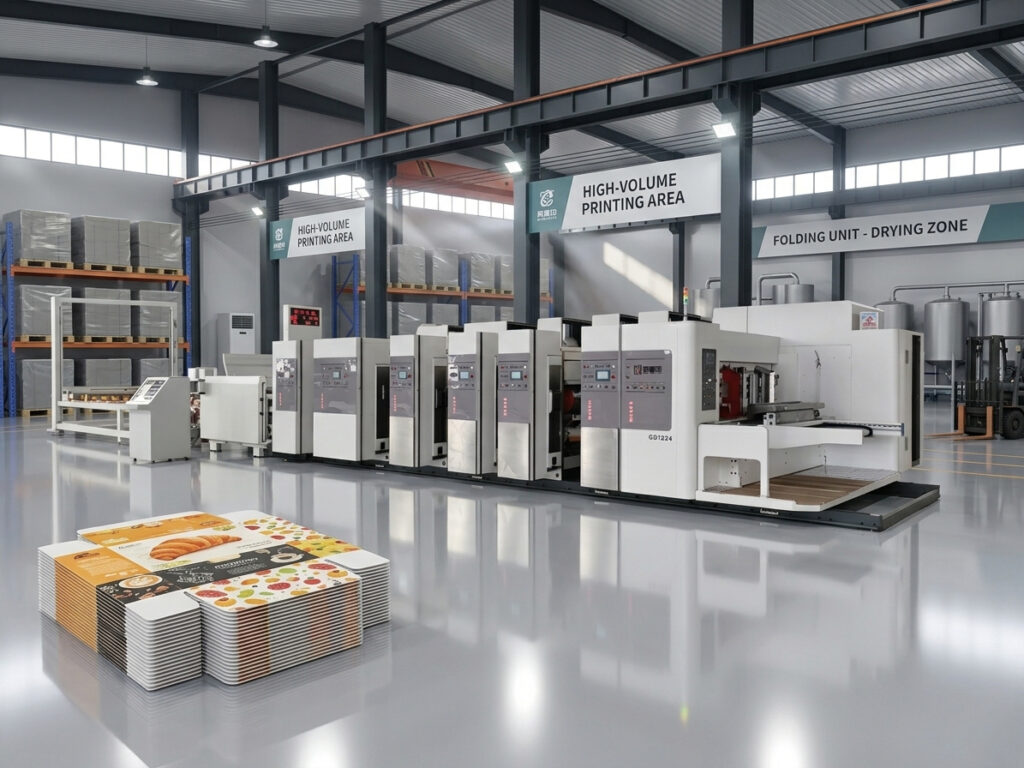
Where to Order Corrugated Box Printing Machine: The Direct-Factory Answer
Guangzhou Smart Machinery manufactures corrugated box printing machines direct — no trading company, no third-party quality intermediary. Our machines ship with laser-engraved ceramic anilox rollers, alloy steel heat-treated drive gears, PLC-controlled motorized phase adjustment with job memory, integrated linkage slotting with imported polyurethane die-cutting pads, and a documented FAT protocol signed before the machine leaves our facility.
Every configuration is available for lead-edge feeding on 3/5/7-ply board, with suction-assisted board stabilization adjustable to your local humidity and board quality conditions. Our engineering team handles export documentation, CE marking for European markets, and on-site commissioning coordination worldwide.
If your plant is ready to move from standalone sequential equipment to an integrated where to order corrugated box printing machine that eliminates inter-machine handling and cuts labor headcount per shift, the next step is a specification conversation — not a catalog download.
→ Inquire for Direct-Factory B2B Pricing, FAT Protocol Documentation & Lead Times
FAQ
Q: What is the minimum order quantity for a corrugated box printing machine from a direct manufacturer? A: Direct OEM manufacturers including Guangzhou Smart Machinery supply single-unit orders. MOQ of 1 unit is standard for capital equipment. Bulk orders (2+ units) typically qualify for negotiated pricing and priority production scheduling.
Q: How long does manufacturing and delivery take? A: Manufacturing lead time for a configured corrugated box printing machine is typically 60–90 days, covering CNC frame machining, component assembly, and pre-shipment FAT run-off. Sea freight to North America adds 20–30 days; Europe 18–25 days. On-site commissioning and operator training add 5–10 days at your facility.
Q: Can the machine handle both 3-ply and 5-ply board on the same production line? A: Yes. Our lead-edge feeding system adjusts to handle 3-ply, 5-ply, and 7-ply board thicknesses without tooling changeover. Board thickness adjustment is handled via the machine’s digital input controls, not manual mechanical adjustment.
Q: What print colors are available, and can I add color units later? A: Standard configurations support 1 to 4 color printing units. Modular architecture allows color units to be added at commissioning or retrofitted post-installation, subject to machine frame length. Confirm your color configuration at inquiry stage to ensure the frame specification accommodates future expansion.
Q: What happens if a ceramic anilox roller is damaged in production? A: Guangzhou Smart Machinery maintains warehouse stock of replacement anilox rollers for all current machine configurations. Replacement dispatch is confirmed at inquiry. For long-term supply assurance, we recommend purchasing one spare anilox roller at machine commissioning.
Q: Is CE certification included for machines exported to Europe? A: Yes. All machines exported to European markets ship with full CE marking under Machinery Directive 2006/42/EC, including the technical file. Confirm your destination country’s import requirements at inquiry stage — some markets require additional documentation beyond CE.
Q: What warranty coverage applies after installation? A: Our standard warranty covers manufacturing defects on structural components and control systems. Wear parts — anilox rollers, polyurethane die-cutting pads, drive belts — are consumables and are not covered under warranty, but are available from our warehouse stock. Full warranty terms are provided in the sales agreement.
Ready to Specify Your Machine?
Guangzhou Smart Machinery supplies factory-direct. Every inquiry receives a response within 24 hours, including a specification sheet, FAT protocol overview, and direct-factory B2B pricing with lead time confirmation.
→ Inquire for Direct-Factory B2B Pricing, FAT Protocol Documentation & Lead Times