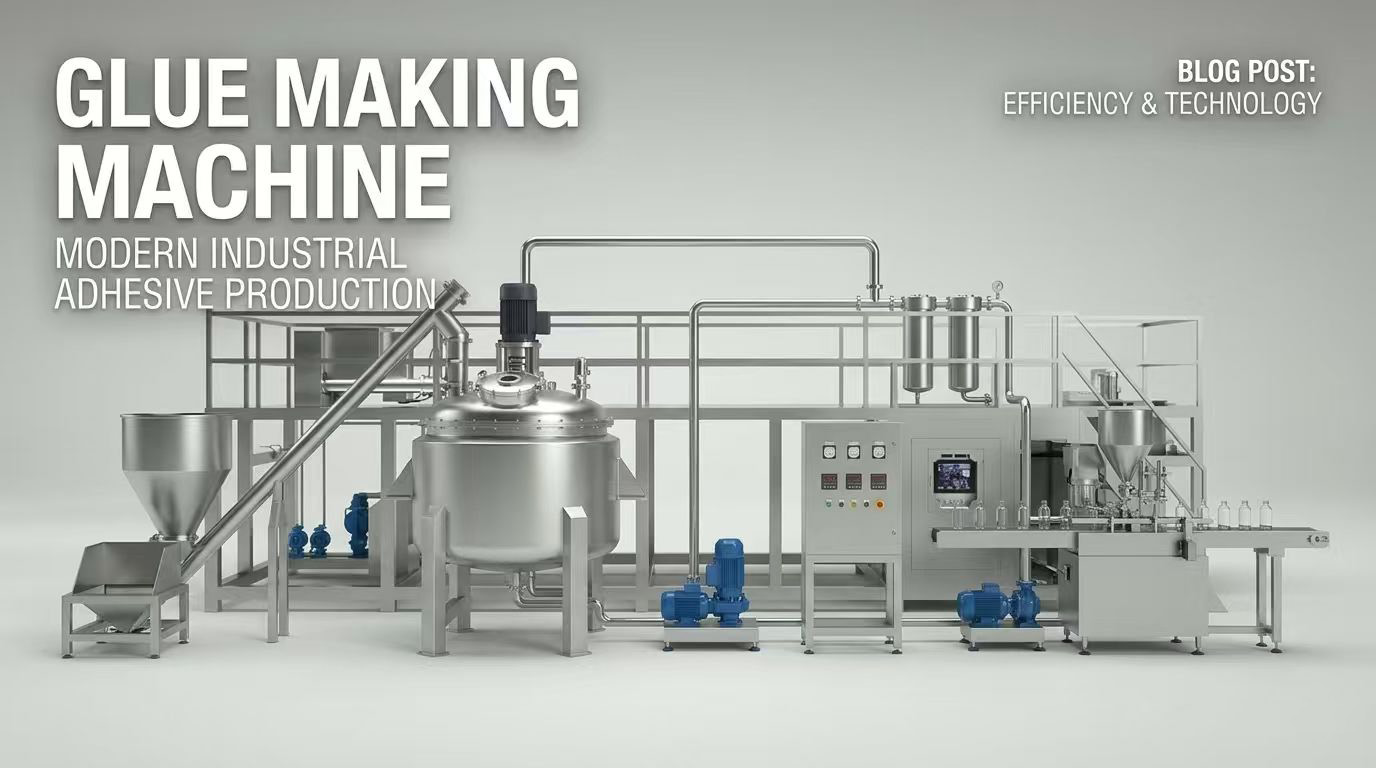
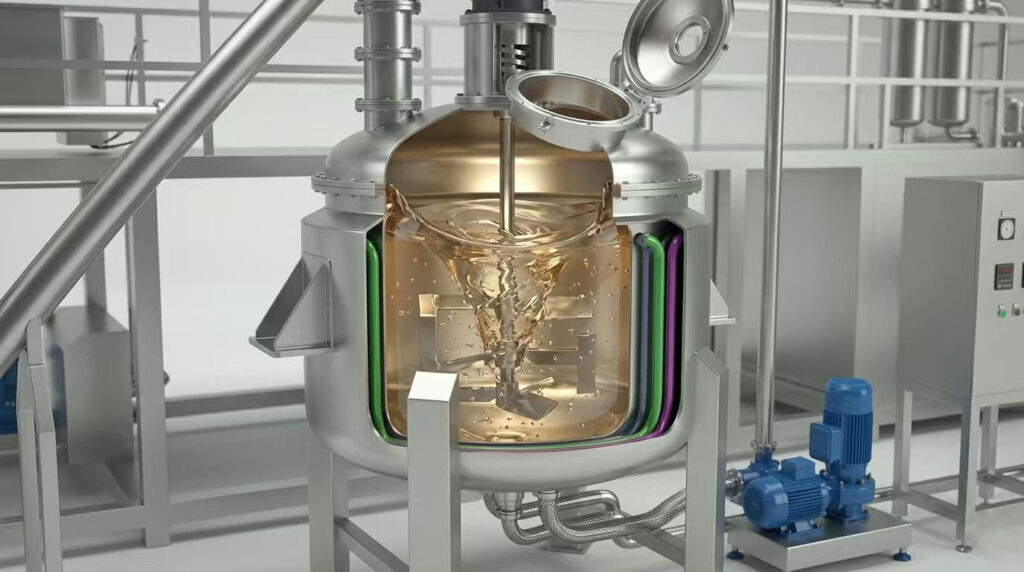
Screening a glue making machine supplier starts with three non-negotiable benchmarks. First, tank metallurgy — mixing and holding vessels must be corrosion-rated stainless steel, not mild steel with a painted or plated finish that pits under sustained caustic soda exposure. Second, dosing control logic — closed-loop, sensor-referenced metering for starch, caustic soda, and water ratios, not manual valve settings adjusted by operator guesswork. Third, viscosity monitoring — inline, real-time viscosity feedback tied to the batch control system, not a periodic manual cup-and-stopwatch check. A supplier failing any one of these three benchmarks is selling a mixing tank, not an engineered adhesive system.
https://gzsmartmachinery.com/product/automatic-glue-making-machine-systems/
Tier-1 Factory vs. Trading Company: Verifying a True Glue Making Machine Manufacturer
Most inquiries for a glue making machine are answered by a trading company reselling a generic mixing tank, not a factory that engineers adhesive-preparation systems for corrugating lines specifically. That distinction determines whether your adhesive formulation stays consistent through a full production shift or drifts batch to batch.
Classify every quotation against the criteria below:
| Engineering Criterion | Tier-1 Factory-Direct | Tier-2 Regional Assembler | Trading Company / Broker |
|---|---|---|---|
| Tank Metallurgy | Corrosion-rated stainless steel (food/chemical grade) | Stainless-lined mild steel | Not disclosed in quotation |
| Dosing Control | Closed-loop, sensor-referenced metering | Timer-based dosing, no sensor feedback | Manual valve adjustment only |
| Viscosity Monitoring | Inline real-time sensor feedback | Manual spot-checks, logged by hand | Not offered |
| Corrosive-Duty Components | Caustic-rated seals, valves, and pump internals | Standard-duty seals, shorter service life | Cannot confirm component sourcing |
| Spare Parts Lead Time | Ex-factory stock, 7–15 days globally | 30–45 days, dependent on the actual OEM | 45–90+ days through intermediaries |
| FAT Availability | Full protocol, live video or on-site | Informal video call only | Rarely offered |
A glue making machine scoring “Tier-1” across this matrix is the only category that should be wired a deposit without a factory visit or verified video audit.
Line-Speed Synchronization: Matching Glue Delivery to Corrugator Throughput
Adhesive starvation and over-application share the same root cause: dosing that does not track line speed. As a corrugator or laminator accelerates, a glue making machine must scale its glue-application rate proportionally, or bond strength per unit area drifts outside spec in either direction.
Production-grade systems reference the dosing pump’s output directly to the corrugator’s line-speed signal through the PLC, not a fixed flow rate set once at startup. This is the same closed-loop principle used in servo-driven folding equipment — a control variable tracked continuously against a live reference signal — applied here to chemical dosing instead of mechanical position.
Ask any supplier whether glue delivery is speed-referenced or fixed-rate. A fixed-rate system runs correctly at exactly one speed and incorrectly at every other speed your plant actually operates.
Process Metallurgy: What Determines Tank, Pump, and Sensor Lifespan
Four components determine whether a glue making machine survives continuous three-shift operation:
- Mixing tank and agitator shaft — corrosion-rated stainless steel resists pitting from caustic soda; carbon steel with a coating will eventually fail at weld seams once the coating is breached.
- Glue transfer pump — a positive-displacement pump (progressive cavity or lobe-style) handles viscous adhesive without the shear degradation a centrifugal pump introduces at high RPM.
- Inline viscosity probe — requires a self-cleaning or easily-serviced sensor face, since dried starch residue on the probe is the single most common cause of false viscosity readings.
- Dosing valves for caustic soda — must use caustic-rated seal material; a standard nitrile or EPDM seal degrades faster in continuous caustic contact than the maintenance schedule assumes.
Verify with your supplier which stainless grade is specified for the mixing vessel. Food-grade 304 is common, but higher-corrosion environments justify the added cost of 316.
Inquire for Direct-Factory Wholesale B2B Pricing & Lead Times on tank capacity and dosing configuration sized to your corrugator’s actual line speed, not a generic off-the-shelf batch size.
Raw Material Dosing Accuracy: Why Formulation Consistency Determines Bond Strength
Corrugating adhesive is built on the Stein Hall two-carrier principle: a small primary-carrier portion of starch is fully gelatinized with caustic soda, then used to carry a much larger secondary-carrier portion of raw, ungelatinized starch that only gelatinizes on contact with the hot corrugated medium during production. Caustic soda ratio controls the gelatinization temperature of the primary carrier; get that ratio wrong and the adhesive either gels prematurely in the tank or fails to bond at the nip.
A glue making machine with [CONFIRM: dosing accuracy tolerance, e.g. ±0.5% by weight] repeatable dosing holds this ratio consistent across every batch, shift, and operator. Manual dosing, by contrast, drifts with operator fatigue, ambient temperature, and even the humidity of the raw starch itself — three variables no spec sheet accounts for but every plant manager has fought.
Borax is typically added in small, precise quantities to stabilize viscosity and improve initial tack; overdosing it is a common manual-mixing error that a sensor-referenced dosing system eliminates by design.
Raw starch moisture content also shifts with ambient humidity — a real variable in Southeast Asian and coastal facilities — which is why dosing systems referencing starch by weight, not fixed volume, hold formulation consistency across seasonal humidity swings that a volume-based system cannot compensate for.
Factory Acceptance Testing for a Glue Making Machine: What a Real Audit Covers
A Factory Acceptance Test for a glue making machine should run a full batch cycle at your actual formulation, not a water-only demonstration mix. Skipping this step is why some systems arrive on-site and still cannot hold viscosity through a full shift.
A complete FAT protocol should verify, on camera or in person:
- Viscosity stability across a full batch hold time, not just at the moment of mixing
- Dosing repeatability across a minimum of five consecutive batches at your specified formulation
- Temperature control accuracy during the primary-carrier gelatinization step
- Tank cleaning cycle time and residue level after a standard changeover
Any supplier unwilling to run this protocol on your actual starch-to-caustic ratio, using your raw materials rather than a generic demonstration recipe, is asking you to discover formulation problems after installation instead of before shipment.
Total Cost of Ownership: The Hidden Cost of Inconsistent Adhesive
The purchase price of a glue making machine is a small fraction of what inconsistent adhesive actually costs a box plant. A single batch that gels early or under-bonds does not just waste starch — it produces cartons that delaminate at a customer’s automated packaging line, triggering a supplier quality audit that a Tier-1 relationship easily survives and a broker-sourced relationship often does not.
| Cost Driver | Tier-1 Factory-Direct | Broker-Sourced / Tier-2 |
|---|---|---|
| Batch-to-batch consistency | High — closed-loop dosing | Variable — manual or timer-based |
| Rework/reject rate from weak bonds | Low | Higher, especially at shift changes |
| Warranty enforcement on tank/pump failure | Direct factory accountability | Diluted across intermediaries |
| Spare seal/valve availability | Ex-factory stock | Extended reorder cycle |
For a plant supplying brand-owner customers with strict inbound quality audits, avoiding even one rejected shipment typically covers the price gap between a Tier-1 factory-direct system and a broker-sourced alternative.
FAQ: Supplier Vetting Questions Procurement Teams Ask
Q: Should I request a factory visit before wiring a deposit on a glue making machine? A: Yes, or at minimum a live video walkthrough showing the actual mixing tank, dosing skid, and control panel for the specific unit’s serial number — not a promotional video of a different installation.
Q: What spare-parts lead time should I write into the purchase contract? A: For a Tier-1 factory-direct supplier, 7–15 days ex-factory for pump seals, dosing valves, and viscosity sensors is a reasonable contractual commitment. Longer than 30 days signals the seller does not hold factory-level inventory.
Q: Can one glue making machine handle multiple board grades and adhesive formulations? A: Yes, provided the dosing system supports multiple stored recipes with sensor-verified ratios per grade. Confirm this in writing rather than assuming a single-tank system can reformulate on the fly without a recipe-management feature.
Q: How do I confirm the stainless steel grade isn’t just a sales claim? A: Request material certification (mill certificates) for the tank and agitator shaft, not just a spec sheet listing “stainless steel” without a grade number.
Q: Does ambient humidity in my region affect glue making machine performance? A: It affects raw starch moisture content more than the machine itself. A weight-referenced dosing system compensates for this automatically; a volume-based system does not, which is worth confirming before ordering for a high-humidity climate.
Request Your Factory Audit Documentation
Guangzhou Smart Machinery manufactures and ships every glue making machine directly from our Panyu, Guangzhou facility — no trading intermediary, no undisclosed OEM behind the tank.
Request a Factory FAT Protocol Sheet to see exactly how your formulation will be batch-tested before it ships, or inquire for direct-factory wholesale B2B pricing and confirmed lead times on a system sized to your corrugator’s line speed. Every quote includes tank material certification, dosing accuracy specification, and a written spare-parts lead-time commitment — before any deposit is requested.